Global Air Traffic Control Market: Automation and Digitalization
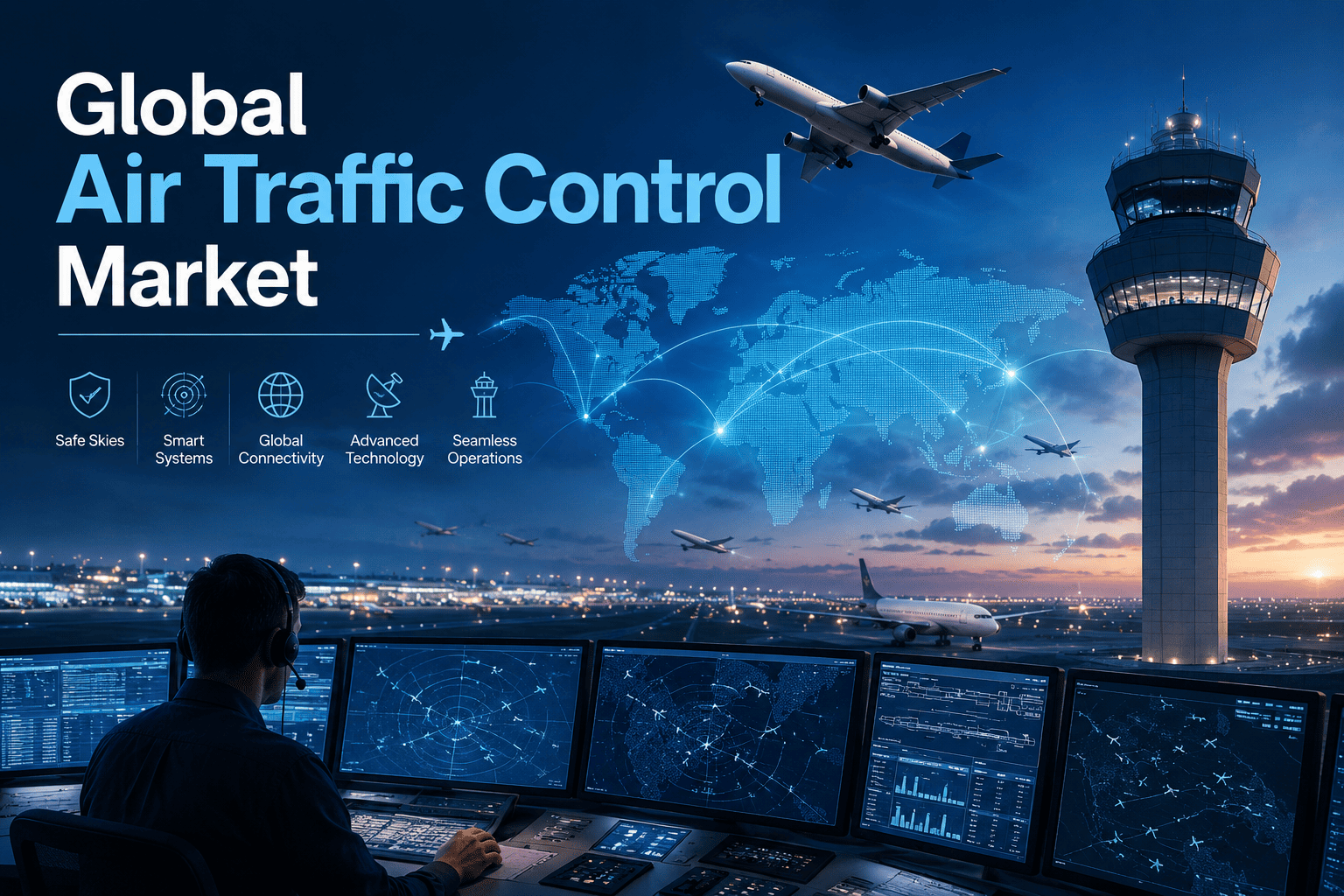
The Global air traffic control market is undergoing a major transformation as aviation authorities and airports invest in automation, advanced radar, digital communications, and intelligent airspace management technologies. According to 6Wresearch, the market was valued at approximately USD 7.5 billion in 2025 and is projected to reach USD 10.87 billion by 2032, expanding at a CAGR of 5,60% during 2026–2032. Automation is expected to be the fastest-growing segment, reflecting the aviation industry’s growing focus on efficiency, safety, and modernization.
Air traffic management has traditionally depended on highly trained personnel, radar networks, communication systems, and navigation infrastructure. Today, however, increasing flight volumes and increasingly complex airspace are creating demand for connected and automated solutions. Digital platforms can combine information from multiple sources, enabling controllers and aviation authorities to make faster and more informed operational decisions.
Advantages of Investing in Global Air Traffic Control Market Modernization
Investment in air traffic control modernization can create long-term opportunities because aviation infrastructure requires continuous upgrades to remain efficient and resilient. Aging systems are increasingly being replaced or complemented by digital platforms, advanced surveillance technologies, automated control solutions, and modern communication networks.
Automation is particularly important because it can reduce repetitive tasks and help air traffic controllers manage increasingly complex traffic patterns. Radar modernization can provide more accurate surveillance, while digital technologies can improve information sharing between aircraft, airports, and air navigation service providers.
For technology companies, system integrators, infrastructure providers, and investors, these developments create opportunities across hardware, software, analytics, cybersecurity, communications, navigation, and professional services. The market’s expansion is therefore not restricted to traditional air traffic control equipment.
Why People Prefer Automation and Digitalization for Future Growth
The aviation sector is increasingly turning toward automation because conventional processes can become difficult to scale as traffic volumes rise. Automated systems can support routine operations while allowing controllers to focus their attention on complex or high-priority situations.
Digitalization also enables air traffic management organizations to integrate information from different systems into a more unified operational environment. Weather data, flight plans, surveillance information, airport capacity, and navigation data can be processed together to improve traffic planning.
This trend is expected to remain important as aviation networks become more interconnected. The growth of unmanned aircraft, drones, and emerging urban air mobility concepts will further increase the need for flexible and technology-enabled airspace management.
Search Visibility through Advanced Air Traffic Control Technologies
As demand for modern aviation infrastructure increases, technology providers are competing through increasingly sophisticated air traffic management capabilities. Automation, radar, digital communications, satellite navigation, and software-based control platforms are becoming important areas of differentiation.
The global air traffic control market is also moving toward integrated solutions. Instead of purchasing isolated systems, aviation organizations increasingly seek platforms that can connect surveillance, communication, navigation, automation, and data analytics.
This creates opportunities for established technology companies with strong integration capabilities. Major participants identified in the market include Raytheon Technologies, Thales Group, Leonardo S.p.A., Northrop Grumman Corporation, and BAE Systems. Their presence demonstrates the strategic importance of advanced technology in the modernization of global aviation infrastructure.
Demand and Benefits of Radar-Based Air Traffic Management
Radar remains a fundamental component of air traffic surveillance, even as digital and satellite-based technologies continue to develop. Modern radar systems provide controllers with critical information about aircraft positions and movements, supporting safe separation and efficient traffic coordination.
The demand for improved surveillance is being reinforced by growing air traffic and increasing pressure on airports and air navigation service providers to use available airspace more efficiently. Advanced radar can work alongside other surveillance technologies to provide broader and more reliable situational awareness.
The benefits extend beyond safety. Better surveillance can support more efficient routing, reduce unnecessary delays, improve traffic sequencing, and strengthen airport operational planning. As a result, radar modernization remains an important investment area within the global air traffic control market.
Enhance User Experience with Digital Air Traffic Management
Air traffic control technology may operate largely behind the scenes, but its impact can be directly experienced by passengers. More efficient airspace management can contribute to smoother departures, improved arrival coordination, and fewer avoidable delays.
Digital systems can help aviation stakeholders respond more quickly when weather conditions, congestion, technical issues, or unexpected traffic changes affect operations. Better access to real-time information enables airports and airlines to coordinate more effectively.
For passengers, this can translate into more predictable travel experiences. For airlines, improved traffic management can support more efficient aircraft utilization and operational planning. For airports, digitalization can help maximize existing capacity before costly physical expansion becomes necessary.
Lifestyle Benefits from a More Efficient Aviation Network
Air travel supports modern business, tourism, trade, education, and personal connections. As international mobility continues to influence everyday lifestyles, the efficiency of aviation infrastructure becomes increasingly important.
The global air traffic control market plays a key role in supporting this ecosystem. Modernized systems can help manage higher volumes of aircraft while maintaining safety and operational consistency. This becomes particularly important in rapidly expanding aviation markets where airports are handling growing numbers of passengers and flights.
More efficient airspace management can also support cargo aviation, which plays a critical role in e-commerce and global supply chains. Faster and more predictable movement of goods can create economic benefits extending well beyond the aviation industry.
Infrastructure Development Is Driving Market Transformation
Infrastructure development is one of the most significant forces shaping the future of air traffic control. Airports and aviation authorities across developed and emerging markets are investing in new facilities while modernizing existing systems.
Asia-Pacific is expected to experience particularly strong growth as expanding air travel and airport infrastructure increase the need for advanced air traffic management capabilities. Countries such as China and India are investing heavily in aviation infrastructure, creating opportunities for technology providers.
At the same time, North America remains an important market because of its mature aviation ecosystem and continued investment in modernization. The combination of established infrastructure in developed markets and new development projects in emerging economies provides a broad foundation for future market expansion.
Digitalization and Automation Are Redefining Airspace Management
The next phase of the global air traffic control market will involve closer integration between radar, automation, digital communications, navigation, and data analytics. Rather than functioning as independent technologies, these systems are increasingly being connected into comprehensive air traffic management environments.
Artificial intelligence and machine learning can further enhance these systems by identifying patterns, forecasting congestion, and supporting predictive decision-making. Cloud-based infrastructure can facilitate data sharing, while cybersecurity technologies will become increasingly important as air traffic control networks become more digitally connected.
The transition will not happen overnight. Aviation is a safety-critical industry, meaning new technologies must meet demanding standards for reliability, security, interoperability, and regulatory compliance. Nevertheless, the direction of the market is clear: greater automation and digitalization are becoming central to the future of airspace management.
Wrapping Up: Why Buying into the Market Now Can Be a Smart Decision
The global air traffic control market is positioned for sustained growth as aviation authorities respond to rising traffic volumes, aging infrastructure, increasing airport capacity requirements, and the need for more efficient airspace management. Automation, advanced radar, and digitalization are transforming conventional systems into smarter and more connected platforms.
With the market projected to grow from approximately USD 7.5 billion in 2025 to USD 10.87 billion by 2032, the opportunity extends across surveillance, automation, software, communications, navigation, cybersecurity, and integrated services. For investors and industry participants, entering the market during this modernization cycle can provide exposure to a long-term aviation technology transformation.
Frequently Asked Questions
1. What is the global air traffic control market?
The global air traffic control market includes systems, technologies, software, and services used to monitor and manage aircraft movement. It covers radar, communication, navigation, surveillance, automation, control towers, and air traffic management infrastructure designed to improve aviation safety and operational efficiency.
2. How is automation changing the global air traffic control market?
Automation is helping controllers manage repetitive processes and large volumes of operational information more efficiently. Within the global air traffic control market, automated systems can support traffic sequencing, monitoring, conflict identification, and decision-making while allowing human controllers to maintain oversight of critical operations.
3. Why is radar important for air traffic control?
Radar provides essential information about aircraft positions and movements, helping controllers maintain safe separation between aircraft. As flight volumes increase, modern radar systems remain important within the global air traffic control market because they support reliable surveillance, traffic coordination, and improved airspace awareness.
4. What is driving digitalization in air traffic control?
Growing air traffic, airport expansion, aging infrastructure, and demand for operational efficiency are major drivers of digitalization. The global air traffic control market is adopting digital platforms to connect surveillance, communication, navigation, analytics, and automation technologies into more efficient and integrated management systems.
5. Which region is expected to experience strong market growth?
Asia-Pacific is expected to experience strong growth due to expanding air travel, airport construction, and modernization initiatives. Increasing aviation activity in countries such as China and India is creating opportunities for the global air traffic control market as authorities invest in advanced infrastructure.
6. What are the benefits of digital air traffic management?
Digital air traffic management can improve information sharing, operational coordination, traffic planning, and responsiveness to changing conditions. Within the global air traffic control market, digital systems can also support better resource utilization and help airports and airlines manage increasing traffic without relying solely on physical infrastructure expansion.
7. How does air traffic control modernization benefit passengers?
Modernization can support more efficient flight sequencing, improved traffic coordination, and faster responses to disruptions. As the global air traffic control market adopts automation and digital technologies, passengers can potentially experience fewer avoidable delays, smoother airport operations, and more predictable journeys.
8. What role does infrastructure development play in the market?
Infrastructure development creates demand for new surveillance, communication, navigation, and automation systems. The global air traffic control market benefits from airport expansion and modernization projects because new and upgraded facilities require reliable technologies capable of supporting growing aircraft and passenger volumes.
9. What challenges could affect air traffic control digitalization?
High modernization costs, legacy infrastructure, cybersecurity concerns, regulatory requirements, and interoperability challenges can slow adoption. Companies operating in the global air traffic control market must develop solutions that can integrate with existing systems while meeting strict aviation safety, reliability, and security requirements.
10. What is the future outlook for the global air traffic control market?
The outlook is positive as automation, radar modernization, digitalization, and increasing aviation activity create sustained demand. The market is expected to benefit from infrastructure investments and technology upgrades through 2032, creating opportunities for companies providing intelligent surveillance, software, communications, navigation, and integrated services.
Read more…
Global activated carbon market