Touch me soft and listen carefully
My encounter with writings of Peter Weibel started with a little observation game. I sadly missed the first seminar of the class about him, but I remembered that we were told to try to get physical issues of his books — to feel their weight, observe, and go through them. So, I decided to go to the the uni library.
Surprised by the monumental scale of the issues, I started checking the Enzyklopädie series, trying to avoid the “Politik und Medien” — unlike the other sections, in the class we had already planned three presentations on it, while other remained untouched. I went through the sections on media and art, media and music, with the plan to write something about the ontology of digital arts. But just for the sake of it, I finally decided to check the media and politics book.
Because my German level is still not very strong, my attention was drawn mostly to articles titled in English. There I read “Art and Democracy, ” “Art and People: Politics and Power, ” “Renaissance 3.0, ” etc. The optimistic tone of these titles made me feel really weird. I actually felt kind of resentment every time I encounter the new one. The persistent melancholy surrounding the future of technology was stopping me to accept that kind of optics. After that first reaction it took me some time to return and actually start reading the texts.
Apparently, it was my first time working with encyclopaedic texts, whose form curates the development of ideas in a particular way. The texts felt more like lecture scripts than argumentative essays. In order to talk about the sources of Weibel’s optimism, I will use parts of different articles, but primarily concentrate on the text “Media and Democracy” (2005).¹
Mindful Political Body
To begin the discussion of artistic influence on society, Weibel proposes tracing the development of the corpus politicum — the metaphorical understanding of the state as a physical body — through historical changes in aesthetic canons. Starting with ancient Greek sculptural idealism, he depicts the link between political agreements of the time and their artistic representation. The emergence of Greek democracy, transitioning from a Nomist age of pre-ordained rules to a Cratist age in which humans determined the shape of their own society and laws, connects with artistic practices such as the sculptural doctrine of Polyclitus. The desire for balance and fairness, and controlled crafted materiality, served as a visual manifestation of liberation from the gods. Therefore Weibel mentioned a hypocritical essence of the greek democratic estate (as in the time of the mass slavery when the population of a slaves was several times bigger than amount of greek citizens and as well as woman they were deprived of the political activity) he still sees the extension and emergency of the artistry as one of the most essential preconditions for the democratic society.
He then follows the development of the political body through several historical stages: the “Artificialization of the State, ” which understands the state as a constructed entity composed of its inhabitants; the modernist idea of the State-As-A-Machine; and later the “Phantom body” — no longer a static organism, but a dynamic network of moving subjects. This leads to the contemporary political body, increasingly composed of DNA-like data structures dynamically circulating through ones rhizomatic connections.
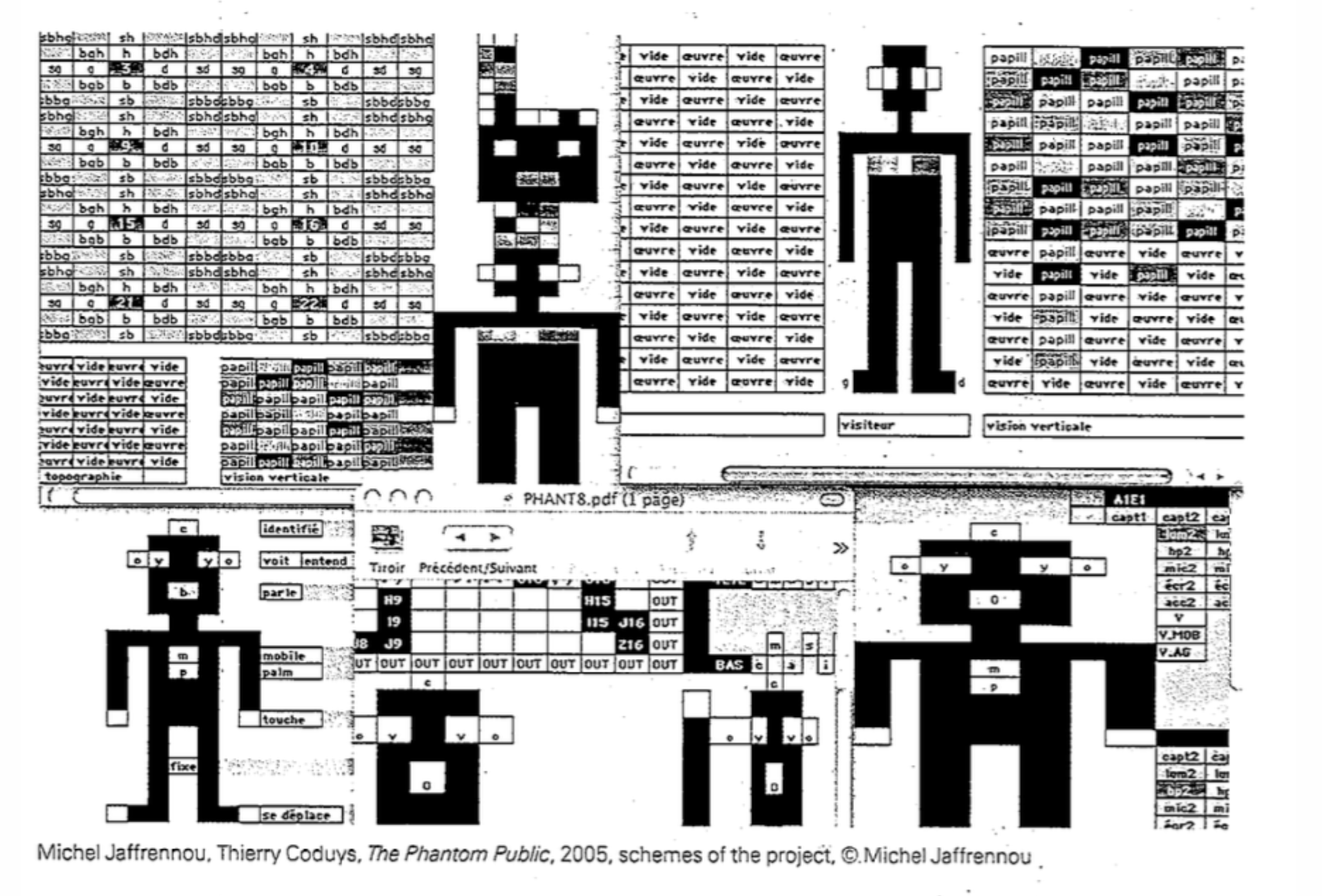
At each stage, artistic artefacts reflect these transformations and help clarify both structural enclosures and democratic development. But for Weibel, the liberating force is not art itself, but technological innovation as it is used by art to transform the conventional structures of states and societies. Weibel emphasizes how mechanical arts — both as practices and its outcomes — can become powerful tools for transforming class and power structures. He illustrates this through the publication of Denis Diderot’s “L’Encyclopédie ou Dictionnaire raisonné des sciences, des arts et des métiers”.² By using the newly developed medium of mass publishing, Diderot was able to disseminate knowledge that enabled larger parts of the population to transform their economic position. By documenting tools and machines, technological transparency became a potential form of emancipation, transforming “unfree” subjects into active participants of the “object-oriented society”.4
For Weibel, our own time — marked by rapid technological invention — offers a similar possibility. By embracing mechanical arts and intervening in cultural production, artists can share skills and knowledge, reshape power dynamics, and contribute to the development of the public sphere.
The public sphere stands in this context as a fundamental mechanism of democracy. Jürgen Habermas introduced the concept of “Öffentlichkeit”, describing it as a “virtual or physical space where private individuals gather to engage in rational-critical debate and form public opinion capable of holding state power accountable. It mediates between state authority and private society”.³ Historically, the public sphere developed from royal and later bourgeois spaces, and today it has expanded, fragmented, and multiplied through new infrastructures. Despite these transformations, its essence remains access to knowledge and public expression. This shift transforms people from viewers of representation into active participants.
In the text, we can trace how technological, political, and artistic practices over the last centuries have step by step opened new gaps of liberation. Weibel describes this through the metaphor “from enchantment to enactment, ” showing how each technological innovation creates new ways to bring social subjectivity to people, and how he anticipates new forms of public space emerging through media such as the internet.
“Today new public spaces form new forums of artistic articulation. They serve as a field of interaction for a different art in which passers-by or users becomes actors engaged in creating a different society”¹
So should I cry or should I laugh?
It is difficult not to see some of these claims as ironic today. The development of “liberated” cloud public spaces that Weibel likely envisioned in the early 2000s has become an field dominated by Big-Tech and Big-Finance. A broader digital disenchantment was already emerging around the same time as Weibel’s text. In the blog project Post-Internet, Gene McHugh wrote that the internet had become “not a thing in the world to escape into, but rather the world one sought escape from, ”⁴ Alongside this narrative disappointment, the material conditions of the internet also changed, marked by the redistribution of digital ownership among large technology conglomerates.
This development now appears as what Yanis Varoufakis describes as techno-feudalism: corporations extract new forms of value from participation itself, using behavioral data for their large language models while monopolising cloud infrastructures.⁵ Every participatory action developed within platforms acquires the logic of the platform and becomes privatised and used for the benefit of its owners. In this context, post-digital disenchantment often merges with reflexive impotence — the feeling that nothing can be changed.
Perhaps now I better understand the source of my earlier confusion. As a digital native, born in 2000, I developed a particular relationship with digital culture. The internet has become an all-absorbing reference point for thinking about digital environments. Just as it is difficult to imagine the end of capitalism, it is difficult for me to imagine digital space outside of the internet. Texts like Weibel’s remind me that I, too, exist within a specific historical stage shaped by political, economic, and technological conditions.
In conclusion, this historical overview reveals the dialectical essence of technological development: while technology can become a source of new forms of enslavement, it still creates gaps in which acts of liberation can take place, it once happened with newspaper, cinema, radio and now with internet. Weibel’s trust in the internet may not have lasted long, but new gaps — and new possibilities — will continue to appear.
References
1. Peter Weibel, Media and Democracy, 2005.
2. Denis Diderot, Encyclopédie, ou dictionnaire raisonné des sciences, des arts et des métiers (Paris, 1751–1772).
3. Jürgen Habermas, The Structural Transformation of the Public Sphere (Cambridge, MA: MIT Press, 1989).
4. Gene McHugh, “Post Internet, ” September 12, 2010, https://122909a.com/?m=201009.
5. Yanis Varoufakis, Technofeudalism: What Killed Capitalism (London: Bodley Head, 2023).