How Will the European Ice Cream Market Grow by 2034?
The European ice cream market stands as a testament to the continent’s rich culinary traditions blended with modern food innovation. From the artisanal gelato parlors of Italy to the highly automated manufacturing hubs in Germany, ice cream is deeply ingrained in European culture. As the industry moves toward 2034, it is transitioning from a seasonal treat into a year-round indulgence, driven by health-conscious formulations, premiumization, and a robust retail infrastructure.
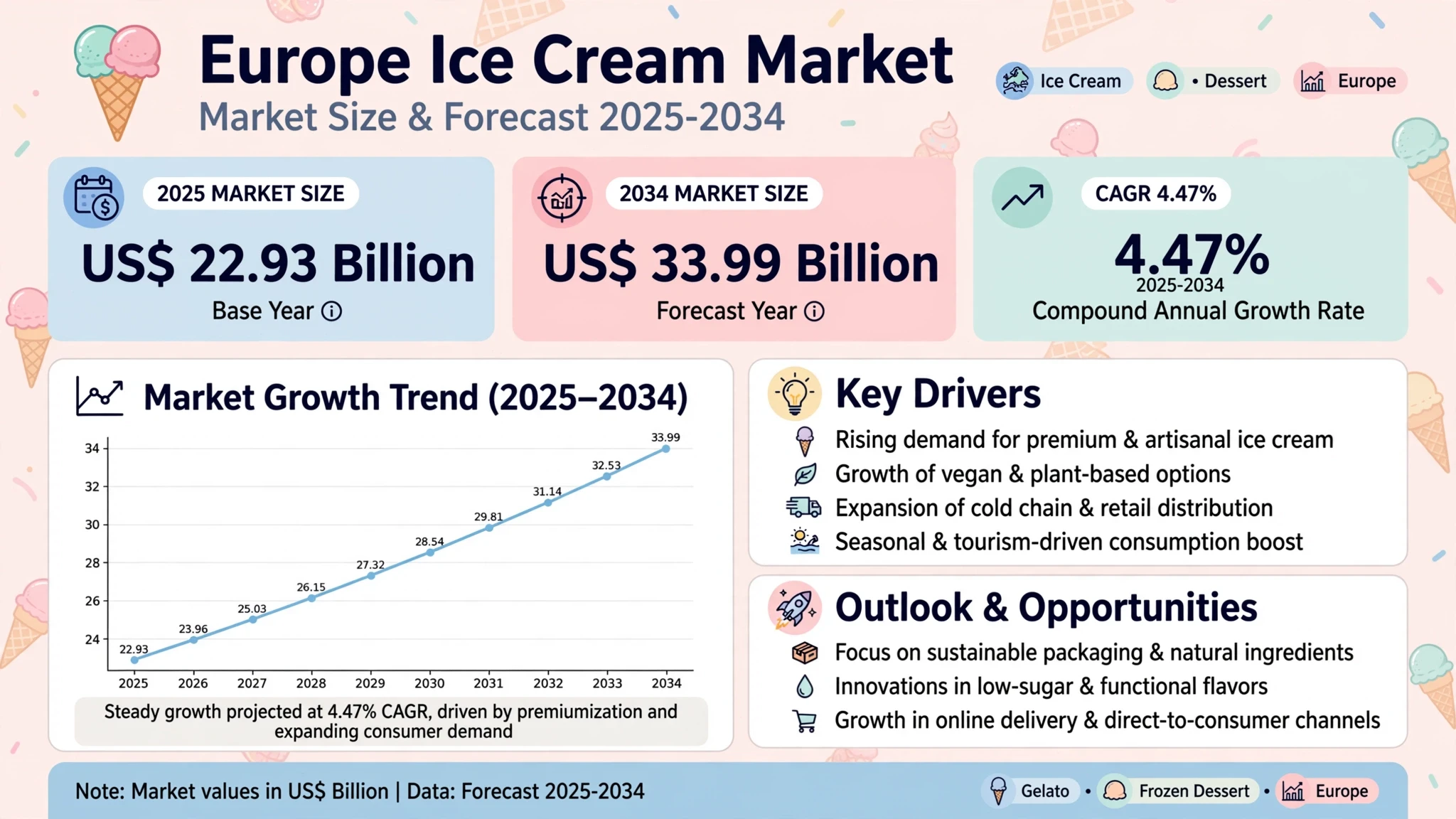
According to market projections, the European ice cream market is expected to witness significant growth, rising from US$ 22.93 Billion in 2025 to US$ 33.99 Billion by 2034, expanding at a Compound Annual Growth Rate (CAGR) of 4.47%. This upward trajectory is supported by the rising demand for artisanal quality, a pivot toward plant-based alternatives, and the massive scale of the European tourism industry.
Request Sample Report: https://www.renub.com/request-sample-page.php?gturl=europe-ice-cream-market-p.php
Understanding the Versatility of European Ice Cream
Ice cream in Europe is more than just a chilled dessert; it is a sophisticated culinary category. Traditionally crafted from high-quality milk, cream, and sugar, the sector has evolved to embrace diverse dietary needs, including lactose-free, vegan, and high-protein variants.
Beyond the standalone scoop, ice cream is a cornerstone of the European foodservice industry. It serves as an essential component in elaborate sundaes, classic waffles, crêpes, and specialty café beverages. This versatility ensures that ice cream maintains its relevance across various demographics, from younger consumers seeking quick, trendy snacks to families purchasing premium tubs for home consumption.
The Production Landscape: A Snapshot
Production volume remains a key indicator of market strength. In 2022, the European Union’s output highlighted the dominance of major dairy-producing nations:
- Germany: The leading producer with ~620 million litres.
- France: Second with ~590 million litres.
- Italy: Third, producing ~570 million litres, reflecting the cultural significance of gelato.
- Spain & Belgium: Rounding out the top five with substantial volumes, fueled by strong domestic consumption and tourism.
Primary Growth Drivers
The Rise of Premium and Artisanal Offerings
European consumers are increasingly exhibiting "premiumization" behavior—a willingness to pay more for higher-quality ingredients and cleaner labels. Research suggests that over 60% of consumers prioritize natural ingredients. This shift has forced manufacturers to move away from artificial additives, favoring organic dairy, Madagascar vanilla, and single-origin cocoa. Premium private-label products are also flourishing in supermarket aisles, bridging the gap between mass-market affordability and artisanal quality.
Health-Conscious and Plant-Based Innovation
The plant-based revolution is arguably the most significant trend currently reshaping the market. With Europe leading global adoption of vegan and flexitarian diets, manufacturers are innovating with bases like oat, almond, coconut, and soy. Furthermore, the "wellness" trend has led to the rise of reduced-sugar and functional ice creams enriched with vitamins or probiotics. By replacing refined sugars with natural sweeteners like stevia, companies are successfully capturing the health-conscious market without sacrificing the creamy texture that consumers expect.
Robust Retail Infrastructure and Tourism
Europe’s retail ecosystem is remarkably efficient, with supermarkets and hypermarkets providing wide-scale access to frozen desserts. Simultaneously, the region’s status as a global tourism magnet—attracting over 700 million arrivals in a typical year—acts as a massive accelerator for impulse sales. From beach kiosks in Spain to tourist-heavy cafés in France, seasonal influxes create spikes in consumption that keep the industry dynamic and profitable year-round.
Market Segment Analysis
Cones and Cups: The Convenience Kings
The cones and cups segment is expanding rapidly as consumers prioritize portability and portion control. These formats are the "go-to" for single-serve consumption. Innovations in this space, such as biodegradable packaging and premium chocolate-lined waffle cones, have elevated the humble cone to a gourmet experience, particularly in the UK and Germany.
Impulse Ice Cream: Spontaneous Consumption
Accounting for roughly 45% of the total European market, impulse ice cream—encompassing sticks, bars, and sandwiches—remains the largest revenue-generating category. Its success is built on "availability." By positioning freezers at checkout counters in convenience stores and fuel stations, brands capitalize on spontaneous purchasing behavior. Seasonal limited-edition flavors continue to be the primary hook for repeat impulse buys.
Fruit-Based and Natural Flavors
As part of the broader move toward clean-label eating, fruit-based ice creams and sorbets have gained significant ground. Flavors such as raspberry, mango, and lemon are no longer just seasonal options but are increasingly available as year-round staples. The use of real fruit purées and high-quality sorbet bases has successfully converted consumers who previously avoided dairy, broadening the market reach significantly.
Overcoming Industry Challenges
The Cost Volatility Factor
Manufacturers face persistent challenges regarding raw material costs. Fluctuations in the prices of milk, cream, sugar, and cocoa—driven by climate change and geopolitical instability—often threaten profit margins. Additionally, the energy-intensive nature of maintaining a "cold chain" (uninterrupted refrigeration from factory to store) means that rising energy prices directly impact the bottom line. Larger firms benefit from economies of scale, but artisanal producers often have to pass these costs to the consumer, which can risk demand in price-sensitive environments.
Seasonal Dependencies and Health Awareness
Despite the trend toward year-round consumption, cold winters in Northern Europe still cause sales dips. Furthermore, public health campaigns targeting sugar consumption and obesity remain a critical consideration. Companies are responding by reformulating existing recipes to be lower in fat and sugar, ensuring that their products align with modern dietary guidelines without losing their indulgent appeal.
Country-Specific Insights
- Germany: A mature market where sustainability and premiumization drive growth. The strong retail presence and high per-capita consumption (7–8 kg annually) make it a focal point for new product launches.
- France: Deeply rooted in gourmet culture, the market thrives on luxury recipes—salted caramel, pistachio, and artisanal gelato are staples here, heavily supported by the country’s massive tourism industry.
- Spain: The Mediterranean climate and high tourist volume ensure that impulse ice cream and refreshing fruit sorbets maintain high demand, with a noticeable shift toward healthier, dairy-free alternatives.
- Russia: Characterized by its traditional preference for "plombir" (milk-based ice cream), the Russian market remains a volume leader, with domestic manufacturers continuing to modernize and expand their premium lines to reach younger generations.
Future Outlook
Looking ahead, the European ice cream market will continue to prioritize technology-driven innovation. This includes smarter cold-chain logistics, sustainable packaging solutions, and a continuous flow of limited-edition flavors that cater to both local palates and international trends. As the market reaches an estimated US$ 33.99 Billion by 2034, the winners in this space will be the companies that successfully navigate the balance between indulgence, wellness, and environmental responsibility.
Frequently Asked Questions (FAQs)
1. What is the expected market size for European ice cream by 2034? The European ice cream market is projected to grow from US$ 22.93 Billion in 2025 to approximately US$ 33.99 Billion by 2034, with a CAGR of 4,47%.
2. Why is plant-based ice cream growing so fast in Europe? Europe has a high concentration of vegan and flexitarian consumers. Manufacturers are meeting this demand by creating high-quality alternatives using oat, coconut, and almond bases that mimic the texture and taste of traditional dairy.
3. What role does tourism play in the European ice cream market? Tourism is a major catalyst for seasonal demand. With over 700 million annual tourist arrivals, regions like Southern Europe see massive spikes in ice cream sales, particularly in the impulse (sticks/bars) and artisanal gelato segments.
4. What are the biggest challenges currently facing ice cream manufacturers? The primary challenges include volatile raw material costs (milk, cocoa, sugar), rising energy expenses for cold-chain management, and increased public health scrutiny regarding sugar and fat content.
5. How are companies addressing the health-conscious consumer? Manufacturers are reformulating products to include less sugar, lower fat, and functional ingredients like probiotics. They are also using natural sweeteners such as stevia and monk fruit to maintain sweetness without the calories of refined sugar.
6. Which product category generates the most revenue in Europe? The impulse segment (single-serve sticks, bars, and cones) is the largest, accounting for approximately 45% of total sales due to its convenience and prevalence in retail convenience stores and kiosks.
7. Is the European market moving toward more sustainable practices? Yes, sustainability is becoming a competitive necessity. This includes a shift toward recyclable and biodegradable packaging, as well as an emphasis on responsibly sourced cocoa and dairy ingredients to meet stricter European environmental regulations.
