The Future of Dining: U.S. Free-From Food Market Trends & Forecast
The American dietary landscape is undergoing a fundamental transformation. What began as a niche market for individuals with severe medical requirements—such as Celiac disease or life-threatening nut allergies—has rapidly evolved into a mainstream consumer movement. Today, the "free-from" label, designating foods formulated without specific allergens or additives like gluten, dairy, soy, or artificial preservatives, is a primary driver of grocery purchasing decisions across the United States.
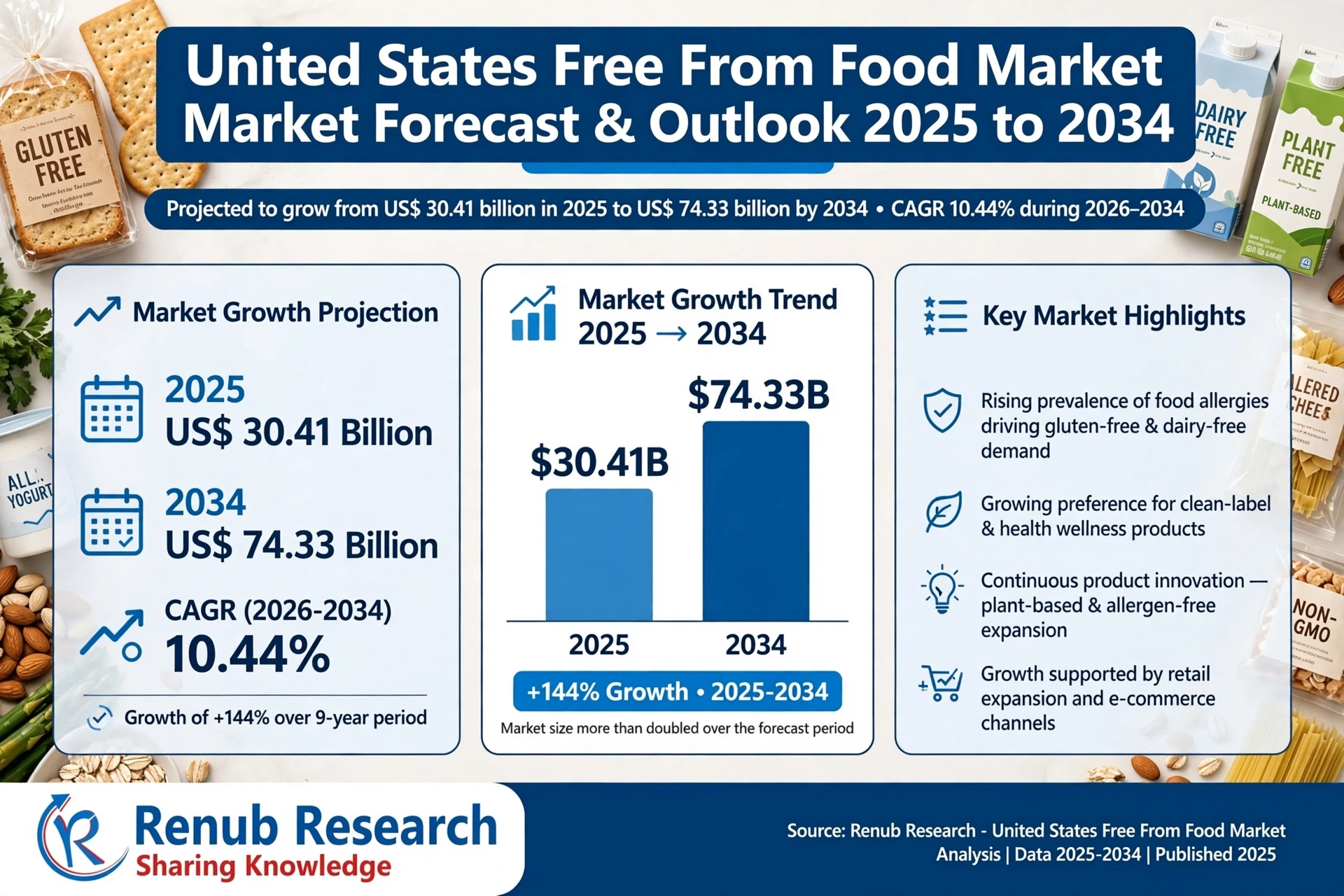
As consumers increasingly equate ingredient transparency with personal wellness, the industry is witnessing explosive growth. According to Renub Research, the United States free-from food market is projected to expand significantly, rising from US$ 30.41 billion in 2025 to US$ 74.33 billion by 2034. This trajectory represents a robust compound annual growth rate (CAGR) of 10.44% during the forecast period of 2026–2034.
Defining the "Free-From" Revolution
Free-from foods are products engineered to exclude ingredients known to cause adverse reactions. While these products were traditionally designed for medical necessity, the current market is propelled by "lifestyle-choice" consumers. These individuals actively avoid specific ingredients—most notably gluten and dairy—believing they contribute to inflammation, digestive discomfort, or general lethargy.
The market’s expansion is deeply rooted in the clean-label movement, where shoppers prioritize minimally processed items with recognizable, simple ingredient lists. Whether motivated by the rise of plant-based diets, veganism, or simple weight management goals, the modern U.S. consumer views the "free-from" designation as a hallmark of quality and health-conscious living.
Download Free Sample Report:
Market Catalysts: Why Is Demand Skyrocketing?
The surge in market valuation is not accidental; it is the result of shifting health demographics and aggressive retail innovation.
1. The Rising Prevalence of Dietary Sensitivities
Data from the IFIC Spotlight Survey (April 2025) reveals a critical reality: nearly 30% of Americans report living with a food allergy, intolerance, or sensitivity.
- 13% report a diagnosed food allergy.
- 8% experience food intolerance.
- 9% report food sensitivity.
With over 80 million Americans affected by various allergies, as reported by the CDC, the demand for "safe" food is no longer optional—it is a necessity for millions of households. Parents are particularly vigilant, driving consistent sales in allergen-free school snacks and pantry staples.
2. The Clean-Label and Wellness Movement
Modern shoppers are increasingly scrutinizing back-of-pack labels. Terms like "non-GMO," "no artificial colors," and "preservative-free" are now standard benchmarks for health. Consumers associate free-from products with "cleaner" digestion and overall vitality. This psychological shift has pushed food manufacturers to reformulate classic favorites. For instance, the 2025 launch of Maïzly’s plant-based corn milk exemplifies this trend, offering a dairy-free and gluten-free alternative fortified with essential vitamins, successfully capturing the wellness-focused demographic.
3. Continuous Product Innovation
Innovation has successfully bridged the "taste gap" that once plagued free-from products. Historically, gluten-free bread or dairy-free cheese struggled with texture and flavor parity. Today, companies utilize advanced fermentation, pulse-based proteins (chickpeas, lentils), and improved hydrocolloids to mimic traditional textures. In May 2025, Beyond Meat expanded its footprint into 1,900 Kroger stores with their Beyond Chicken Pieces, proving that protein-rich, allergen-free meat alternatives are now a staple in major American retail chains.
Key Market Segments: Where Is the Growth?
The U.S. market is highly segmented, allowing brands to target specific health needs through distinct categories.
Dairy-Free Foods
The dairy-free segment remains a dominant force. Driven by lactose intolerance and the environmental appeal of plant-based milks (almond, oat, soy, and pea), this category has moved from the specialty aisle to the center of the dairy case. Yogurt, ice cream, and cheese alternatives have seen exponential adoption, supported by major legacy brands and agile startups alike.
Gluten-Free Staples
Once a medical niche, the gluten-free category has matured into a stable, high-value market. From pasta made of brown rice or lentils to sophisticated bakery items, the segment is now characterized by high-quality alternatives that satisfy both Celiacs and those pursuing low-inflammation diets.
Snacks: The Fastest-Growing Category
Convenience remains king. The snack food segment, including allergen-free chips, protein bars, and popped snacks, is seeing the highest velocity in growth. As busy Americans seek on-the-go nutrition that won’t trigger physical discomfort, manufacturers have flooded the market with chickpea-based puffs, nut-free granola, and grain-free crackers.
Challenges to Sustained Growth
Despite a promising CAGR, the industry faces structural hurdles that could temper growth if not addressed.
- Premium Pricing: Free-from products often carry a "health tax." Specialized supply chains, certified "allergen-free" manufacturing facilities, and premium raw ingredients drive costs upward. During inflationary periods, price-sensitive consumers may revert to conventional products unless their dietary restriction is medically critical.
- Sensory and Stability Hurdles: Removing binders like gluten or fats like dairy often compromises shelf life and mouthfeel. Developing products that remain fresh without synthetic preservatives remains a technical challenge, requiring heavy R& D investment.
Regional Hotspots in the U.S.
Market penetration varies significantly by geography, driven by regional health cultures:
- California: The epicenter of innovation, where vegan, plant-based, and clean-label trends often originate.
- New York: A high-density market where demand for premium, health-focused, and convenient ready-to-eat free-from meals is driven by the fast-paced urban lifestyle.
- Washington: A hub for sustainable and transparent food sourcing, with high consumer loyalty to clean-label brands.
- New Jersey: Showing consistent growth as families and healthcare-conscious demographics expand their use of allergen-friendly pantry staples.
Distribution Channels: The Shift to Digital
While supermarkets and hypermarkets remain the primary point of purchase, the online channel has revolutionized accessibility. E-commerce platforms allow consumers to filter products by specific allergens—a feature that is virtually impossible in a physical grocery store. For households managing complex dietary restrictions (e.g., soy-free AND gluten-free), subscription-based online retailers have become a lifeline, offering convenience and product transparency.
Frequently Asked Questions (FAQs)
1. Why is the U.S. free-from food market growing so fast? The growth is driven by a dual-factor effect: a rise in diagnosed food allergies/intolerances and a broader lifestyle shift where consumers view "free-from" labels as indicators of healthier, cleaner, and less processed food.
2. What is the projected market size by 2034? According to Renub Research, the U.S. free-from food market is expected to reach approximately US$ 74.33 billion by 2034, growing from US$ 30.41 billion in 2025.
3. Are free-from foods healthier than regular foods? Not necessarily. While many free-from products use high-quality ingredients, some processed alternatives may contain high levels of sugar, salt, or thickeners to replace the texture lost by removing gluten or dairy. Always read the ingredient label.
4. Which food category is currently seeing the most innovation? The snack category is seeing rapid innovation, with brands launching creative alternatives like grain-free tortilla chips, pulse-based crackers, and allergen-free protein bars.
5. How do consumers identify if a product is truly "free-from"? Consumers look for third-party certifications on packaging, such as the "Certified Gluten-Free" seal or "Non-GMO Project Verified" label, which ensure the product meets specific manufacturing standards.
6. Does inflation affect the sales of free-from foods? Yes, to an extent. Premium pricing makes these items vulnerable to budget cuts. However, consumers with medically necessary restrictions (such as Celiac disease) tend to maintain their purchasing habits regardless of economic shifts.
7. Is the gluten-free trend still relevant? Absolutely. It has evolved from a medical requirement to a permanent lifestyle choice for millions, leading to a mature, stable market with high-quality product variety.
