Why Are Global Cases Rising? Inside the Multi-Billion Dollar IBD Treatment Market
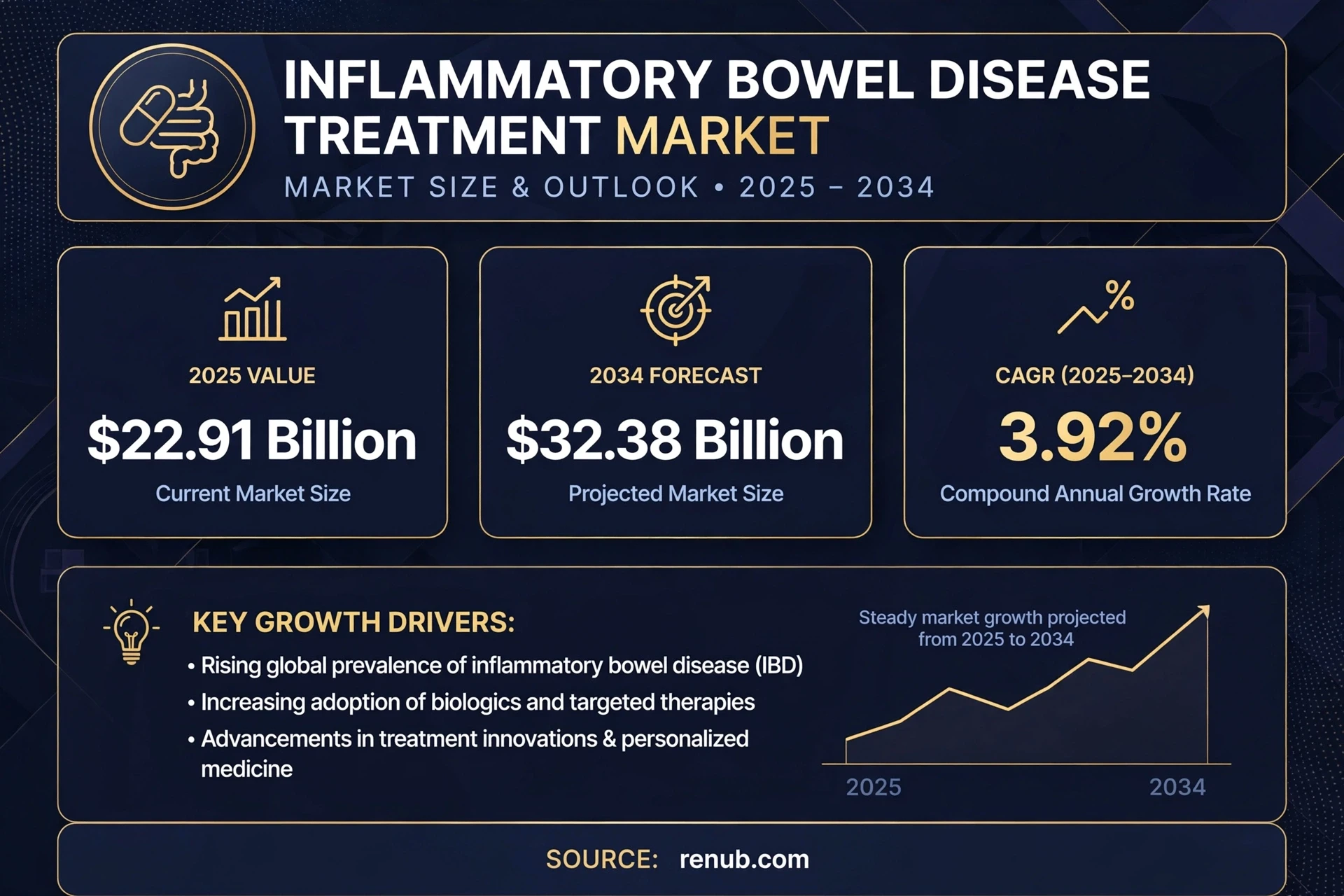
Are you or a loved one searching for the latest advancements in gastrointestinal health? The Inflammatory Bowel Disease Treatment Market is projected to grow steadily, driven by the rising global prevalence of Crohn’s disease and ulcerative colitis, along with increasing demand for advanced therapeutic options. As medical science pushes past traditional boundaries, understanding how this sector is evolving can provide clarity for patients, researchers, and healthcare professionals alike.
Download Free Sample Report: https://www.renub.com/request-sample-page.php?gturl=inflammatory-bowel-disease-treatment-market-p.php
Understanding the Global IBD Treatment Market Expansion
Inflammatory Bowel Disease (IBD) encompasses chronic medical conditions that cause inflammation in the gastrointestinal system, primarily divided into Crohn’s Disease and Ulcerative Colitis. Symptoms often include abdominal pain, persistent diarrhea, fatigue, and unintended weight loss.
Worldwide, IBD treatment has gained significant importance due to the rising prevalence of these disorders across both developed and emerging economies. The primary goals of medical management are to reduce intestinal inflammation, relieve symptoms, induce and maintain remission, prevent disease flare-ups, and ultimately improve patients' quality of life. Treatment strategies rely on aminosalicylates (5-ASA), corticosteroids, immunomodulators, biologic therapies, Janus kinase (JAK) inhibitors, and supportive nutritional therapy. In severe cases where medications fail or complications develop, surgical intervention may be required to remove damaged portions of the intestine.
The market is expected to expand from US$ 22.91 billion in 2025 to US$ 32.38 billion by 2034, registering a compound annual growth rate (CAGR) of 3,92% during the forecast period from 2026 to 2034.
Key Growth Drivers and Therapeutic Innovations
The sustained expansion of the global market is propelled by several critical factors:
- Rising Global Prevalence: More than 10 million people worldwide live with IBD. Urbanization, westernized dietary habits, antibiotic exposure, environmental pollution, and alterations in the gut microbiome contribute to the rising incidence.
- Adoption of Biologics and Targeted Therapies: Biologic medicines targeting tumor necrosis factor (TNF), integrins, and interleukin (IL)-12/23 pathways deliver superior clinical outcomes compared to conventional therapies for moderate-to-severe cases. Furthermore, small-molecule drugs like JAK inhibitors offer oral convenience.
- Improved Diagnostics: Advanced tools such as capsule endoscopy, magnetic resonance enterography (MRE), and fecal calprotectin testing allow for earlier intervention before irreversible intestinal damage occurs.
- Recent Product Launches: Pharmaceutical leaders continue to innovate. Recent milestones include AbbVie expanding SKYRIZI® for ulcerative colitis, Eli Lilly launching OMVOH®, and Johnson & Johnson expanding TREMFYA® globally.
Overcoming Industry Challenges
Despite significant advancements, the market faces notable hurdles:
- High Cost of Advanced Therapies: Annual treatment costs for biologic medications frequently range from US$ 20,000 to over US$ 50,000 per patient. Because IBD is a lifelong condition, cumulative expenses place substantial financial pressure on patients and healthcare systems.
- Treatment Resistance and Safety Concerns: Approximately 30% to 40% of patients may not respond adequately to first-line biologic therapy or may lose response over time. Additionally, immunosuppressive drugs carry risks of serious infections, requiring careful long-term monitoring.
Regional Insights and Distribution Channels
- United States: Representing a leading market with over 3 million affected individuals, the U.S. benefits from advanced healthcare infrastructure, specialized IBD centers, and rapid adoption of innovative therapies.
- United Kingdom & Saudi Arabia: The UK’s National Health Service (NHS) provides comprehensive access to evidence-based biologics and biosimilars. Meanwhile, Saudi Arabia’s Vision 2030 modernization initiative is rapidly upgrading specialized digestive disease services.
- Distribution Channels: The market is divided primarily between Hospital Pharmacies (handling complex biologic initiations, infusions, and specialist supervision) and Retail Pharmacies (dispensing recurring long-term maintenance oral therapies like 5-ASAs and immunomodulators).
Frequently Asked Questions
- What is the projected market size and growth rate for IBD treatments?The global IBD treatment market is expected to expand from US$ 22.91 billion in 2025 to US$ 32.38 billion by 2034, growing at a CAGR of 3,92% from 2026 to 2034.
- What are the primary differences between Crohn’s disease and ulcerative colitis?Ulcerative colitis primarily affects the colon and rectum with continuous inflammation, whereas Crohn’s disease can impact any part of the gastrointestinal tract from the mouth to the anus, often involving deeper layers of the intestinal wall.
- Why are biologic therapies so important in managing IBD?Biologics target specific components of the immune system driving inflammation, offering higher clinical remission rates and better long-term mucosal healing compared to traditional steroids and immunomodulators.
- How do JAK inhibitors differ from traditional biologic drugs?Unlike injectables or infused biologics, JAK inhibitors are oral small-molecule medications that block intracellular signaling pathways, providing faster symptom relief and greater administration convenience.
- What role do biosimilars play in the current treatment landscape?Biosimilars offer highly similar, cost-effective alternatives to reference biologic drugs, greatly improving affordability and patient access across global healthcare markets.
- Why is early diagnosis critical for inflammatory bowel disease patients?Early detection via advanced endoscopy and biomarkers allows physicians to initiate targeted therapy sooner, preventing long-term structural bowel damage and reducing the likelihood of emergency surgeries.
- Which geographic region holds the highest prevalence and market share for IBD?North America records the highest prevalence of IBD worldwide, making the United States the leading regional market for diagnosis, pharmaceutical consumption, and advanced treatment adoption.
