Between the Fragment and the Void: The Anatomy of the Collage Seam
In its conceptual iteration, collage has long ceased to be a mere technique for the decorative juxtaposing of planes. Today, it is a radical gesture aimed at the deconstruction of habitual perception. In a world oversaturated with visual noise, minimalist collage assumes the role of a filter, transforming redundancy into a deliberate distance. Here, form is merely a vehicle for the idea, while the void operates as a full-fledged medium.
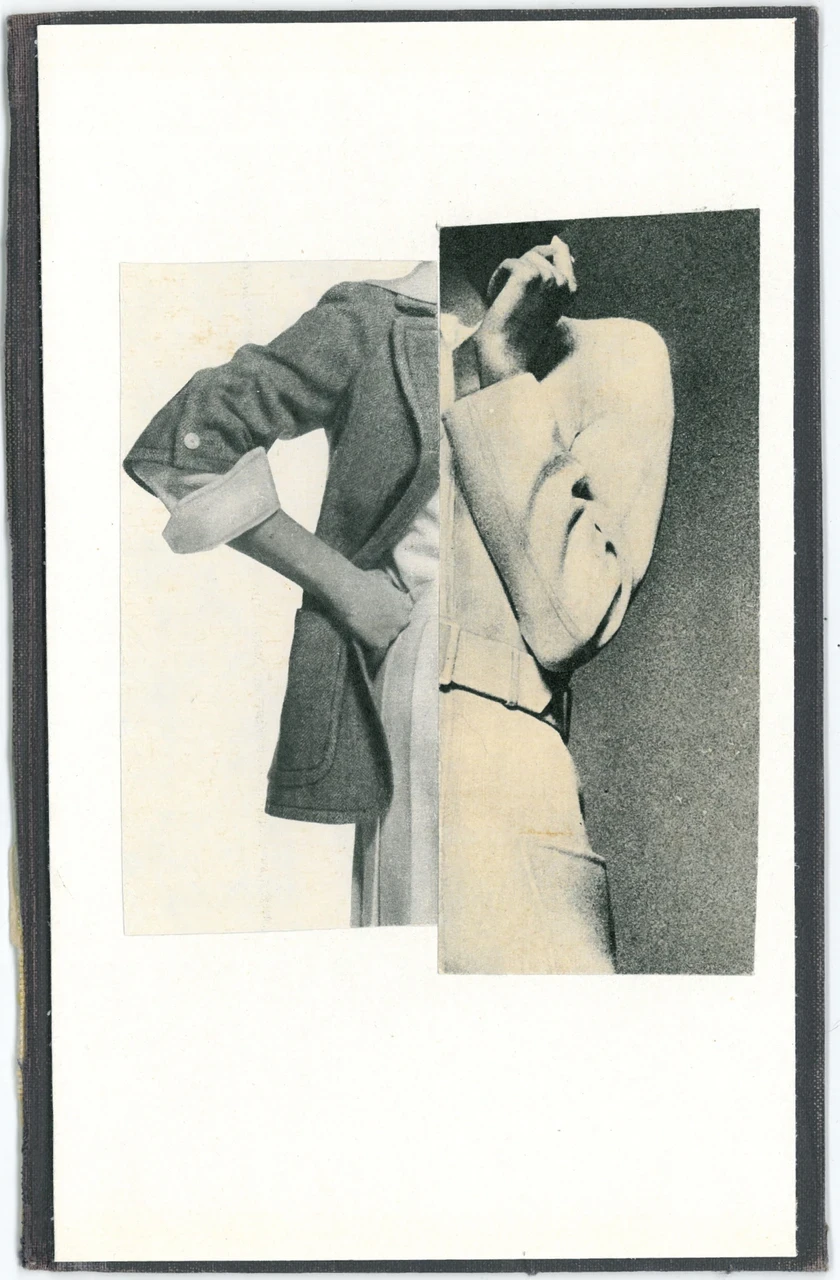
The Optics of Extraction: The Role of Empty Space
Minimalism in collage is not a deficit of elements, but a strategy of attention management. When we intentionally remove the "superfluous," the remaining fragments acquire an almost sacred status. At this moment, the viewer’s perception shifts: they cease to be a passive consumer of the image and become its accomplice.
The void within a composition functions as a high-voltage field. It does not separate objects; rather, it forcibly binds them together. An isolated symbol — whether a silhouette or a natural artifact — begins to emit a "background hiss" when surrounded by unfilled space, transmitting meanings that would be suppressed in a dense context. The viewer is confronted with the necessity of filling these lacunae with their own reflection. Thus, the collage is completed not on paper, but within the consciousness of the onlooker.
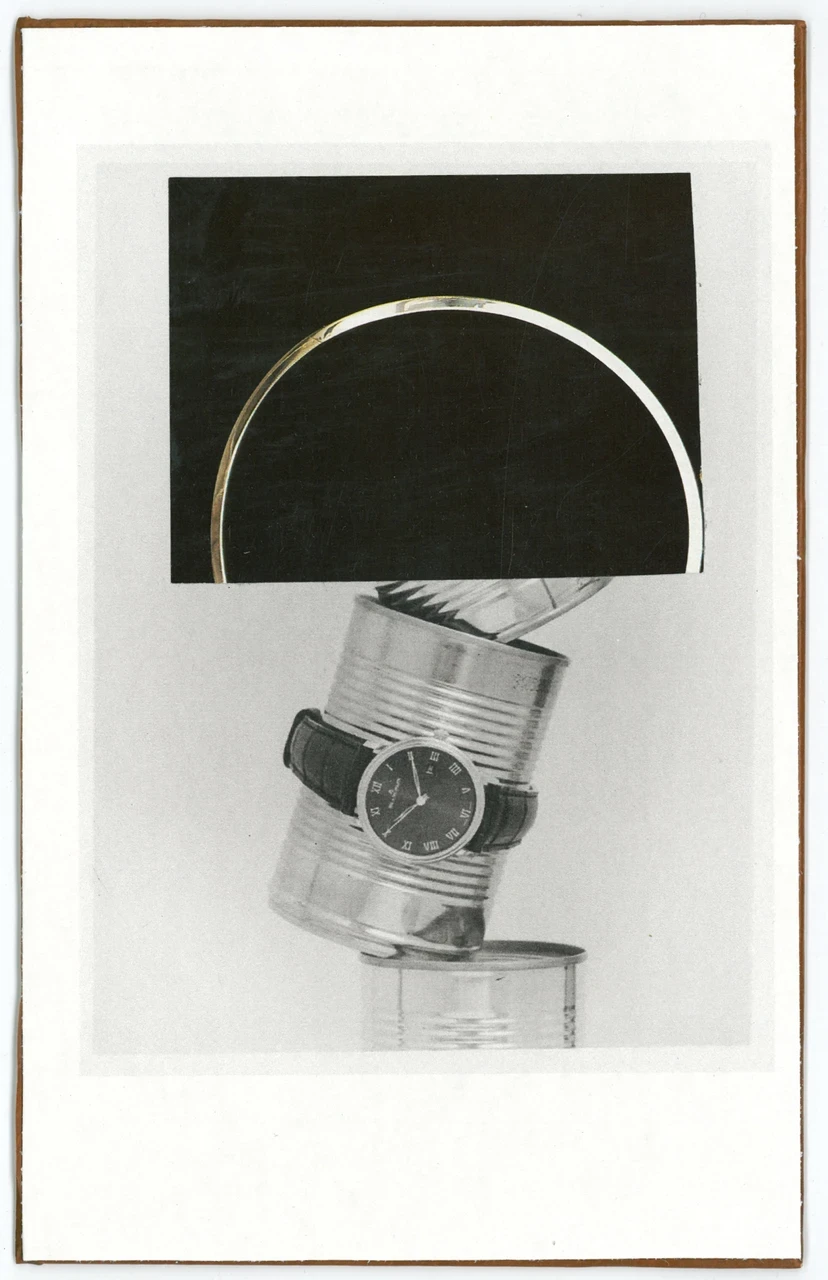
The Anatomy of the Seam: The Birthpoint of Meanings
The key element of conceptual collage is the seam — the boundary where one reality is violently interrupted and transitions into another. Cutting an image (vertically or horizontally) is an act of analytical dissection of the familiar world. We destroy the integrity of the image to liberate it from the dictatorship of its original context.
When two alien fragments meet on a single plane, cognitive dissonance occurs. Our brain, accustomed to logic and continuity, attempts to "stitch" them together, to find a justification for their proximity. At this point — in the gap between the cut edges — a "third state" is born. This is a visual mutation where, for example, the statics of a candle flame and the dynamics of a human profile form a new hybrid image. The seam here is not concealed; it is put on display as evidence of the handcrafted nature and conceptual assembly of the world.
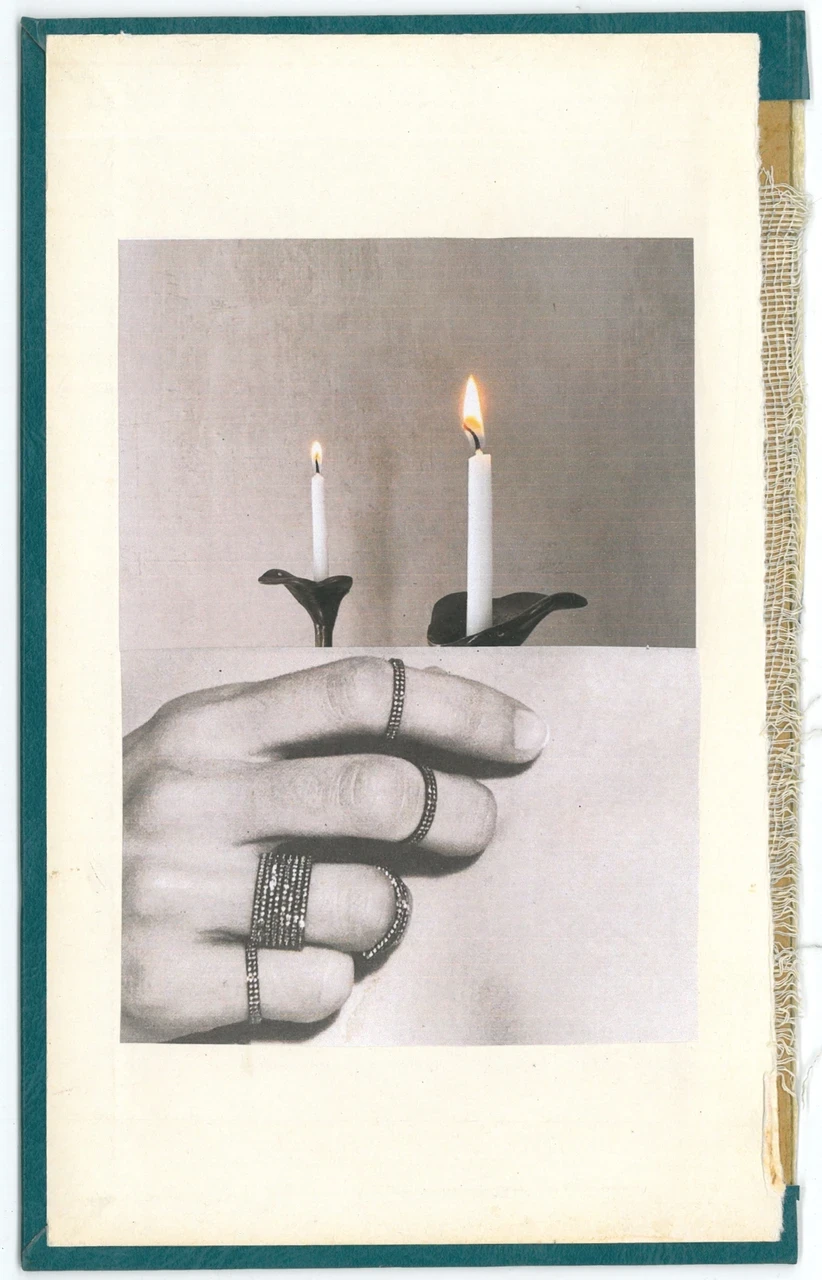
Nostalgia as a Multi-Layered Chronicle
Working with vintage materials injects a temporal dimension into the perception of collage. Nostalgia here is not a yearning for the past, but a method of engaging with time as a multi-layered structure. By utilizing old paper, archival photographs, or found objects, we are not restoring history, but engaging in its "reassembly."
A vintage object carries a specific charge of memory accumulated over decades. When such a fragment enters a modern minimalist space, a layering of eras occurs. Time ceases to be linear — it folds, forming loops and semantic dead ends. We create an "actual past": the object retains its authenticity (scent, texture, faded pigment) but acquires a new function — to serve as a metaphor for loss, distance, or the search for identity.
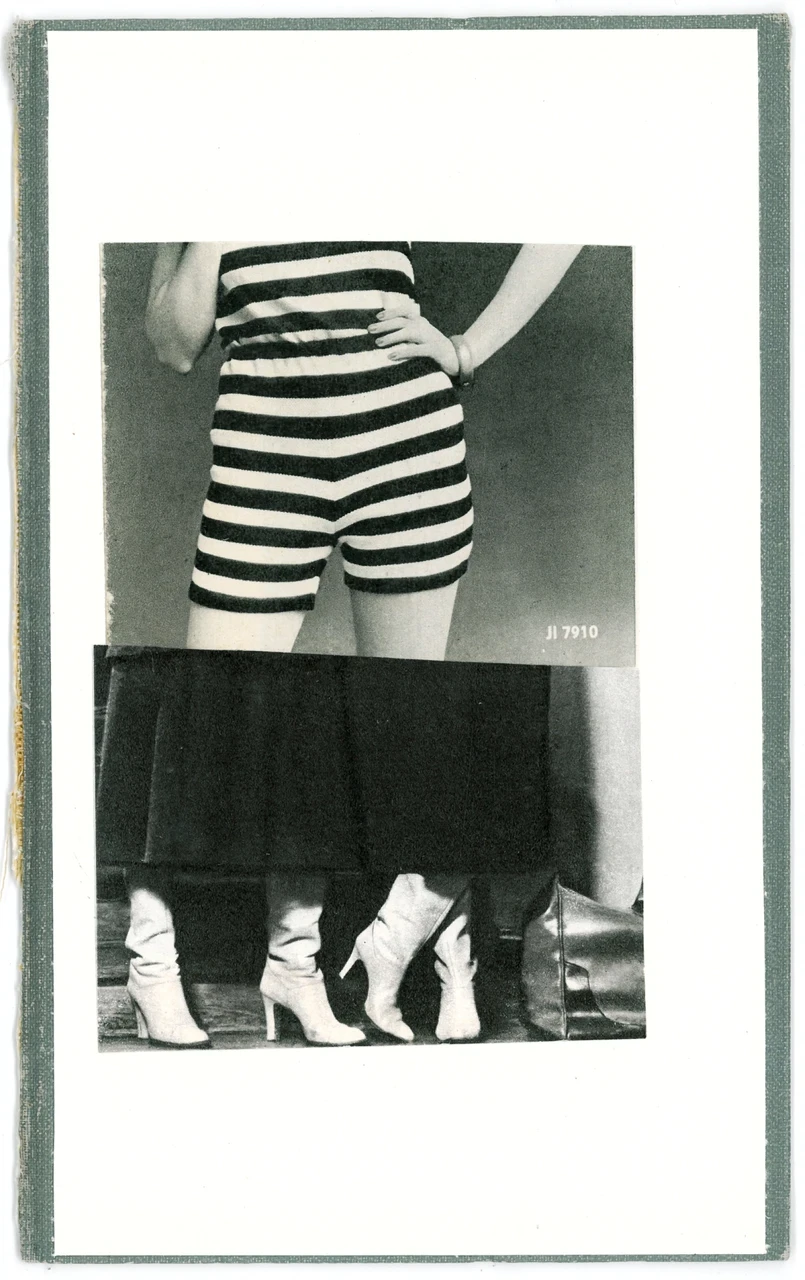
The Associative Network and Symbolic Capital
Ultimately, conceptual collage is the practice of forging new connections. Each element acts as a variable in a complex equation. We take familiar cultural codes and strip them of their habitual surroundings, creating a situation of "defamiliarization" (ostranenie).
A fragment of text deprived of its paragraph, or a face concealed behind another image, becomes a symbol of understatement. This is a play with associative thinking: the viewer catches the echoes of meanings, constructing their own logical chains. The collage transforms into a visual chronicle, where the seam between fragments becomes a meeting point of the private and the universal, of memory and oblivion, of form and idea.