What Are the Best Alternatives to Diamonds?
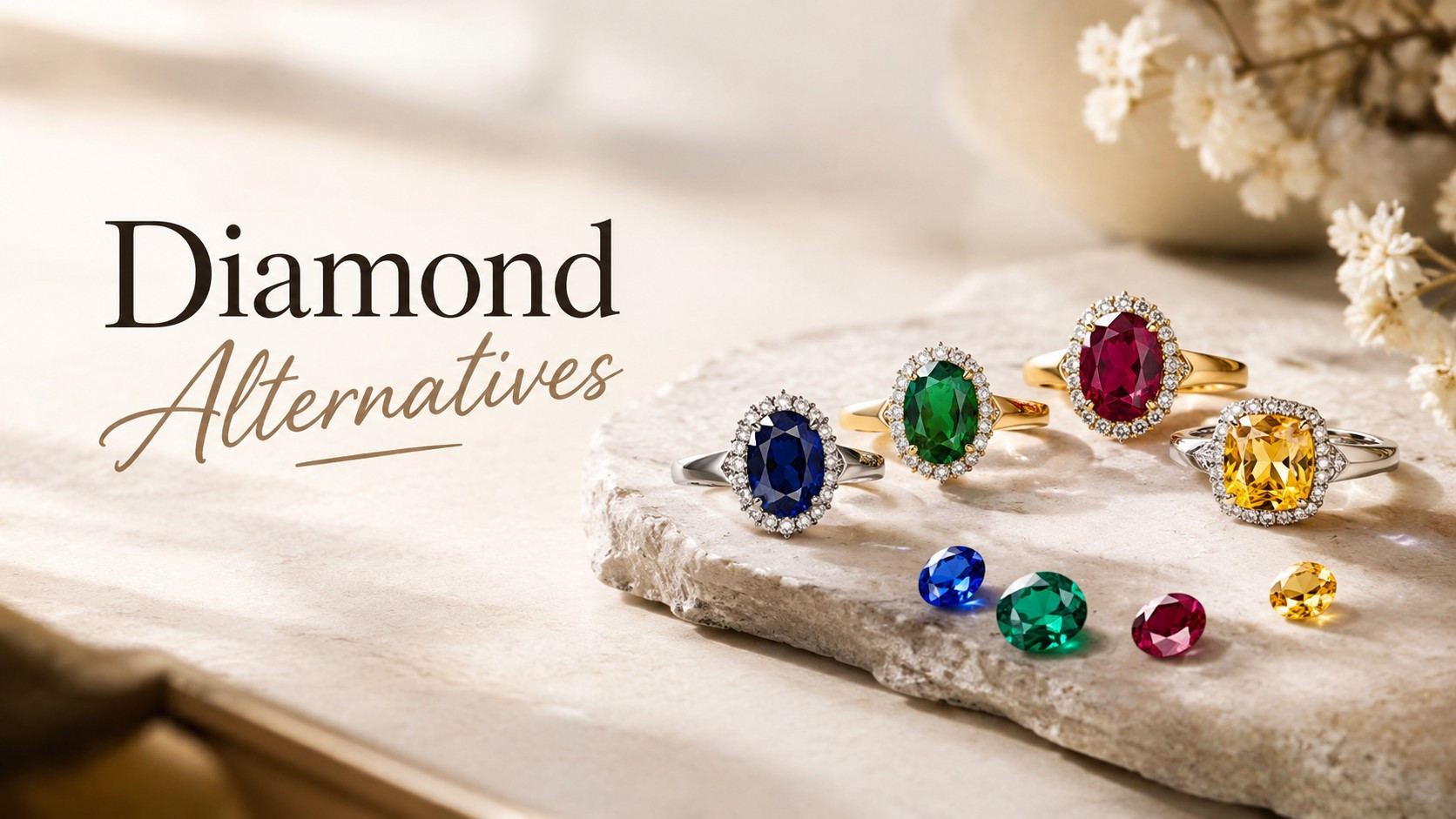
People are finally realizing that spending three months salary on a single clear stone is not the only way to show love or build a beautiful collection. The jewelry market has shifted in a massive way recently and modern shoppers are actively hunting for the best alternatives to diamonds. Whether you are shopping for a lifelong engagement ring or just upgrading your daily wear pieces, you now have access to stones that look identical to or even outshine traditional mined diamonds for a fraction of the cost.
Let’s talk about the big three clear stones that are taking over the market right now, plus a few colorful options that add real personality to any outfit.
Moissanite: The King of Sparkle
If your looking for the absolute most brilliant stone available today, moissanite is the clear winner. Alot of people assume moissanite is just a cheap fake diamond but that is completely untrue. It is actually a completely seperate gemstone with its own unique history and physical properties.
Moissanite was first discovered inside a meteor crater in 1893 by a scientist named Henri Moissan. He initially thought he had found diamonds, but later testing revealed it was actually silicon carbide. Because natural moissanite from space is incredibly rare, almost all of the moissanite you see on the market today is grown in a lab. This means no destructive mining practices are involved, making it a very eco friendly option for conscious buyers.
When it comes to durability, moissanite scores a 9.25 on the Mohs hardness scale. Diamonds score a 10. This makes moissanite the second hardest gemstone used in jewelry today, meaning it will easily survive decades of daily wear without scratching or chipping. You do not have to baby this stone at all, whether you are typing at a keyboard all day or working with your hands.
But the real reason people love moissanite is the fire. Fire refers to the way a stone splits light into rainbow colors. Moissanite actually has a higher refractive index than a diamond, meaning it reflects more light and creates a much more intense rainbow sparkle. Some people absolutely love this disco ball effect, while others prefer the more subtle white sparkle of a traditional diamond.
Price is where moissanite really shines. You can easily find a flawless one carat moissanite for roughly 300 to 800 dollars. That same budget would barely buy you a low quality, heavily included natural diamond that might look cloudy to the naked eye.
Lab Grown Diamonds: The Exact Same Thing For Less
Maybe you really want a diamond but you just hate the inflated price tag and the ethical issues attached to mining. Lab grown diamonds are your best bet here. I need to make this very clear because their is still alot of confusion about this topic. Lab grown diamonds are not cubic zirconia. They are not fake. They are 100 percent real diamonds with the exact same carbon structure, optical properties, and physical hardness as a diamond pulled out of the earth. Even a trained jeweler with a magnifying loupe cannot tell them apart without highly specialized laboratory equipment.
Scientists create these stones using two main methods called High Pressure High Temperature and Chemical Vapor Deposition. Basically they mimic the exact conditions that happen deep inside the earth crust, just sped up in a controlled, clean environment. Because they are real diamonds, they score a perfect 10 on the Mohs scale. They give you that classic white sparkle that traditional diamond jewelry is famous for. The only difference is the price and the origin story.
You can expect to pay about 70 to 90 percent less for a lab grown diamond compared to a mined one of the same size and quality. A stunning one carat lab diamond might cost you anywhere from 800 to 3000 dollars. It is the smartest choice if you want the prestige and exact look of a diamond without emptying your savings account. Plus, they are graded on the exact same scale for cut, color, clarity, and carat weight, so you know exactly what kind of quality you are buying.
White Sapphire: The Natural Classic
If you strongly prefer a stone that was created by nature but you still want a clear, white look, you should definately look into white sapphires. Sapphires come in every color of the rainbow and the clear versions have been used as diamond substitutes for centuries.
White sapphires rank at a 9 on the Mohs hardness scale. This makes them very durable and perfectly suitable for rings that you wear every single day. However they do behave very differently than diamonds and moissanite when they interact with light.
A white sapphire has a lower refractive index. It does not flash rainbow colors or give off that intense icy white sparkle. Instead, it has more of a silvery, glowing appearance. It is a very elegant, understated look that appeals to people who want a beautiful ring without blinding everyone in the room.
The main drawback to white sapphire is how it handles dirt. Diamonds and moissanite will still sparkle even when they get a little dirty from hand soap, lotion, or daily natural skin oils. White sapphires tend to get cloudy very quickly when they have any buildup on the bottom of the stone. You will need to clean a white sapphire with a soft toothbrush and mild dish soap every week or two if you want to keep it looking brilliant.
Price wise, white sapphires are generally very affordable and usually cost less than lab grown diamonds, making them an excellent earth mined alternative for budget conscious shoppers.
Colorful Options: Bringing Personality to the Mix
Who says your jewelry even has to be clear? Some of the most famous and expensive rings in the world feature colored center stones. Princess Diana famously chose a massive blue sapphire for her engagement ring, a trend that is still going strong today with modern royalty and celebrities alike.
Moving away from clear stones opens up a massive world of options. Here are some of the most popular choices right now.
Blue Sapphires: They represent wisdom and royalty. Scoring a 9 on the hardness scale, they are incredibly tough and come in shades ranging from light pastel blue to deep midnight blue.
Rubies: Made from the exact same mineral family as sapphires, rubies also score a 9. Their rich red color symbolizes passion and they look absolutely stunning set in yellow or rose gold settings.
Emeralds: These are a bit softer, scoring around 7.5 to 8 on the hardness scale. You have to be a little more careful with emeralds so you dont chip them on hard surfaces, but their deep green color is entirely unique. They are incredibly popular for vintage inspired geometric designs.
Morganite: This peachy pink stone has exploded in popularity over the last five years. It looks beautiful against rose gold settings and gives off a very soft, romantic vibe that looks amazing on all skin tones.
Choosing a colored gemstone is also a fantastic way to coordinate your pieces. For example, matching a peach morganite ring with a beautiful pair of gemstone earrings makes for a cohesive, stylish look that stands out in a sea of plain white stones. Colored stones give you the freedom to express your actual personality instead of just following tradition.
Styling Your Alternative Stones
When you finally pick your perfect stone, the fun really begins with the setting and styling. A big benefit of saving money on your center stone is that you can afford to invest more in the actual metal setting. You can upgrade from 14k gold to 18k gold, or even platinum which is incredibly durable. You also have the budget to add smaller accent stones around the band.
It also frees up your budget for matching accessories. A lot of shoppers end up buying a complete set. If you save thousands of dollars by choosing moissanite or a lab created stone, you can easily afford a matching pendant necklace or a stunning pair of gemstone earrings to complete the look. Coordinating your jewelry elevates your entire wardrobe and makes you look incredibly put together.
The Problem With Cheaper Substitutes
You might be wondering why I have not mentioned cubic zirconia or white topaz yet. While these stones are extremely cheap and look decent on day one, they are generally terrible choices for long term wear.
Cubic zirconia and white zircon are very soft compared to the big three. They scratch easily, they cloud up permanently over time, and they just do not hold their value or beauty. If you buy a cubic zirconia ring, you will likely have to replace the stone within a year or two because it will be covered in tiny micro scratches that make it look dull and milky. When your spending money on fine jewelry, you want something that will actually last. It is always better to save up slightly more for moissanite than to waste your money on a temporary stone that you will just have to throw away later.
How to Make Your Final Choice
Picking the right stone really comes down to your personal priorities, your budget, and what kind of look you want on your hand or around your neck.
If you absolutely must have a natural stone pulled from the earth but you are on a strict budget, white sapphire is your answer. Just be prepared to clean it frequently to maintain its silvery glow.
If you want the biggest, most aggressive sparkle possible and you love the idea of rainbow fire, moissanite will blow you away. It is incredibly durable, entirely ethical, and saves you a massive amount of cash that you can put towards a honeymoon or a house down payment.
If you want the exact chemical and optical properties of a diamond, minus the ethical concerns and the insane retail markup, lab grown diamonds are the clear winner. They give you that classic status and subtle white sparkle that has defined the industry for a century.
And if you want to stand out from the crowd entirely, exploring the world of rubies, emeralds, and sapphires will give you a piece of jewelry that feels completely custom and unique to your personality.