Decoding the Saudi Arabia E-Commerce Apparel Market Boom
The digital retail landscape across the Kingdom of Saudi Arabia is experiencing an unprecedented transformation. Driven by rapid digitalization, massive mobile connectivity, and evolving consumer preferences, the nation’s online fashion sector has established itself as one of the most lucrative and dynamic markets in the Middle East. Understanding this explosive growth requires a closer look at the key drivers, regional dynamics, market challenges, and future outlook shaping the industry.
Download Free Sample Report: https://www.renub.com/request-sample-page.php?gturl=saudi-arabia-e-commerce-apparel-market-p.php
Market Size, Forecast, and Growth Trajectory
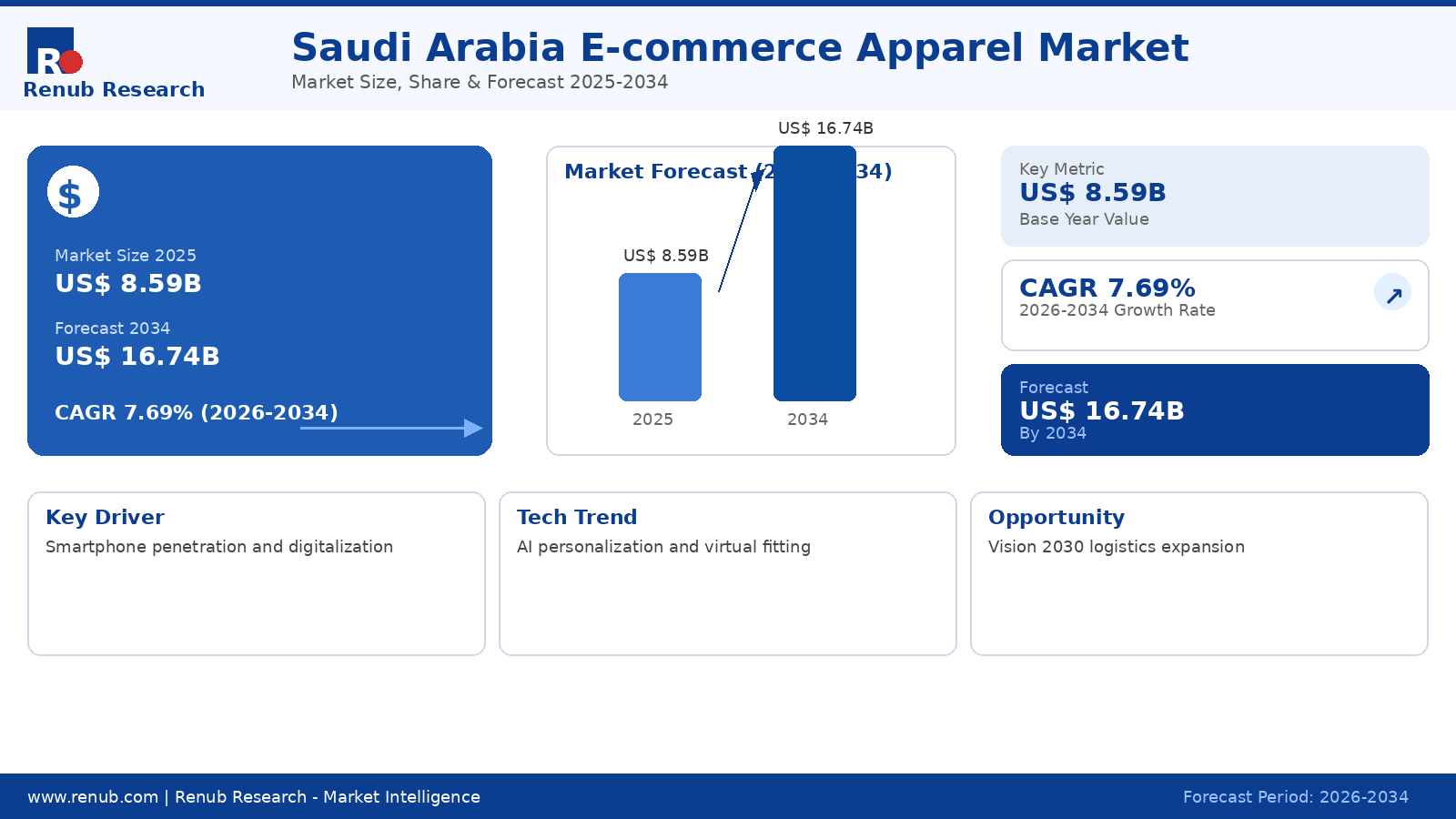
According to Renub Research market insights, the Saudi Arabia e-commerce apparel market is projected to expand significantly over the coming years:
- 2025 Market Value: US$ 8.59 billion
- 2034 Projection: US$ 16.74 billion
- Compound Annual Growth Rate (CAGR): 7,69% during the 2026–2034 forecast period
This steady upward trajectory is propelled by a young, tech-savvy demographic, expansive e-commerce platforms, improved supply chain networks, and the widespread adoption of secure digital payment solutions. As digital shopping becomes deeply embedded in everyday lifestyles, online retail channels are capturing an increasingly large share of total apparel sales across the Kingdom.
E-Commerce Apparel and Consumer Demand Dynamics
E-commerce apparel encompasses the online sale of clothing, footwear, and fashion accessories via brand-owned websites, dedicated mobile apps, and multi-vendor digital marketplaces. The product mix is diverse, spanning casual wear, formal attire, traditional garments, sportswear, luxury fashion, and fast-fashion collections. To capture consumer loyalty, online retailers continuously enhance the shopping journey through convenient payment gateways, doorstep delivery, hassle-free returns, personalized recommendations, virtual fitting tools, and detailed sizing charts.
The Rise of Digital Lifestyles
Saudi Arabia ranks among the world’s most digitally connected nations. At the beginning of 2025, the country recorded 48.1 million active cellular mobile connections (representing roughly 140% of the total population), along with 33.9 million internet users (a 99,0% penetration rate) and 34.1 million social media user identities (99.6% penetration). This hyper-connected environment ensures that fashion trends spread rapidly, with social media marketing, influencer collaborations, and algorithmically targeted digital campaigns directly influencing consumer purchasing decisions.
Key Product Launches and Brand Expansion
Major international and regional fashion brands have heavily invested in localized digital collections and exclusive online launches tailored specifically for Saudi consumers. Recent highlights include:
- adidas × Kaf (2025): Debuted the SS25 Global Sportswear Collection, fusing traditional Saudi aesthetics with modern sportswear during the brand’s first regional runway show in Riyadh.
- Namshi (2025): Launched multiple exclusive lines, including the House of Namshi collection and expanded modest fashion offerings designed for GCC shoppers.
- Zaecy (2025): Introduced its inclusive athleisure line onto the Namshi platform, broadening access to size-activewear across the Kingdom.
- Global Footprints: Leading labels such as H& M, Mango, American Eagle, Tommy Hilfiger, Calvin Klein, and PUMA have rolled out targeted digital collections for their online channels in Saudi Arabia.
Catalysts Driving Market Expansion
Accelerated Smartphone Penetration and Ecosystem Digitization
World-leading mobile connectivity has made smartphones the primary transactional medium for Saudi consumers. The rapid transition away from physical storefronts is further supported by the national embrace of digital wallets, cashless financial infrastructure, and Buy Now Pay Later (BNPL) services, making online fashion transactions seamless and friction-free.
Demographic Dividends and Fashion Modernization
Saudi Arabia’s young population has a voracious appetite for global fashion trends, luxury labels, and streetwear. E-commerce platforms eliminate geographic boundaries, allowing consumers to source international styles instantly. Strategic initiatives like the Saudi Fashiontex Expo in Jeddah further cement the Kingdom’s ambition to become a major Middle East and Africa (MEA) hub for textiles, fashion trade, and retail technology.
Vision 2030 Infrastructure Mandates
Under Vision 2030, government investments in logistics frameworks, regional fulfillment centers, automated sorting facilities, and express delivery hubs have revolutionized the supply chain. Supported by the National Industrial Development and Logistics Program (NIDLP), delivery lead times have drastically decreased, boosting consumer trust and fulfillment reliability.
Operational Challenges and Market Restraints
Despite the strong growth outlook, online apparel retailers face notable hurdles:
- Reverse Logistics and Fit Discrepancies: Because shoppers cannot physically try on garments prior to purchase, sizing and fit issues lead to high product return rates. Managing reverse logistics—including return pickups, quality checks, and restocking—creates significant margin pressure and inventory management challenges.
- Market Saturation and Margin Compression: The digital fashion space is fiercely competitive, featuring rivalries between domestic marketplaces, global giants, and D2C brands. Omnipresent discounting cycles, price-comparison tools, and rising customer acquisition costs (CAC) through social channels frequently squeeze corporate profit margins.
Regional Spotlight: Key Cities Fueling Online Apparel
- Riyadh: As the capital and largest regional market, Riyadh boasts high disposable incomes, dense digital infrastructure, and a vibrant influencer ecosystem that drives high average transaction values for luxury, fast fashion, and modest wear.
- Jeddah: Serving as a primary commercial hub and international gateway, Jeddah features a multicultural population with diverse fashion demands, augmented by seasonal tourism and major shopping festivals.
- Dammam: Driven by a growing industrial workforce and young families, Dammam displays steady growth in casual wear, workwear, and family apparel purchases supported by improving courier services.
- Khobar: Known for its affluent population and strong expatriate community, Khobar registers high demand for premium fashion, luxury brands, and imported designer clothing through cross-border and domestic e-commerce platforms.
Broader Digital Commerce Ecosystem
The expansion of e-commerce in Saudi Arabia extends beyond fashion. Several parallel retail sectors are experiencing rapid digitalization:
- Cosmetics E-commerce: Skincare, makeup, fragrances, and halal-certified beauty products are surging online, heavily influenced by beauty creators and virtual consultations.
- Groceries E-commerce: Urban households increasingly rely on online platforms, dark stores, and quick-commerce apps for scheduled deliveries, fresh produce, and routine household replenishment.
- Home Appliances E-commerce: Consumers frequently purchase refrigerators, washing machines, and smart home devices online, drawn by easy price comparisons, financing options, and digital warranty registrations.
Frequently Asked Questions
1. What is the projected market size of the Saudi Arabia e-commerce apparel market by 2034?
The market is projected to reach US$ 16.74 billion by 2034, growing from US$ 8.59 billion in 2025 at a CAGR of 7,69%.
2. What are the primary drivers of online apparel growth in Saudi Arabia?
Key drivers include near-universal internet and smartphone penetration, a young and fashion-conscious demographic, continuous logistics infrastructure upgrades under Vision 2030, and the rapid adoption of digital payment solutions.
3. Which region is the largest market for online apparel sales within the Kingdom?
Riyadh remains the largest regional market due to its large population, high disposable income levels, and concentration of corporate headquarters and influencer networks.
4. How are brands addressing the challenge of high product returns in online fashion?
Retailers are increasingly utilizing virtual try-on tools, detailed digital sizing charts, and advanced customer reviews to help shoppers make more accurate purchasing decisions and reduce fit-related returns.
5. What role does Saudi Arabia’s Vision 2030 play in the e-commerce sector?
Vision 2030 drives systemic investments in national digital infrastructure, streamlined customs regulations, and logistics networks (such as the NIDLP), which collectively lower operational entry barriers and improve delivery speeds.
6. Which demographic segment dominates online apparel purchases in Saudi Arabia?
A young, tech-savvy, and digitally native population—particularly working professionals and younger consumers—drives the vast majority of mobile commerce and online fashion transactions.
7. What payment methods are most popular for online apparel shopping in Saudi Arabia?
Consumers heavily utilize digital wallets, cashless financial infrastructure, credit/debit cards, and Buy Now Pay Later (BNPL) services to complete secure online transactions.
