Global Seafood Market Trends: Growth, Forecast, and Industry Insights
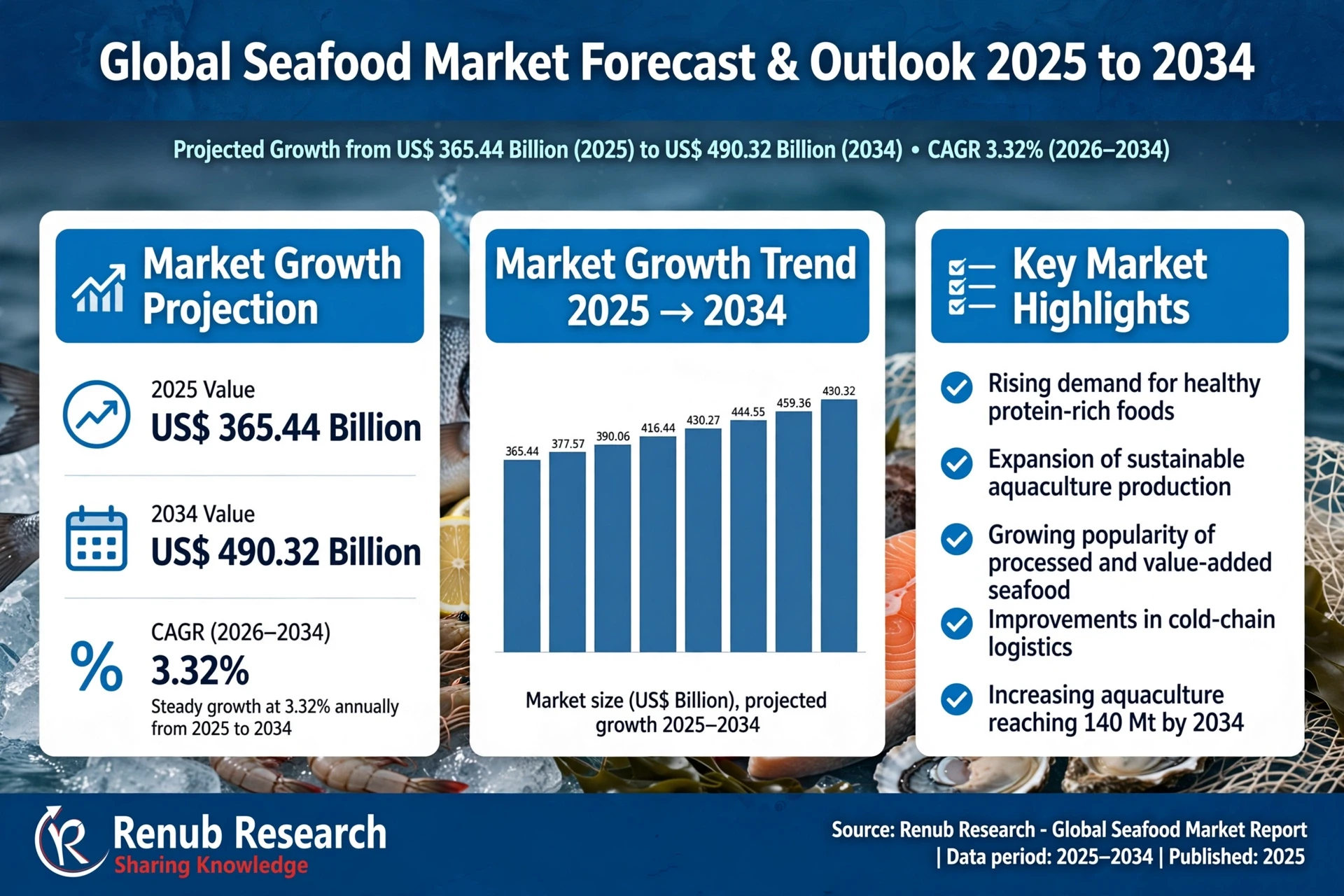
The global seafood market is experiencing steady and resilient expansion, driven by a global shift toward healthier dietary patterns and rising protein consumption. Valued at US$ 365.44 billion in 2025, the market is projected to reach US$ 490.32 billion by 2034, registering a compound annual growth rate (CAGR) of 3.32% throughout the 2026–2034 forecast period.
What is the Global Seafood Market and Why is it Growing?
Seafood encompasses a wide variety of edible aquatic organisms harvested from marine and freshwater environments, including finfish (salmon, tuna, cod), shellfish (shrimp, crab, lobster), mollusks (oysters, mussels), and edible marine plants. Recognized for providing high-quality protein, omega-3 fatty acids, and essential minerals, seafood supports cardiovascular health, brain function, and overall well-being.
The market’s continuous growth is propelled by several key factors:
- Nutritional Awareness: Consumers increasingly replace red and processed meats with lean, nutrient-dense protein alternatives.
- Aquaculture Expansion: With wild fish stocks facing environmental pressures, fish farming has bridged the supply-demand gap, becoming the fastest-growing source of seafood production.
- Convenience and Processing: The rise of ready-to-cook, ready-to-eat, and value-added packaged seafood products aligns seamlessly with fast-paced, urban lifestyles.
- Logistical Advancements: Improvements in cold-chain logistics, refrigeration technology, and global e-commerce distribution ensure product freshness across both coastal and inland markets.
Request Sample Report: https://www.renub.com/request-sample-page.php?gturl=global-seafood-market-p.php
World Aquaculture vs. Capture Fisheries Production
Global seafood production has undergone a structural transformation over the past three decades:
- Aquaculture Dominance: Aquaculture output is projected to reach approximately 140 million tonnes (Mt) by 2034. Since the early 2000s, fish farming has expanded rapidly, matching and eventually exceeding the volume of capture fisheries by the early 2020s.
- Stable Capture Fisheries: Total capture fisheries production has remained relatively stable at around 90–95 Mt annually, with capture for human consumption holding steady near 80–85 Mt. Environmental limits, strict fishing quotas, and sustainability regulations mean wild capture will remain constrained, cementing aquaculture as the primary driver of future seafood supply security.
Key Growth Catalysts
Rising Consumer Demand for Healthy, Protein-Rich Foods
Health-conscious demographics and preventive healthcare trends are fueling the demand for seafood. According to the 2024 International Food Information Council (IFIC) Food & Health Survey, consumers actively prioritize nutrient-rich foods and increased protein intake. Scientific data further indicates that seafood typically consists of 20–30% high-quality protein, making it one of the leanest animal protein sources available. Furthermore, the World Wildlife Fund (WWF) estimates that over 3 billion people globally rely on seafood for dietary protein security.
Expansion of Sustainable Aquaculture Production
Technological innovations in fish breeding, automated farming systems, water quality monitoring, and disease management have dramatically improved aquaculture efficiency and year-round availability. Private companies and governments continue to invest heavily in sustainable practices to protect natural marine ecosystems while meeting rising global demand. For instance, commercial promotions—such as Red Lobster’s September 2025 "Ultimate SpendLESS Shrimp" campaign—demonstrate how scalable shrimp production helps stimulate value-oriented seafood consumption.
Popularity of Processed and Value-Added Seafood Products
Urbanization and busier schedules have accelerated the demand for convenient, shelf-stable, and frozen seafood offerings. Innovations in packaging, single-serve portions, and freezing techniques have made seafood much easier to prepare. A prime example is Bumble Bee Seafoods, which launched Bumble Bee Snackers™ in August 2025, introducing single-serve flavored tuna snacks tailored for younger, on-the-go consumers.
Market Challenges and Restraints
Overfishing and Environmental Sustainability Concerns
Excessive harvesting of wild fish stocks, paired with climate change, marine pollution, and habitat destruction, threatens ocean ecosystems. While strict government conservation quotas and sustainability regulations are necessary to preserve biodiversity, they often increase operational costs for fishing companies. Additionally, rising ocean temperatures and acidification continue to impact fish migration and harvest volumes.
Supply Chain Complexity and Price Volatility
Because seafood is highly perishable, maintaining an uninterrupted cold chain from harvest to retail is critical. Disruptions caused by transportation delays, labor shortages, or equipment failures can lead to significant product waste. Furthermore, fluctuating fuel costs, seasonal catch volumes, and shifting trade policies create continuous price volatility for producers and consumers alike.
Form, Type, and Application Insights
Form Analysis
- Fresh Seafood: Valued for superior taste and texture; highly popular in coastal markets and premium retail, though constrained by high perishability.
- Ambient Seafood: Includes shelf-stable items like dried, smoked, and salted fish, serving as a dependable and affordable protein source in regions with limited cold-chain infrastructure.
- Canned and Processed: One of the fastest-growing categories, offering extended shelf life, convenience, and consistent quality via modern supermarkets and e-commerce platforms.
Type Insights
- Crustaceans: Dominated by shrimp and prawns due to their affordability, high versatility, and massive demand across retail and hospitality sectors.
- Molluscs: Encompasses oysters, mussels, squid, and scallops, which are heavily utilized in gourmet cuisine and traditional regional dishes.
Application Insights
- Retail: Supermarkets, hypermarkets, and e-commerce platforms serve as the primary distribution channels, offering diverse fresh, frozen, and packaged options.
- Foodservice: Restaurants, hotels, QSRs, and institutional catering drive substantial volume, emphasizing consistent quality, portion control, and responsible sourcing.
Regional Market Highlights
- United States: A mature market driven by strong nutritional awareness, with heavy reliance on imported seafood. Innovation continues via alternative proteins, such as BlueNalu’s May 2025 initiative to commercialize cell-cultivated bluefin tuna in California.
- United Kingdom: Characterized by a strong fishing heritage and rising demand for chilled and frozen convenience seafood, alongside a high consumer preference for certified sustainable sourcing.
- China: The world’s largest seafood producer, consumer, and exporter. Rising disposable incomes and robust e-commerce logistics have fueled strong demand for both domestic aquaculture and imported luxury seafood like Norwegian salmon.
- Brazil: An emerging Latin American powerhouse anchored by rapid expansion in freshwater tilapia farming and growing urban consumption of healthy proteins.
- United Arab Emirates (UAE): Features one of the highest per-capita seafood consumption rates globally, supported by a thriving tourism sector and strong government commitments to food security and sustainability, as highlighted by Seafood Souq’s October 2025 partnership with the UAE Ministry of Climate Change and Environment (MOCCAE).
Frequently Asked Questions (FAQs)
1. What is the projected market size for the global seafood market by 2034? The global seafood market is projected to reach US$ 490.32 billion by 2034, growing from US$ 365.44 billion in 2025 at a CAGR of 3,32%.
2. What are the primary drivers of growth in the seafood industry? Key drivers include rising health awareness, increasing consumer preference for lean protein, rapid aquaculture expansion, and the growing popularity of convenient, processed seafood products.
3. How has aquaculture impacted global seafood production? Aquaculture has become the fastest-growing source of seafood production worldwide, successfully matching and surpassing capture fisheries volume to ensure global food security amid wild stock constraints.
4. Why are processed and value-added seafood products gaining popularity? Busy modern lifestyles, urbanization, and the need for quick meal preparation have increased demand for convenient, ready-to-cook, and single-serve packaged seafood items.
5. What are the main environmental challenges facing the seafood market? The industry faces ongoing challenges from overfishing, habitat degradation, climate change, ocean acidification, and strict regulatory quotas designed to protect marine biodiversity.
6. How do cold-chain logistics influence the seafood market? Advanced cold-chain infrastructure, temperature-controlled transport, and modern freezing technologies are essential for preserving product freshness, minimizing waste, and expanding distribution to inland markets.
7. Which regions are leading the global seafood consumption and production landscape? Asia-Pacific (led by China) is the largest production and consumption hub, while North America and Europe represent mature, high-value consumer markets with strong demand for sustainable seafood.
