How Does the US Liquid Biopsy Market Reach $4.86 Billion by 2034?
Introduction to the United States Liquid Biopsy Market
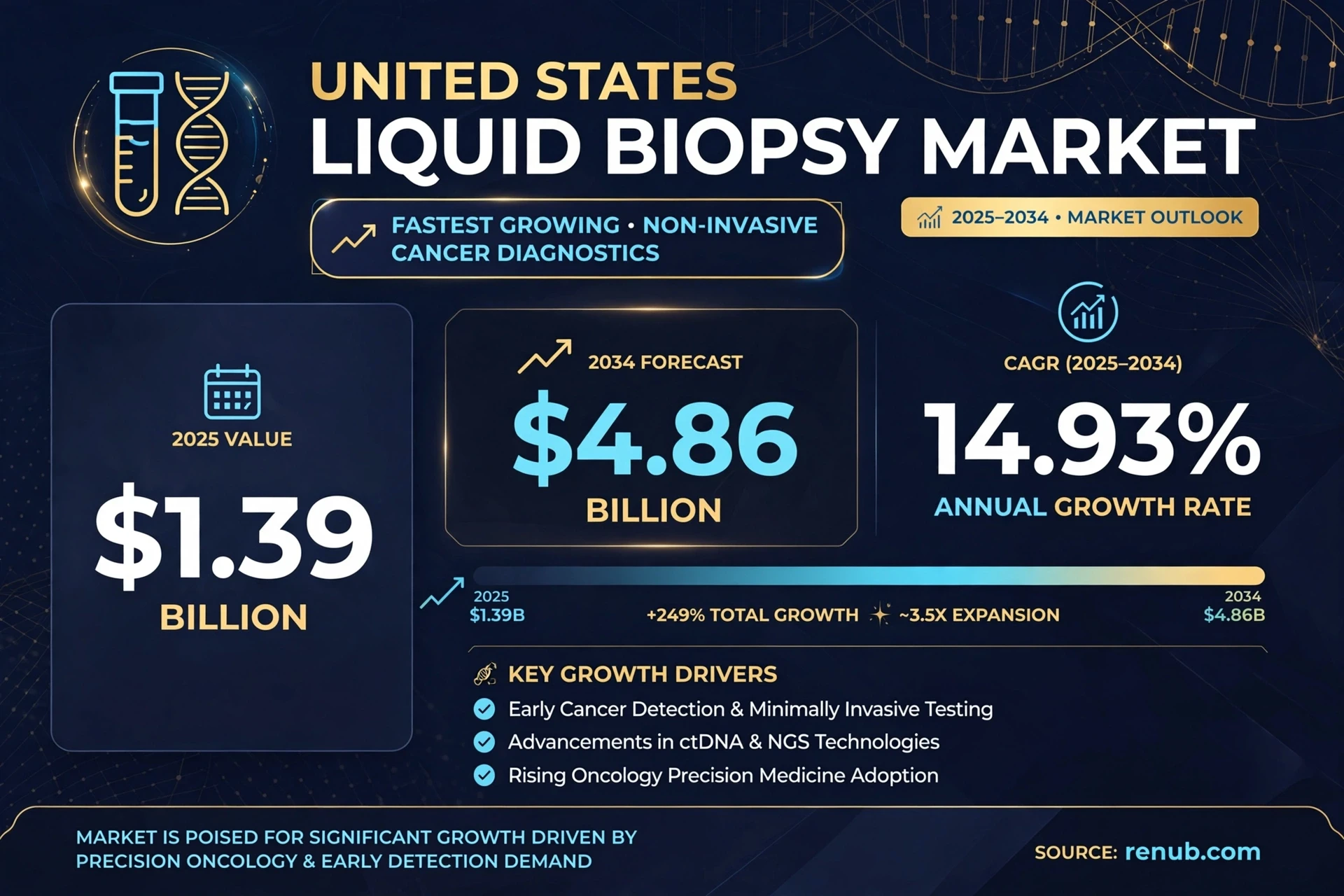
The landscape of modern oncology is undergoing a revolutionary transformation, driven heavily by innovations in non-invasive diagnostics. At the forefront of this medical evolution is the United States liquid biopsy market, which stands as a beacon of hope for clinicians, researchers, and patients alike. According to recent market intelligence provided by Renub Research, the United States liquid biopsy market is projected to expand significantly from US$ 1.39 billion in 2025 to US$ 4.86 billion by 2034. This robust expansion represents an impressive compound annual growth rate (CAGR) of 14.93% during the forecast period from 2026 to 2034.
This extraordinary financial and clinical momentum is not accidental. The market is experiencing unprecedented demand due to a combination of rising cancer incidences, an aging American population, and a decisive shift toward precision medicine. Traditional tissue biopsies, while historically considered the gold standard for cancer diagnosis, often involve surgical procedures, patient discomfort, long recovery times, and inherent procedural risks. In contrast, liquid biopsy offers a revolutionary alternative. By analyzing blood and other biological fluids, this advanced diagnostic technology allows healthcare providers to detect cancer markers rapidly, safely, and accurately. As healthcare infrastructure continues to modernize, liquid biopsy is cementing its status as an indispensable pillar of contemporary cancer care across the United States.
What is Liquid Biopsy and Its Growing Popularity in Healthcare?
Defining Liquid Biopsy and Its Core Molecular Mechanisms
Liquid biopsy is an advanced molecular diagnostic technique designed to detect and analyze cancer-related biomarkers from accessible biological samples, primarily blood, urine, and other body fluids. Instead of requiring a surgical or needle-based tissue extraction, liquid biopsy isolates and analyzes circulating tumor DNA (ctDNA), circulating tumor cells (CTCs), cell-free DNA (cfDNA), exosomes, and specialized extracellular vesicles.
These microscopic biomarkers shed light on the genetic makeup, presence, and progression of a tumor. Because tumors are notoriously heterogeneous and constantly evolving, liquid biopsy provides a real-time molecular snapshot of the disease. It is utilized across a broad spectrum of clinical applications, including early cancer detection, companion diagnostics, treatment selection, therapeutic response monitoring, minimal residual disease (MRD) tracking, recurrence surveillance, and the identification of drug-resistance mutations.
The Surge in Popularity Across United States Clinical Settings
In the United States, liquid biopsy has captured the attention of leading hospitals, specialized cancer centers, commercial diagnostic laboratories, and pharmaceutical giants. This soaring popularity stems from the urgent need to overcome the limitations of traditional diagnostics. Patients benefit from significantly reduced physical discomfort, lower procedural risks, and faster turnaround times for test results. Furthermore, because the procedure is non-invasive, it can be repeated safely multiple times throughout a patient’s treatment lifecycle.
This longitudinal tracking empowers oncologists to modify therapeutic regimens dynamically as tumors mutate or develop resistance to specific drugs. The integration of next-generation sequencing (NGS), artificial intelligence-assisted genomic analysis, and personalized medicine frameworks has further elevated diagnostic accuracy. As medical providers increasingly prioritize patient-centric, less invasive interventions, liquid biopsy has rapidly transitioned from an experimental research tool into an essential routine practice in American oncology.
Cancer Statistics: A Closer Look at the US and Global Burden
United States Cancer Statistics at a Glance
To fully understand the commercial and clinical trajectory of the liquid biopsy market, one must examine the staggering burden of cancer both nationally and globally. In the United States alone, an estimated 2,041,910 new cancer cases are projected to be diagnosed in 2025, with approximately 618,120 deaths resulting from the disease.
The distribution of these diagnoses highlights the immense scope of the healthcare challenge:
- Most Common Cancers: Leading diagnoses include breast, prostate, lung and bronchus, colorectal, melanoma, bladder, kidney and renal pelvis, non-Hodgkin lymphoma, uterine corpus, pancreatic, leukemia, thyroid, and liver/intrahepatic bile duct cancers.
- Sex-Based Distribution: Among men, prostate, lung, and colorectal cancers account for an alarming 48% of all newly diagnosed cases. Among women, breast, lung, and colorectal cancers represent 51% of all new diagnoses.
- Incidence and Mortality Rates: Based on recent multi-year data, the overall cancer incidence rate sits at 445.8 new cases per 100,000 people annually, while the mortality rate is recorded at 145.4 deaths per 100,000 people per year. Mortality remains noticeably higher among men (171.5 per 100,000) compared to women (126.3 per 100,000).
- Racial and Ethnic Disparities: The highest cancer mortality rate is observed among non-Hispanic Black men (203.6 per 100,000), whereas the lowest occurs among non-Hispanic Asian/Pacific Islander women (83.1 per 100,000).
- Growing Survivor Population: As of January 2022, the U.S. boasted an estimated 18.1 million cancer survivors, a figure projected to climb to roughly 26 million by 2040.
- Lifetime Risk and Pediatric Burden: Approximately 38,9% of Americans will receive a cancer diagnosis in their lifetime. Meanwhile, pediatric cancer accounts for an estimated 14,690 new diagnoses among children and adolescents (ages 0-19) in 2025, alongside 1,650 projected deaths.
- Economic Expenditure: National spending on cancer care in the United States reached approximately US$ 208.9 billion in 2020, with expenditures continuing to escalate due to an aging demographic and the adoption of high-cost therapies.
Global Cancer Burden and Future Projections
On a global scale, the statistics are equally sobering. In 2022, nearly 20 million new cancer cases were diagnosed worldwide, accompanied by approximately 9.7 million cancer-related deaths. Driven by rapid population growth, increasing global life expectancy, and shifting lifestyle risk factors, the annual number of new cancer cases is projected to surge to 33 million by 2050.
Concurrently, global cancer deaths are expected to climb to roughly 18.2 million annually by mid-century. While high-income nations typically exhibit higher incidence rates due to advanced screening programs, aging populations, and longer life expectancies, lower-income regions face unique burdens, such as high rates of cervical cancer coupled with limited access to vaccination and early treatment. This mounting global crisis underscores an urgent, universal demand for early diagnosis, precision medicine, and scalable screening programs.
Key Growth Drivers Propelling the Liquid Biopsy Industry
Rising Cancer Incidence and the Quest for Early Detection
The escalating prevalence of cancer across the United States acts as the primary engine driving market expansion. With over 2 million new diagnoses annually, the healthcare system faces immense pressure to identify malignancies at the earliest, most treatable stages. Traditional diagnostic methods often detect cancer after symptoms have progressed, which frequently diminishes survival odds.
Liquid biopsy transforms this paradigm by enabling physicians to identify microscopic amounts of circulating tumor DNA and cellular biomarkers before clinical symptoms manifest. Early detection significantly improves treatment planning, boosts survival rates, and reduces long-term healthcare expenditure. As public awareness campaigns and clinical screening initiatives gain momentum, patient and physician demand for non-invasive diagnostic options continues to skyrocket.
Expansion of Precision Medicine and Next-Generation Sequencing (NGS)
Precision oncology has redefined how clinicians approach cancer treatment, moving away from generalized therapies toward highly customized regimens based on individual genetic profiles. Liquid biopsy serves as a cornerstone for this movement. Modern next-generation sequencing (NGS) platforms can simultaneously scan hundreds of cancer-related genes from a single blood draw, uncovering actionable mutations without requiring risky surgical tissue biopsies.
Pharmaceutical companies increasingly incorporate liquid biopsy into clinical trials and companion diagnostic developments to identify patient sub-populations most likely to benefit from targeted therapies. The proliferation of FDA-approved targeted oncology drugs, paired with advancements in artificial intelligence and bioinformatics, guarantees that liquid biopsy remains deeply embedded in modern clinical workflows.
Technological Innovations and Broadened Clinical Applications
Continuous engineering and biochemical breakthroughs have dramatically enhanced the analytical sensitivity and specificity of liquid biopsy assays. Modern testing platforms can reliably detect ultra-low concentrations of biomarkers, including ctDNA, CTCs, exosomes, and cell-free RNA.
Beyond initial diagnosis, these technological refinements support expanded clinical applications such as post-surgical minimal residual disease (MRD) monitoring, therapeutic response tracking, and the early identification of drug-resistance mutations. As biotechnology firms introduce automated testing workflows and multi-cancer early detection panels, physician confidence in liquid biopsy continues to reach new heights.
Major Challenges Impacting Market Expansion
High Testing Costs and Reimbursement Complexities
Despite its undeniable clinical value, the widespread adoption of liquid biopsy faces notable hurdles, chief among them being high testing costs. Comprehensive genomic profiling assays can range from several hundred to several thousand dollars per test. While insurance reimbursement has improved for specific late-stage FDA-approved indications, many emerging applications—such as early screening or serial monitoring—face inconsistent coverage policies from commercial payers.
Smaller community hospitals and independent laboratories may also struggle with the capital expenditure required to acquire specialized sequencing hardware and maintain sophisticated bioinformatics infrastructure. Limited reimbursement can restrict patient access, particularly within uninsured or underinsured demographics, slowing down universal market penetration.
Sensitivity Limitations and the Need for Standardization
Technical challenges and a lack of universal clinical standardization also present obstacles. Detection sensitivity can vary wildly depending on the tumor type, overall disease stage, and the concentration of shed ctDNA in the bloodstream. Early-stage tumors release minimal amounts of genetic material, increasing the risk of false-negative results.
Furthermore, variations in pre-analytical sample collection, laboratory handling, sequencing protocols, and bioinformatic interpretation can introduce consistency discrepancies across different testing facilities. Establishing harmonized clinical guidelines, regulatory standards, and rigorous assay validation remains crucial for securing absolute physician trust and cementing liquid biopsy as a universally accepted standard of care.
Recent Product Launches and Innovations
The dynamism of the U.S. liquid biopsy market is heavily reflected in a wave of strategic product launches and commercial expansions by leading biotechnology and diagnostics corporations:
- Guardant Health (2024): Expanded the U.S. rollout of Shield™, a breakthrough blood-based liquid biopsy test for colorectal cancer screening in average-risk adults, alongside the commercial introduction of Guardant360 TissueNext™ for integrated genomic profiling.
- Roche (2024): Broadened the availability of the AVENIO Tumor Tissue CGP Kit and enhanced its AVENIO ctDNA Analysis Kits across the United States to optimize comprehensive mutation detection.
- Illumina (2024): Released an updated TruSight™ Oncology 500 ctDNA v2 research solution, engineered to elevate circulating tumor DNA analysis in translational oncology.
- Thermo Fisher Scientific (2024): Introduced the Oncomine™ cfDNA Assay Plus, empowering laboratories with highly sensitive multiplex testing for clinically relevant cancer markers.
- Bio-Rad Laboratories (2024): Scaled up applications for its QX600™ Droplet Digital PCR System, facilitating ultra-sensitive detection of low-frequency ctDNA mutations.
- QIAGEN (2024): Unveiled new QIAcuity Digital PCR liquid biopsy assays designed to optimize plasma sample mutation detection in U.S. clinical labs.
- Exact Sciences (2024): Advanced the commercialization of its CancerSEEK® multi-cancer detection platform to support early cancer screening development.
- Freenome (2025): Expanded clinical deployment of its multiomics blood-based screening platform following extensive U.S. validation studies.
- GRAIL (2025): Widened U.S. availability of the Galleri® Multi-Cancer Early Detection (MCED) Test, designed to screen for signals from multiple cancer types prior to symptom onset.
Segment Analysis Across Key Applications and Regions
Key Market Segments
The liquid biopsy ecosystem is highly diversified, categorized across multiple operational segments:
- Cancer Types: Spans lung cancer, breast cancer, colorectal cancer, prostate cancer, liver cancer, and others. Lung cancer currently commands a significant share due to high mortality rates and frequent actionable mutations (such as EGFR, ALK, ROS1, and KRAS), while prostate cancer adoption grows steadily for metastatic surveillance.
- Products and Components: Includes kits and reagents, platforms and instruments, and specialized diagnostic services. Consumable kits and reagents experience high recurring demand driven by high-throughput laboratory testing volumes.
- Applications: Divided into early diagnosis, patient monitoring, and recurrence monitoring. Early diagnosis represents an explosive growth frontier, fueled by multi-cancer screening initiatives.
- Biomarkers and Sample Types: Utilizes circulating tumor cells (CTCs), circulating tumor DNA (ctDNA), and extracellular vesicles (EVs), primarily extracted from blood samples, though urine and other biofluids are also explored.
- End-Users: Comprises hospitals, reference laboratories, government bodies, and academic research centers.
Geographic and State-Level Market Dynamics
Market penetration varies across individual U.S. states, shaped by local healthcare infrastructure, population demographics, and research density:
- California: Serves as the premier state market, anchored by a massive population, a globally recognized biotechnology hub, and extensive clinical research in precision medicine and multi-cancer screening.
- Texas: Exhibits rapid market growth driven by expanding metropolitan healthcare infrastructure in Houston, Dallas, and Austin, alongside high annual cancer diagnosis numbers.
- New York: Features advanced medical systems and world-class academic institutions that seamlessly integrate liquid biopsy into routine clinical oncology.
- Florida: Benefits from a large population exceeding 23 million residents and a high proportion of older adults, fueling consistent clinical demand for minimally invasive diagnostic care.
- Other Key States: States like Illinois, Pennsylvania, Ohio, Georgia, New Jersey, Washington, North Carolina, Massachusetts, Virginia, and Michigan contribute significantly to the national commercial landscape through robust academic research and specialized cancer treatment centers.
Frequently Asked Questions (FAQs)
What is the projected market size and growth rate for the U.S. liquid biopsy market?
According to Renub Research data, the United States liquid biopsy market is projected to grow from US$ 1.39 billion in 2025 to US$ 4.86 billion by 2034, registering a compound annual growth rate (CAGR) of 14,93% from 2026 to 2034.
How does liquid biopsy differ from a conventional tissue biopsy?
A conventional tissue biopsy requires surgical or needle-based extraction of physical tumor tissue, which can be invasive, painful, and risky. Liquid biopsy analyzes circulating tumor DNA, cells, and biomarkers extracted from a simple blood draw or body fluid sample, offering a non-invasive, repeatable, and rapid diagnostic alternative.
What are the primary growth drivers for the liquid biopsy market in the United States?
Key growth drivers include the rising incidence of cancer across the country, rapid expansions in precision medicine and next-generation sequencing (NGS), and continuous technological innovations that enhance detection sensitivity for early-stage malignancies.
Which cancer types currently dominate liquid biopsy adoption in clinical practice?
Lung cancer leads the market due to the high prevalence of targetable genetic mutations (such as EGFR and ALK), followed closely by breast, colorectal, and prostate cancers where real-time molecular monitoring is vital for treatment success.
What are the main challenges hindering broader adoption of liquid biopsy tests?
Primary obstacles include high out-of-pocket testing costs, inconsistent insurance reimbursement policies for early screening and experimental uses, technical sensitivity limitations with early-stage tumors, and a lack of universal clinical standardization.
What role does circulating tumor DNA (ctDNA) play in liquid biopsy?
Circulating tumor DNA consists of microscopic DNA fragments shed by tumors into the bloodstream. Analyzing ctDNA allows clinicians to identify genetic mutations, track treatment efficacy, detect minimal residual disease, and monitor for potential cancer recurrence without surgery.
Which states represent the largest geographic markets for liquid biopsy in the U.S.?
California, Texas, New York, and Florida represent the leading state markets, driven by large patient populations, advanced healthcare infrastructure, high concentrations of specialized cancer institutes, and vibrant biotechnology innovation ecosystems.
