India HVAC Market: Trends, Forecasts, and Growth Drivers (2026–2034)
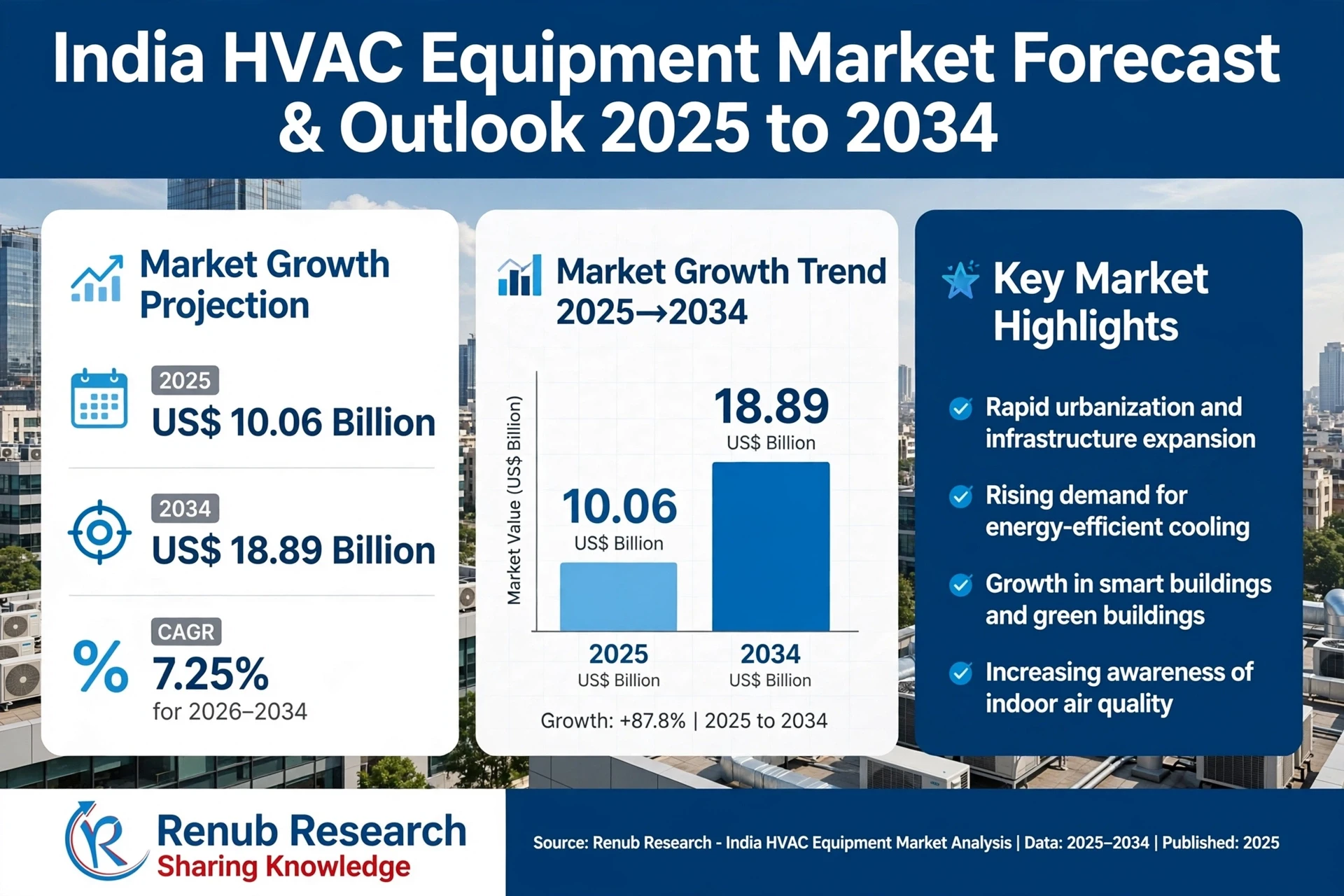
The Indian Heating, Ventilation, and Air Conditioning (HVAC) market is undergoing a transformative phase. As the nation experiences rapid urbanization and shifting climatic patterns, HVAC systems have evolved from luxury amenities into essential infrastructure. According to Renub Research, the India HVAC Systems Market is projected to grow from US$ 10.06 billion in 2025 to US$ 18.89 billion by 2034, registering a steady CAGR of 7,25% during the 2026–2034 forecast period.
This growth is propelled by a confluence of rising disposable incomes, aggressive infrastructure development, and a national mandate for energy efficiency in both residential and commercial sectors.
Understanding HVAC Systems and Their Role in India
HVAC systems—encompassing air conditioners, chillers, furnaces, ventilation units, and air purifiers—are the backbone of modern climate control. In India, where tropical temperatures and high humidity are prevalent, these systems are critical for maintaining human comfort and operational efficiency in high-density environments like data centers, hospitals, and corporate offices.
The adoption of these systems is no longer limited to major metropolitan areas. Tier-2 and Tier-3 cities are witnessing a surge in demand, driven by the expansion of real estate projects and government-backed "Smart City" initiatives. Furthermore, post-pandemic health awareness has thrust indoor air quality (IAQ) into the spotlight, making advanced filtration and ventilation features a top priority for consumers and developers alike.
Download Free Sample Report: https://www.renub.com/request-sample-page.php?gturl=india-hvac-equipment-market-p.php
Market Dynamics: Equip ment Trends and Shifts
The Indian market shows a clear preference for decentralized cooling solutions. Room Air Conditioners (RAC) dominate the landscape, accounting for over 80% of the total refrigerant-based equipment stock.
Shift in System Preference (2017–2038)
- Room ACs: This segment continues to gain dominance, projected to reach 88% market share by 2037–38, fueled by affordability and ease of installation in residential units.
- Chiller Systems: While essential for large-scale infrastructure, their share is expected to decline gradually from 8% to 5% by 2038 as more modular, energy-efficient alternatives like VRF gain traction.
- VRF (Variable Refrigerant Flow): These systems are becoming the preferred choice for modern office complexes due to their flexibility and energy savings, maintaining a stable growth trajectory.
- Packaged DX Systems: This segment is witnessing a steady decline as centralized and smart-connected systems replace older, less efficient technology.
Key Pillars of Market Expansion
1. Urbanization and Infrastructure Development
India’s urban population is anticipated to reach 820 million by 2047. This demographic shift necessitates massive investments in transit infrastructure, including metro rail networks and 120 newly proposed airports. Such large-scale projects create institutional demand for high-capacity, heavy-duty HVAC systems, ensuring long-term market stability.
2. The Green Building Revolution
India is a global leader in sustainable construction, ranking 3rd on the U.S. Green Building Council’s (USGBC) list for LEED-certified projects. Developers are increasingly mandated to meet Environmental, Social, and Governance (ESG) targets, leading to the widespread adoption of inverter-based technology, smart building management systems (BMS), and low-GWP (Global Warming Potential) refrigerants.
3. Heightened Focus on Indoor Air Quality
Air pollution in major metros has shifted the consumer mindset. The integration of HEPA filtration, UV-C disinfection, and "Made-in-India" bio-filtration technology—such as the plant-based wall-mounted purifiers recently supported by the Technology Development Board—reflects a market pivot toward holistic health and wellness solutions.
Challenges to Sustained Growth
Despite the optimistic outlook, the industry faces structural hurdles:
- High Upfront Capital: The cost of advanced, energy-efficient equipment remains a deterrent for SMEs and budget-conscious homeowners.
- Total Cost of Ownership: Frequent power fluctuations in various regions can damage sensitive electronics in modern HVAC units, increasing maintenance costs and reducing equipment lifespan.
- The Skill Gap: There is a critical shortage of certified technicians capable of installing and maintaining sophisticated IoT-enabled VRF and chiller systems, leading to energy inefficiencies and performance issues.
Regional Insights: The Engines of Demand
Certain states act as the primary engines for the HVAC industry due to their economic output and climatic needs:
- Maharashtra: Driven by Mumbai and Pune’s skyscraper culture, IT parks, and data centers, this state remains the largest consumer of centralized and VRF systems.
- Uttar Pradesh: Fast-paced urbanization in Noida and Greater Noida is creating a boom in residential and commercial cooling demand.
- Gujarat: A powerhouse of manufacturing and logistics, the state’s demand is spurred by the need for climate-controlled environments in industrial hubs and ports.
- Andhra Pradesh: Emerging smart city projects in Amaravati and growth in the pharmaceutical sector are boosting demand for specialized HVAC ventilation solutions.
Technological Innovation and Product Launches
Industry leaders are aggressively localizing technology to cater to Indian environmental conditions:
- AI and Connectivity: Companies like Daikin, LG, and Panasonic have introduced AI-powered inverter ACs that optimize cooling based on room occupancy and ambient temperature.
- Energy Efficiency: Blue Star and Voltas have rolled out extensive ranges of 5-star rated smart ACs, emphasizing electricity savings in a cost-sensitive market.
- Commercial Advancements: Carrier and Mitsubishi Electric are focusing on high-efficiency VRF systems with heat recovery, specifically designed to reduce the operational costs of large commercial buildings.
Future Outlook (2026–2034)
The next decade will see a definitive move toward "Smart Cooling." The integration of Internet of Things (IoT) will allow HVAC systems to become self-diagnosing, reducing downtime and energy waste. As the government continues to tighten energy-efficiency norms (BEE ratings), the market will move toward zero-emission cooling, cementing India’s role as a critical hub for global HVAC innovation.
Frequently Asked Questions (FAQs)
1. What is the expected market size of India’s HVAC industry by 2034? According to Renub Research, the market is projected to grow to US$ 18.89 billion by 2034, up from US$ 10.06 billion in 2025.
2. Why are Room ACs the most dominant segment in India? Room ACs are preferred due to their affordability, ease of installation, and suitability for the rapidly expanding Indian residential housing sector.
3. What role do government initiatives play in the HVAC market? Government policies, such as "Smart City" missions and incentives for green building certifications (LEED/IGBC), are forcing a transition toward energy-efficient and sustainable HVAC technologies.
4. How is the air purifier market linked to HVAC systems? Rising pollution levels and post-pandemic health awareness have led consumers to prioritize "healthy air" features within their climate control systems, driving demand for integrated air purification.
5. What are the main challenges for HVAC adoption in India? High initial costs, power grid instability (voltage fluctuations), and a shortage of skilled technicians for maintaining complex IoT-based systems are the primary barriers.
6. Which states are leading the demand for HVAC systems? Maharashtra, Gujarat, Uttar Pradesh, and Tamil Nadu are among the top states, driven by high commercial activity, urbanization, and industrial growth.
7. Are "Smart" HVAC systems becoming popular in India? Yes, there is a significant shift toward AI-enabled and IoT-integrated systems that allow remote monitoring, energy optimization, and predictive maintenance, particularly in the premium residential and corporate segments.
