Next Decade of Organic Food Market Expansion: What's Driving Growth?
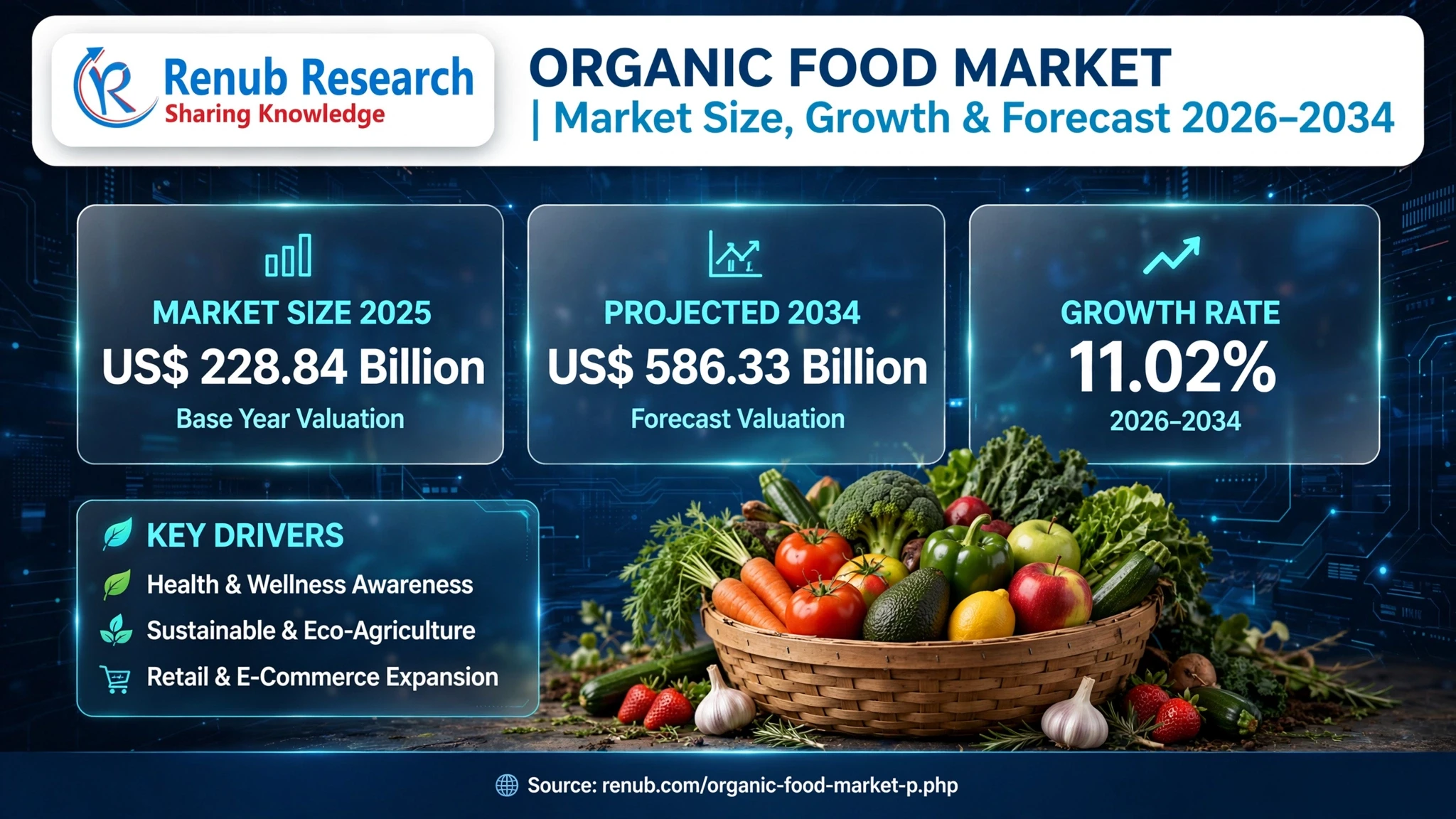
Are you wondering how consumer health trends and sustainable farming are reshaping global plates? The organic food market is projected to expand from US$ 228.84 billion in 2025 to US$ 586.33 billion by 2034, registering a robust compound annual growth rate (CAGR) of 11.02% during the forecast period of 2026–2034.
This unprecedented surge is driven by a profound shift toward chemical-free food products, clean-label lifestyles, and environmental sustainability. From bustling supermarkets in the United States to expanding organic farmlands across India and Europe, organic products are transitioning from a niche lifestyle choice into a mainstream global necessity.
Download Free Sample Report: https://www.renub.com/request-sample-page.php?gturl=organic-food-market-p.php
What is Organic Food and Its Growing Global Popularity?
Organic food refers to agricultural products grown, processed, and handled using natural farming methods without synthetic pesticides, chemical fertilizers, genetically modified organisms (GMOs), artificial preservatives, or growth hormones. It prioritizes soil health, biodiversity, and animal welfare. Common offerings range from fresh fruits and vegetables to dairy, grains, meat, and packaged foods.
Why is its popularity skyrocketing worldwide? Modern consumers are increasingly anxious about pesticide residues, antibiotic resistance, and the ecological footprint of conventional industrial agriculture. Enhanced availability through hypermarkets, specialty stores, and digital grocery apps has made healthy eating more accessible than ever. Furthermore, supportive government initiatives and rising disposable incomes continue to accelerate adoption across both developed and developing economies.
Global Organic Agriculture Landscape: Key Highlights
Understanding the current scale of organic agriculture highlights its rapid trajectory:
- Certified Farmland: Spans 98.9 million hectares across 183 countries.
- Regional Leaders: Oceania holds the largest share with 53.2 million hectares, followed by Europe (19.6 million hectares) and Latin America (10.3 million hectares).
- Country Leaders: Australia leads in farmland (53.0 million hectares), while India boasts the highest number of organic producers (over 2.36 million farmers).
- Market Value: The global organic food market value stands at €144.9 billion, anchored heavily by the United States (€60.4 billion), Germany (€17.0 billion), and China (€15.5 billion).
Major Growth Drivers and Persistent Market Challenges
Primary Drivers
- Rising Health and Wellness Awareness: Over 70% of consumers in developed economies actively read food labels. Heightened concerns over lifestyle diseases like diabetes and obesity fuel the demand for safe, nutrient-rich organic options.
- Demand for Eco-Friendly Agriculture: Consumers actively prefer goods that lower environmental impact, conserve water, and protect pollinators.
- Retail and E-commerce Expansion: Supermarkets command 55–60% of sales, while digital grocery platforms record double-digit annual growth rates.
Core Challenges
- High Production Costs: Organic items typically retail at prices 20% to 50% higher than conventional alternatives due to intensive labor, lower conversion yields, and strict compliance costs.
- Complex Certification Requirements: Farmers face a grueling 2-3 year transition period before earning certification, compounded by rigorous paperwork, regular audits, and supply chain vulnerability.
Global Regional Insights: Markets in Action
United States
As the world’s largest organic market, the U.S. generates annual sales exceeding US$ 65 billion, with organic items making up 6–7% of total retail food sales. More than 75% of American households buy organic items regularly, heavily favoring fresh produce, dairy, and clean-label snacks.
United Kingdom
Over 60% of British consumers purchase organic products annually. Driven by animal welfare concerns and ethical sourcing, categories like organic dairy, eggs, and bakery goods continue to experience steady mainstream adoption.
India
India features more than 4 million hectares of certified organic farmland. Urban centers in Tier I and Tier II cities are driving phenomenal demand for organic pulses, spices, millets, and teas, supported by strong governmental push and modern e-commerce penetration.
Saudi Arabia
Over 80% of organic food sold in Saudi Arabia is imported. Rising health consciousness, government economic diversification plans, and a growing expatriate population are fueling robust demand for premium imported organic fruits, vegetables, and packaged goods.
Market Segmentation Overview
To better understand industry dynamics, the market is categorized across three core pillars:
- Product Type: Organic Fruits and Vegetables, Organic Meat, Poultry and Dairy, Organic Processed Food, Organic Bread and Bakery, Organic Beverages, Organic Cereal and Food Grains, and Others.
- Distribution Channel: Supermarkets/Hypermarkets, Specialty Stores, Convenience Stores, Online Retail Stores, and Others.
- Geography: North America (US, Canada), Europe (France, Germany, Italy, Spain, UK, Belgium, Netherlands, Turkey), Asia Pacific (China, Japan, India, Australia, South Korea, Thailand, Malaysia, Indonesia, New Zealand), Latin America (Brazil, Mexico, Argentina), and Middle East & Africa (South Africa, Saudi Arabia, UAE).
(Note: Major industry competitors—including Danone S.A., General Mills Inc., Sprouts Farmers Market, The Hain Celestial Group, The Kroger Company, United Natural Foods, Dole Food Company, and Newman’s Own—are continuously evaluated through comprehensive company overviews, SWOT frameworks, and revenue analyses).
Frequently Asked Questions (FAQs)
Q1: What is the projected market size of the organic food market by 2034? The global organic food market is projected to reach US$ 586.33 billion by 2034, up from US$ 228.84 billion in 2025.
Q2: What is the expected CAGR of the organic food market? The market is anticipated to expand at a compound annual growth rate (CAGR) of 11,02% during the forecast period of 2026–2034.
Q3: Which region holds the largest share of certified organic farmland? Oceania leads the globe with 53.2 million hectares of certified organic farmland, largely driven by Australia.
Q4: Why are organic food products generally more expensive than conventional foods? Organic products cost 20–50% more due to labor-intensive farming methods, natural inputs, lower crop yields during the multi-year conversion phase, and stringent certification compliance.
Q5: Which product category dominates global organic food sales? Organic fruits and vegetables represent the largest segment, accounting for approximately 35–40% of total global organic food sales.
Q6: How much does online retail contribute to organic food distribution? Online grocery and e-commerce platforms account for roughly 18–20% of global organic food retail sales, experiencing rapid double-digit growth.
Q7: Which country has the highest number of certified organic producers? India leads the world with over 2.36 million certified organic producers actively engaged in sustainable agriculture.
What specific product category within the organic food market are you most interested in exploring further for your marketing strategy?
