FTO Search: A Smarter Approach to Managing Patent Risk
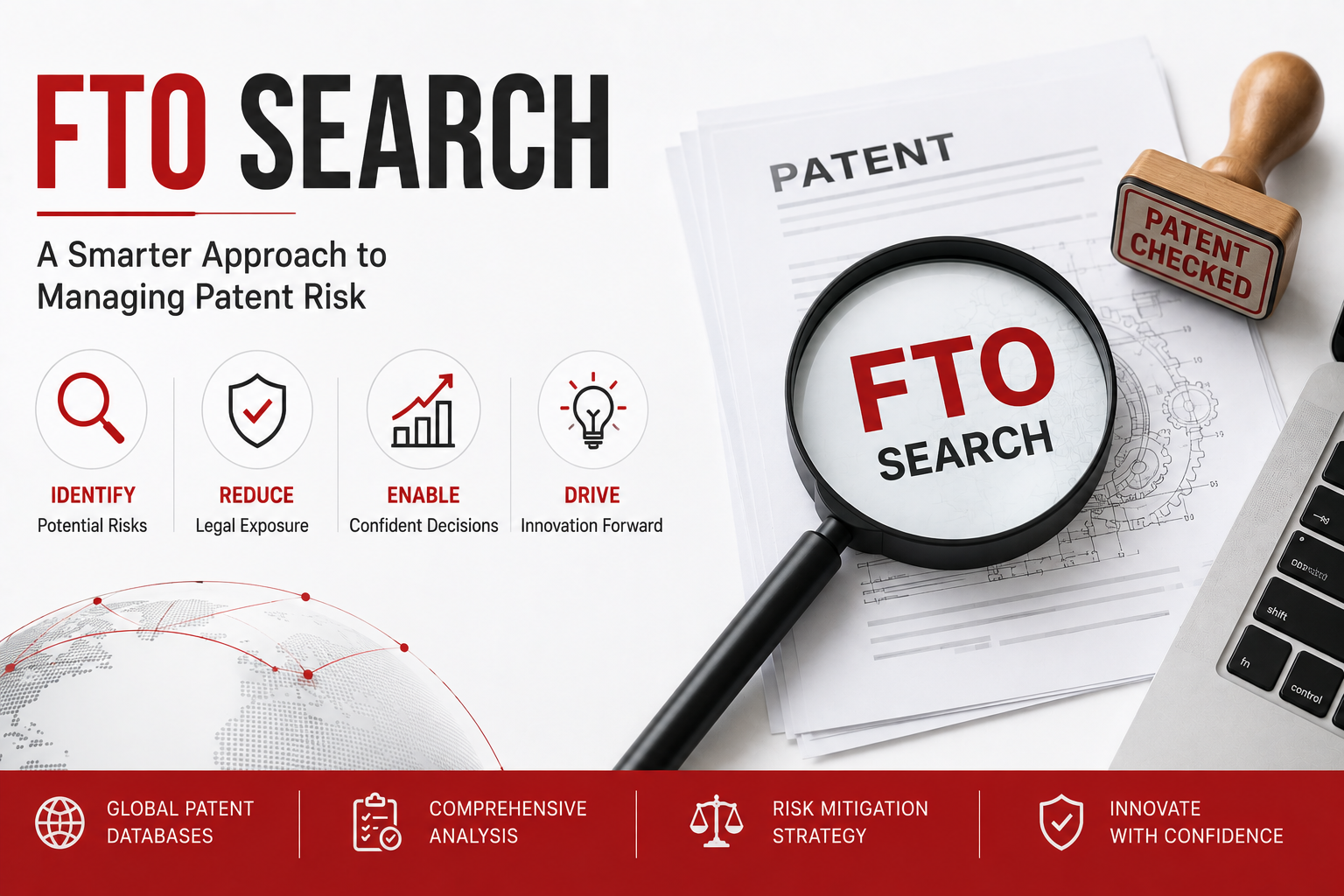
Launching a new product or technology involves more than determining whether the invention is innovative. Businesses also need to understand whether commercialising it could potentially conflict with someone else’s patent rights. This is where an FTO search becomes valuable. Freedom-to-operate research helps businesses identify patents and applications that may be relevant to a planned product, process, or technology in a particular market.
Rather than simply asking whether an invention is patentable, an FTO search focuses on a different question: can the business move forward without creating unnecessary patent risks? A carefully planned search can provide valuable information before significant resources are committed to development, manufacturing, or market entry.
Why FTO Search Matters Before Commercialisation
Patent landscapes can be complicated, particularly when several companies are developing similar technologies. A product may involve multiple technical components, each potentially connected to different patent rights. Simply searching for patents that contain the product name or a few technical terms may therefore leave important information undiscovered.
An FTO search typically examines relevant patent claims, legal status, jurisdictions, family relationships, and other factors that can influence whether a patent may present a commercial concern. The objective is not merely to collect documents, but to identify potentially relevant rights and assess their connection to the proposed product or process.
This makes FTO research particularly useful for businesses entering new markets, launching products, licensing technology, or evaluating potential investments.
Understanding National Phase Patent Application Risks
International patent activity can add another layer of complexity. A national phase patent application may follow an international application and seek protection in specific countries. For businesses assessing freedom to operate, understanding these applications and their status can be important because patent rights are ultimately territorial.
A thorough review can help researchers identify relevant applications, track their progress, and determine whether corresponding rights may exist in the market where a product is intended to be commercialised.
An effective FTO search is therefore more than a database exercise. It combines targeted searching with careful claim analysis and an understanding of patent status and jurisdiction. By identifying potential obstacles early, businesses can explore strategies such as design modifications, licensing, or further legal assessment before moving ahead. In this way, FTO search can become an important part of responsible product planning and long-term intellectual property strategy.