AI in Home Construction: How Artificial Intelligence Is Changing House Plan
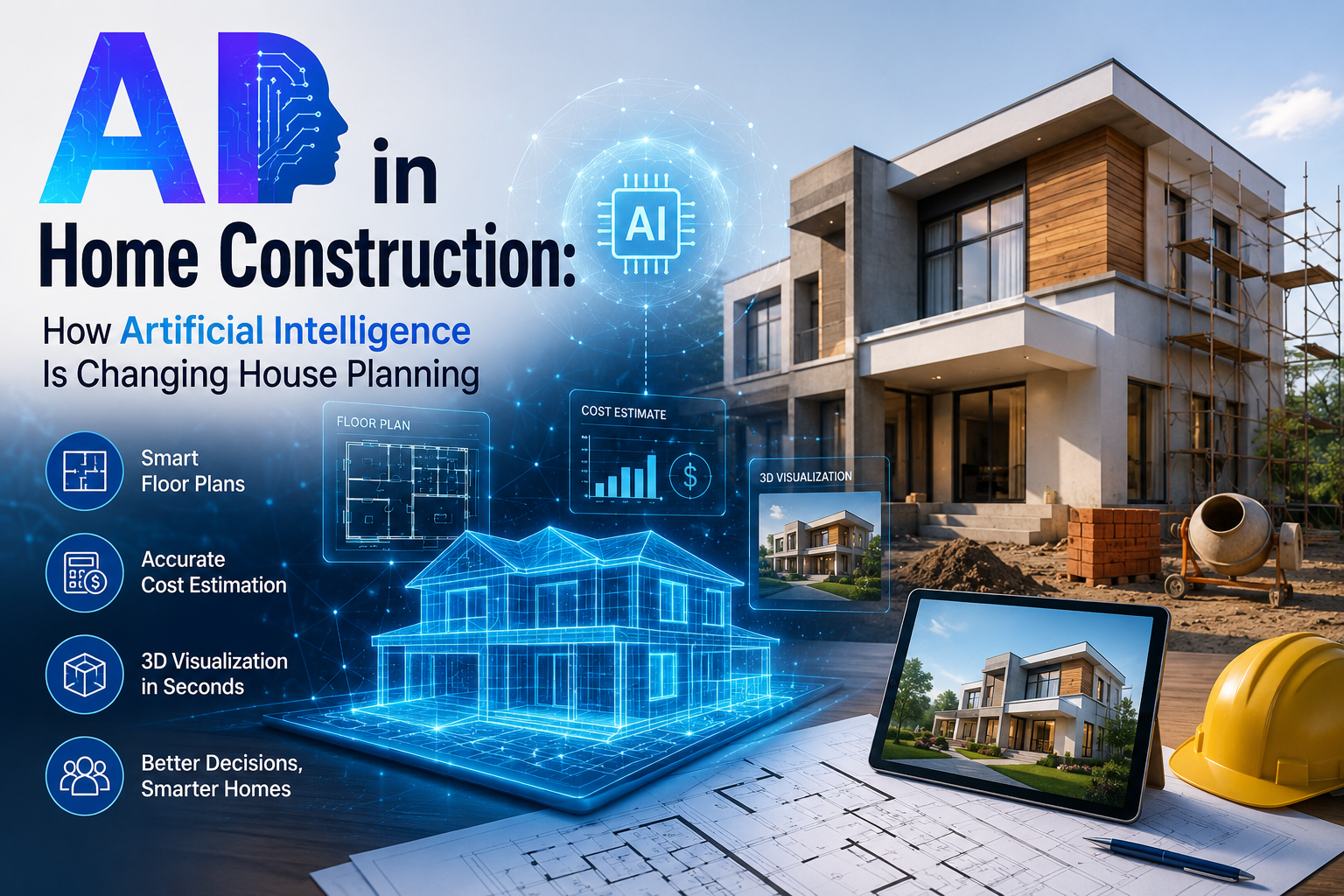
Planning and building a home is a major decision that involves design, budgeting, materials, contractors, timelines, and countless small details. Traditionally, homeowners had to depend on architects, contractors, and multiple tools to plan these aspects separately.
Artificial intelligence is now changing the way people approach this process. From visualising a house before construction to exploring design options and improving cost planning, AI home construction tools are making house planning more accessible, faster, and more data-driven.
But what exactly can AI do when building a home, and can it replace architects and construction professionals? Let’s explore how AI is transforming modern house planning.
What Is AI in Home Construction?
AI in home construction refers to the use of artificial intelligence technologies to support different stages of planning and designing a house.
AI tools can analyse information, generate design ideas, create visualisations, identify patterns, and help homeowners explore different possibilities before construction begins.
For example, a homeowner may use AI to visualise different exterior designs, compare room layouts, explore architectural styles, or understand how a proposed home could look before spending money on construction.
The goal is not necessarily to replace professionals. Instead, AI can work as a planning and visualisation tool that helps homeowners and professionals make better-informed decisions.
How AI Is Changing House Planning
1. Visualising Your Home Before Construction
One of the biggest advantages of AI is the ability to visualise design concepts before construction begins.
Instead of relying only on 2D drawings, homeowners can explore realistic representations of:
- Exterior elevations
- Living rooms
- Bedrooms
- Kitchens
- Bathrooms
- Balconies
- Gardens
- Home entrances
- Modern and traditional façades
This can make it easier to understand the relationship between design ideas and the finished home.
For homeowners who are unsure about colours, materials, layouts, or architectural styles, AI-generated visualisations can provide an early reference point.
2. Exploring Multiple House Designs
A single house can have many possible design directions.
AI can help generate and compare different concepts based on requirements such as:
- Plot size
- Number of bedrooms
- Number of floors
- Preferred architectural style
- Parking requirements
- Open spaces
- Natural lighting
- Room preferences
For example, someone planning a 2,000-square-foot home could explore modern, contemporary, traditional, or minimalist design concepts before finalising a direction with an architect.
This makes AI house building particularly useful during the early planning stage.
3. Smarter Space Planning
Good house planning is not only about appearance. A home should also be comfortable and functional.
AI-assisted planning can help homeowners explore different ways of arranging spaces and understanding how rooms relate to each other.
For example, a homeowner can consider:
- Bedroom placement
- Kitchen positioning
- Living and dining areas
- Staircase location
- Storage requirements
- Parking space
- Natural light
- Ventilation
- Movement between rooms
However, AI suggestions should always be reviewed by qualified architects and engineers before they are used for actual construction.
4. Better Construction Budget Planning
Budget is one of the most important parts of building a house.
Construction costs can vary depending on location, built-up area, materials, labour, design complexity, finishes, and market conditions.
AI-powered tools can potentially help organise these inputs and provide an early estimate or planning range.
An AI home builder platform may combine information such as:
- Built-up area
- Number of floors
- Construction type
- Material preferences
- Finish quality
- Location
- Room requirements
This can help homeowners understand the approximate financial scope of a project before moving forward.
However, an AI estimate should not automatically be treated as the final construction quotation. Actual costs should be verified with current local rates and qualified professionals.
5. Comparing Materials and Design Options
Choosing construction materials can become complicated because homeowners have many options.
AI-assisted planning can help users compare alternatives based on factors such as appearance, functionality, durability, and budget.
For example, homeowners may explore different options for:
- Flooring
- Wall finishes
- Kitchen surfaces
- Doors and windows
- Exterior materials
- Lighting
- Bathroom finishes
This allows homeowners to understand how different choices may affect the overall design direction and budget.
6. AI and Vastu-Based Home Planning
Vastu is an important consideration for many Indian homeowners.
AI tools can help users explore preliminary layouts based on preferred Vastu principles, such as the positioning of rooms, entrances, kitchens, and other spaces.
However, Vastu recommendations can vary depending on the approach being followed. AI-generated suggestions should therefore be treated as an initial planning reference rather than professional Vastu consultation.
The final design should also consider practical requirements such as structural safety, building regulations, ventilation, accessibility, and site conditions.
7. Reducing Design Changes Before Construction
Design changes after construction begins can be expensive and time-consuming.
AI visualisation can help homeowners identify preferences earlier.
For example, before construction starts, a homeowner may realise that:
- The kitchen needs more storage.
- The living room requires larger windows.
- The exterior design needs a different finish.
- The bedroom layout needs more space.
- The staircase position could be improved.
Identifying these preferences during planning can help reduce unnecessary changes later.
Can AI Replace an Architect?
No.
AI can support the planning process, but it cannot replace the expertise and responsibility of qualified architects, structural engineers, and other construction professionals.
A real construction project requires decisions based on factors such as:
- Structural safety
- Soil conditions
- Local building regulations
- Site measurements
- Electrical planning
- Plumbing
- Structural calculations
- Approvals and permissions
- Construction execution
AI can help generate ideas and organise information, but professionals are needed to validate designs and make them suitable for real-world construction.
How Homeowners Can Use AI Effectively
AI is most useful when homeowners treat it as a planning assistant rather than a complete construction solution.
A practical approach could be:
Step 1: Define your requirements.
Decide the approximate plot size, built-up area, number of bedrooms, floors, parking requirements, and preferred style.
Step 2: Explore design concepts.
Use AI to visualise different architectural styles, layouts, colours, and exterior concepts.
Step 3: Develop your preliminary budget.
Use available estimation tools to understand the potential construction budget.
Step 4: Consult professionals.
Share your ideas and requirements with architects, engineers, and construction professionals.
Step 5: Finalise the technical design.
The final drawings, structural plans, services, approvals, and construction details should be prepared and verified by qualified professionals.
The Future of AI House Building
AI is likely to become increasingly integrated into residential construction.
Future AI-powered platforms may bring multiple planning activities together, including design visualisation, cost estimation, material comparison, space planning, and project coordination.
This could make the early stages of house planning more transparent and easier for homeowners to understand.
For Indian homeowners in particular, tools that combine local construction costs, regional architectural preferences, climate considerations, and local regulations could become increasingly valuable.
The biggest opportunity is not simply using AI to create attractive house images. It is using AI to help homeowners make better decisions before construction begins.
Conclusion
AI home construction is changing how homeowners approach the early stages of building a house. From visualising designs and exploring layouts to supporting budget planning and comparing options, artificial intelligence can make the planning process more interactive and informed.
At the same time, AI should complement rather than replace architects, engineers, and construction professionals. The best results come from combining AI-powered tools with professional expertise and real-world site knowledge.
As AI house building technology continues to develop, homeowners will have more opportunities to visualise, plan, and refine their dream homes before construction begins.
The future of home planning is not just about building faster. It is about planning smarter before you build.
Frequently Asked Questions
Can AI design a house?
AI can generate preliminary design concepts, layouts, and visualisations. However, final architectural and structural designs should be prepared and reviewed by qualified professionals.
How can AI help with home construction?
AI can assist with design visualisation, space planning, preliminary cost estimation, material comparisons, and exploring different house concepts.
What is an AI home builder?
An AI home builder is a digital platform or tool that uses artificial intelligence to assist with aspects of home planning, design, visualisation, or construction-related decision-making.
Can AI estimate house construction costs?
AI-powered tools can provide preliminary estimates using information such as built-up area, location, materials, and finish levels. Actual costs should be confirmed using current local rates and professional quotations.
Is AI useful for planning an Indian home?
Yes. AI can help Indian homeowners explore designs, layouts, Vastu-related concepts, materials, and preliminary budgets. Professional validation is still necessary for actual construction.
Will AI replace architects and engineers?
AI is more likely to become a supporting tool for architects and engineers rather than completely replacing them. Construction requires professional judgement, technical knowledge, site assessment, and responsibility for safety and compliance.