A Complete Guide to Cable Tray Systems for Industrial Projects in Kolkata
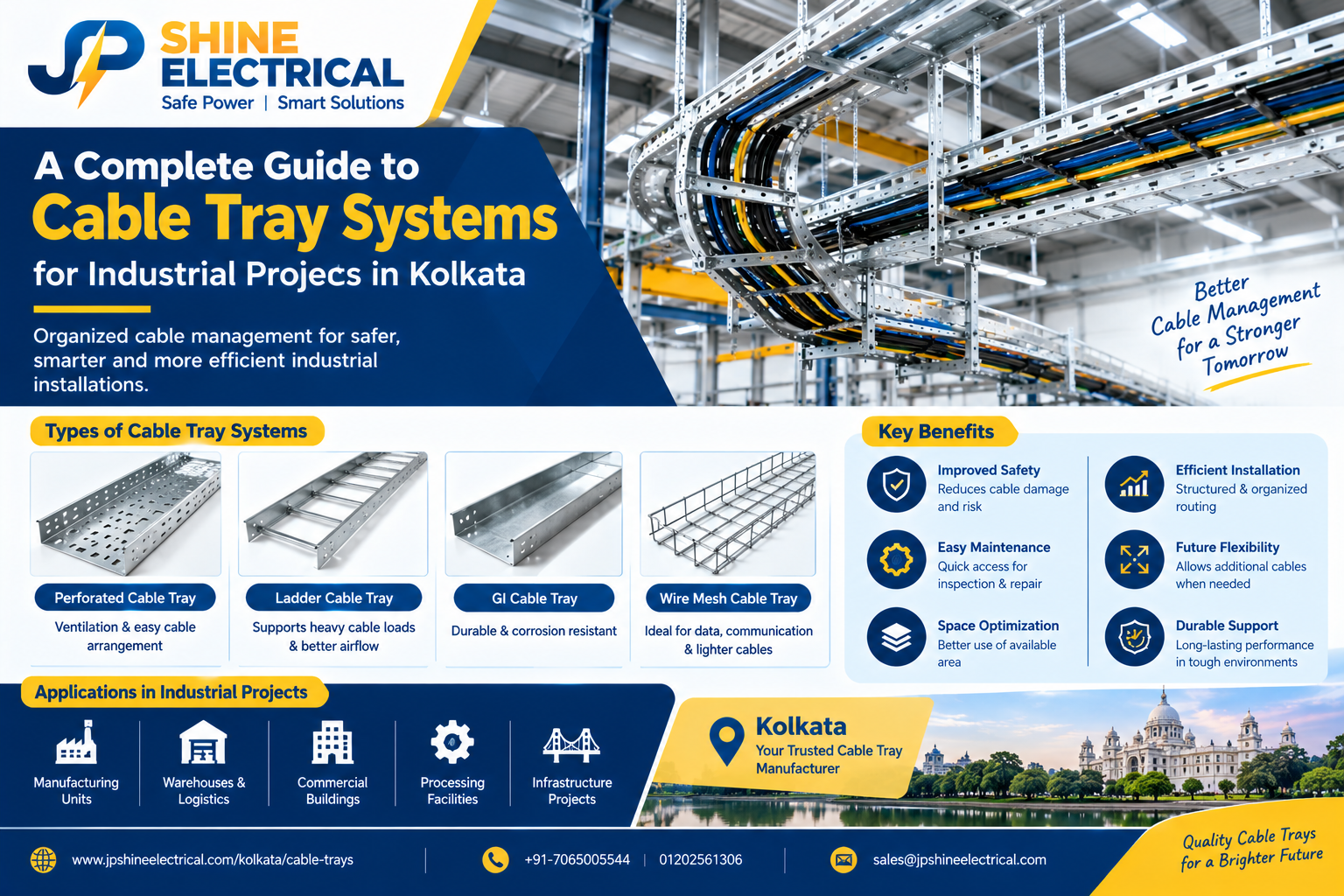
Industrial electrical installations need a well-organized cable management system to support safe operation, efficient maintenance, and long-term reliability. Cable trays help route and support electrical cables across factories, warehouses, commercial buildings, and infrastructure projects. For businesses planning industrial installations, understanding cable tray types, materials, and selection criteria is essential.
Choosing suitable Cable Tray Supplier in kolkata can help contractors and facility managers create organized electrical layouts that are easier to inspect, maintain, and expand.
What Is a Cable Tray System?
A cable tray system is a structural arrangement designed to support insulated electrical, control, and communication cables along planned routes. It can be installed on walls, ceilings, structural supports, or dedicated frameworks, depending on the project design.
Unlike unorganized cable routing, a properly planned cable tray system provides defined pathways and better access for inspection. The design should account for cable weight, tray capacity, support spacing, environmental conditions, and applicable electrical safety requirements.
Different Types of Cable Tray Systems
Selecting the right cable tray depends on the installation environment, cable quantity, load requirements, and ventilation needs.
1. Perforated Cable Trays
Perforated cable trays feature openings along the base to support cable arrangement and ventilation. They are commonly used in commercial buildings, factories, control rooms, and general electrical installations.
2. Ladder Cable Trays
Ladder cable trays consist of two side rails connected by regularly spaced rungs. Their open design allows airflow and can be suitable for larger cable runs in industrial facilities. The tray and support arrangement must be selected according to the actual cable load.
3. GI Cable Trays
Galvanized iron (GI) cable trays have a protective galvanized finish and are used in many industrial and commercial electrical installations. Their suitability depends on the coating quality, installation environment, and exposure to moisture or corrosive substances.
4. Wire Mesh Cable Trays
Wire mesh cable trays feature an open-grid construction that can be useful for data cables, communication systems, and lighter cable installations. They can provide convenient cable access when installed with suitable supports and fittings.
Key Benefits of Cable Tray Systems for Industrial Projects
A properly selected cable tray system can offer several practical advantages:
- Organized cable routing: Keeps cables arranged along planned pathways.
- Easier maintenance: Helps technicians access cables for inspection and troubleshooting.
- Efficient installation: Supports systematic cable routing across large facilities.
- Space management: Makes better use of available installation areas.
- Future flexibility: Allows expansion when the system has adequate spare capacity.
- Durable support: Appropriate materials and installation methods help maintain system performance.
Cable trays should always be installed with suitable supports, fittings, and cable loading arrangements to maintain stability and accessibility.
How to Select the Right Cable Tray for Kolkata Projects
Kolkata’s industrial, commercial, and infrastructure projects may have different electrical requirements. Before choosing a cable tray system, project teams should evaluate the following factors.
Material and finish: Select materials appropriate for the installation environment, including any moisture or corrosion exposure.
Cable load: Calculate the expected cable weight and verify the tray’s rated capacity and support spacing.
Tray dimensions: Choose a suitable width and depth based on the cable quantity, arrangement, and planned future expansion.
Installation location: Indoor and outdoor installations may require different materials, finishes, covers, and mounting arrangements.
Accessories: Check requirements for bends, tees, reducers, couplers, covers, and mounting brackets.
Technical specifications: Review product documentation and relevant electrical installation standards before procurement.
Careful planning helps reduce installation difficulties and supports dependable long-term cable management.
Applications Across Industrial and Commercial Facilities
Cable tray systems are used in manufacturing units, warehouses, processing facilities, office buildings, utility areas, and infrastructure developments.
In factories, they help route cables supplying machinery and electrical equipment. Warehouses may use cable trays for lighting, power distribution, and communication wiring. Commercial buildings can benefit from organized cable routes that simplify inspection and future maintenance.
For every application, cable segregation, safe access, adequate support, and compliance with relevant requirements should be considered during design and installation.
Integrating Cable Trays with Electrical Panels
Cable tray planning should be coordinated with the overall electrical distribution layout. Proper positioning of trays and panels can help minimize unnecessary cable runs and improve access for maintenance.
Industrial projects may also require an LT Distribution Panel for low-voltage distribution, a Power Factor Panel for power-factor correction, or a Starter Panel for suitable motor-starting applications.
Businesses looking for local cable tray options can explore the Cable Tray Manufacturer in Kolkata page from JP Shine Electrical.
Frequently Asked Questions
1. Which cable tray is best for industrial projects?
Perforated, ladder, GI, and wire mesh trays serve different applications. The right option depends on cable load, environment, ventilation, and installation requirements.
2. Can cable trays be used outdoors?
Yes, provided the tray material, finish, supports, and accessories are suitable for outdoor exposure and local environmental conditions.
3. What information is needed before ordering cable trays?
Prepare the required dimensions, cable load, installation location, material preference, and accessory requirements.
4. Why is cable tray maintenance important?
Periodic inspection can help identify damaged supports, corrosion, overloading, loose fittings, or other issues requiring attention.
Conclusion
Cable tray systems play an important role in organized industrial electrical installations. By evaluating tray types, material quality, load capacity, environmental conditions, and installation requirements, businesses can select solutions suited to their projects. For industrial projects in Kolkata, careful planning and correct installation help create accessible, manageable, and dependable cable routing systems.