How CNSME PUMP Heavy Duty Slurry Pumps Enhance Tailings Management
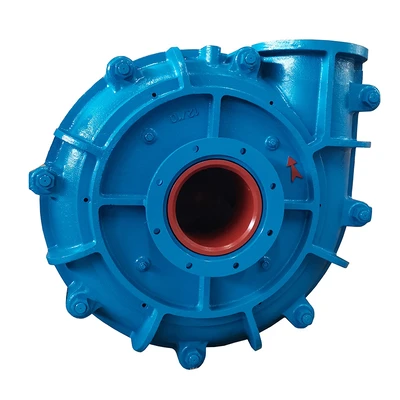
If you’ve ever stood at the edge of a tailings storage facility, you already know the quiet anxiety that comes with managing millions of tons of wet mining waste. One pump failure, one clogged line, one overlooked wear point, and suddenly that quiet anxiety turns into a full-blown environmental and operational crisis. Tailings management isn’t glamorous work, but it’s absolutely critical to modern mining. CNSME PUMP has spent years studying exactly where tailings systems break down, and their heavy duty slurry pump address those failure points with surgical precision. Rather than just moving waste from point A to point B, these pumps fundamentally improve how mines handle the entire tailings lifecycle.
Tackling High Density Slurries Without Clogging
Tailings streams today are thicker than ever as mines chase water efficiency and reduce storage footprints. The problem is that most standard pumps panic when solids concentration climbs past fifty percent. Guts plug, lines stall, and operators spend hours rodding out settled material. CNSME designed their heavy duty slurry pumps with extra wide internal passages and a specially shaped impeller that keeps thick paste moving even when it feels more like wet concrete than liquid. The secret lies in the pump’s ability to maintain turbulent flow without creating stagnant zones where heavy particles can drop out. Mines running thickened tailings at sixty-five to seventy percent solids have found that CNSME pumps start reliably, run consistently, and handle sudden spikes in density without seizing. That reliability means you stop babysitting the tailings line and start trusting it to do its job overnight.
Reducing Water Consumption Through Efficient Transport
Every gallon of water used to push tailings is a gallon that isn’t recycled back into your processing plant. Many mines unknowingly waste enormous volumes of water simply because their pumps require thin, runny slurry to function. CNSME changes that equation entirely. Because their heavy duty slurry pumps can move thicker material with the same or lower energy input, mines can reduce the dilution water added at the pump box. Less dilution means less total volume moving through the pipeline, which translates directly into lower power consumption and reduced water makeup requirements. In arid mining regions where every drop of water carries a price tag, this feature alone pays for the pump within months. Operators have reported cutting water usage for tailings transport by twenty to thirty percent simply by switching to CNSME equipment and adjusting their density targets upward.
Extending Pipeline Life by Reducing Velocity Spikes
Here’s something most pump manufacturers won’t tell you: aggressive pump surging and velocity fluctuations will destroy your tailings pipeline from the inside. Every time a pump cavitates or experiences flow instability, it sends shockwaves down the line that accelerate erosion at every elbow and reducer. CNSME engineers tackled this hidden problem by designing a pump curve that remains remarkably flat across its operating range. What that means in practice is that pressure and velocity stay consistent even when feed conditions vary. No sudden spikes, no violent pressure pulsations, just a steady, predictable flow that treats your pipeline with respect. Mines that have installed CNSME heavy duty slurry pumps alongside vibration monitoring equipment have observed a dramatic reduction in pipe wall wear rates, particularly at vulnerable locations like mitre bends and valve stations. Longer pipeline life means fewer expensive shutdowns for pipe rotation or replacement.
Handling Variable Feed Conditions Without Operator Panic
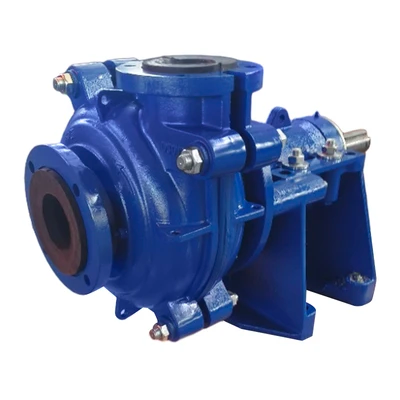
Tailings streams are famously unpredictable. One hour you’re pumping relatively clean water from thickener overflow, and the next hour a density surge sends a wave of settled solids toward the pump. Most pumps require constant operator attention during these transitions, with someone standing by to adjust speed, flush lines, or shut down before damage occurs. CNSME heavy duty slurry pumps handle these swings with remarkable composure. Their wide operating window allows the pump to digest short-term density spikes without losing prime or destroying internal components. The heavy duty bearing assembly absorbs the thrust loads generated by changing slurry weights, while the abrasion resistant wet end simply shrugs off the extra particle impact. Mine operators report that after switching to CNSME, they can walk away from the tailings pump station for hours at a time, trusting the pump to manage normal process variability on its own.
Minimizing Spill Risk with Reliable Seal Technology
A tailings spill is every mine manager’s nightmare. Even a small leak from a pump seal can quickly turn into an environmental violation, a regulatory fine, and a public relations disaster. Traditional gland packing requires constant adjustment to maintain the right balance between leakage and lubrication, and mechanical seals fail catastrophically when abrasive particles invade the seal faces. CNSME’s approach uses a centrifugal expeller seal for most tailings applications, which maintains a perfect seal without any wearing contact. For more aggressive chemistries, they offer back-to-back mechanical cartridge seals with independent flush plans that keep solids away from critical sealing surfaces. The result is a pump that simply doesn’t leak during normal operation. Mines in sensitive environmental areas have run these pumps for years without a single reportable spill originating from the pump station.
Lowering Energy Costs in Thickened Tailings Systems
Nobody talks about energy efficiency in tailings management, but they should. Pumping heavy slurry long distances to a storage facility requires enormous power, and inefficient pumps waste that energy as heat, vibration, and recirculation losses. CNSME’s hydraulic design achieves efficiencies that regularly exceed eighty percent, even when handling high-density tailings. Compare that to sixty or sixty-five percent efficiency from older pump designs, and the annual power savings become substantial. For a large operation moving ten thousand tons of tailings per day, the electrical cost difference can exceed a hundred thousand dollars annually. Mines that have conducted before-and-after energy audits typically see payback periods under two years based solely on power savings, before even factoring in reduced maintenance and extended equipment life.
Enabling Remote Monitoring and Predictive Maintenance
The best tailings pump is one you never have to visit. CNSME heavy duty slurry pumps come equipped with mounting points for vibration sensors, temperature probes, and pressure transmitters, making them ready for the connected mine of today and tomorrow. When you combine these sensors with CNSME’s recommended operating parameters, you can build a predictive maintenance program that alerts your team exactly when a bearing needs grease, a seal needs inspection, or a liner is approaching the end of its life. No more scheduled rebuilds based on calendar days that ignore actual wear patterns. No more surprise failures because someone missed a developing vibration signature. Mines using remote monitoring on their CNSME tailings pumps have reduced unplanned downtime by over seventy percent and extended average rebuild intervals by nearly double. In the demanding world of tailings management, that kind of predictability is worth more than any single component.