How Hands-on Scrum Training Builds Better Scrum Masters
Many professionals begin their Agile journey by earning a Scrum Certification. While certifications validate your understanding of Scrum principles, they don’t necessarily prepare you for the challenges of leading a real Scrum team. The difference between knowing Scrum and applying Scrum becomes evident during sprint planning, stakeholder discussions, and team conflicts.
This is where Practical Scrum Training makes a lasting impact. It transforms theoretical knowledge into workplace-ready skills, helping aspiring Scrum Masters build confidence before they step into live Agile environments.
Why Theory Alone Isn’t Enough
Scrum is built around collaboration, continuous improvement, and adaptability. These skills can’t be developed by reading the Scrum Guide alone.
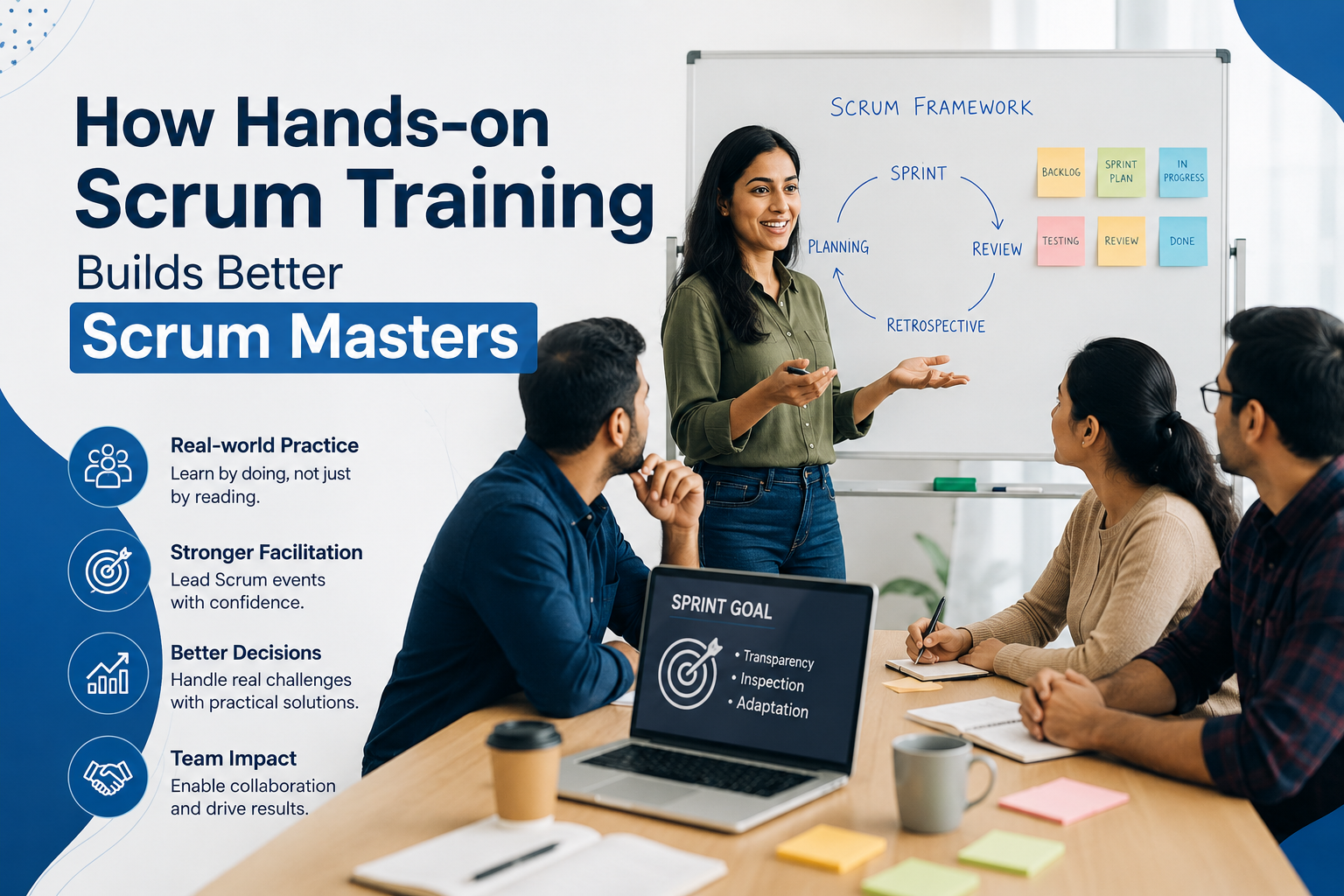
A good Scrum Master Training program exposes learners to real project scenarios where they practice facilitating Scrum ceremonies, resolving impediments, and guiding cross-functional teams. Instead of memorizing definitions, participants experience how Scrum works under realistic project conditions.
For example, learning about Sprint Retrospectives is valuable, but actually conducting one with a team teaches communication, facilitation, and problem-solving skills that no certification exam can measure.
Hands-on Learning Builds Decision-Making Skills
Every sprint brings unique challenges. Requirements change, priorities shift, and teams encounter blockers. A successful Scrum Master isn’t someone who has all the answers; it’s someone who can guide the team toward the right solution.
Practical Scrum exercises encourage learners to:
- Facilitate Sprint Planning sessions
- Prioritize Product Backlogs
- Estimate work using Story Points
- Remove team impediments
- Improve collaboration during Daily Scrums
- Conduct productive Sprint Reviews and Retrospectives
These experiences help learners develop confidence in handling situations they’ll encounter in real Agile teams.
Practical Experience Improves Team Leadership
One of the biggest responsibilities of a Scrum Master is enabling teams to perform at their best.
During Scrum Master Training, participants learn how to facilitate discussions, encourage collaboration, manage stakeholder expectations, and support continuous improvement. These leadership skills are developed through simulations, role-playing activities, and group exercises rather than classroom lectures.
The ability to guide conversations, resolve disagreements, and build trust often distinguishes an effective Scrum Master from one who simply understands Scrum terminology.
Learning Agile Tools Makes You Job-Ready
Today’s Agile teams rely heavily on digital collaboration tools. Knowing Scrum principles without understanding how teams manage work creates a noticeable skills gap.
That’s why practical training usually includes exposure to tools like Jira, where learners create backlogs, manage sprints, assign user stories, and monitor team progress.
Combining Practical Scrum Training with tool-based learning helps professionals transition smoothly into real projects and contribute from their first sprint.
Employers Value Practical Skills
Recruiters hiring for Scrum-related roles increasingly conduct scenario-based interviews rather than focusing only on certifications.
Candidates may be asked how they would handle sprint delays, conflicting stakeholder priorities, or an underperforming team. These questions assess practical thinking rather than textbook knowledge.
Professionals who have completed hands-on Scrum Master Training are typically better prepared because they’ve already practiced solving similar challenges during training.
A Strong Foundation for Long-Term Growth
Hands-on learning doesn’t just prepare professionals for their first Scrum Master role, it also creates opportunities for career advancement.
The practical understanding gained through Practical Scrum Training provides a strong foundation for future roles such as Agile Coach, Product Owner, Agile Consultant, or Delivery Lead. As organizations continue expanding Agile adoption, professionals who combine technical knowledge with practical execution remain in high demand.
Conclusion
A Scrum Certification is an excellent starting point, but it’s practical experience that shapes successful Scrum Masters.
The best Scrum Master Training programs go beyond presentations and exams by immersing learners in real Scrum practices, collaborative exercises, and project simulations. This hands-on approach develops the confidence, communication skills, and decision-making abilities needed to lead Agile teams effectively.
If your goal is to become a capable Scrum Master, not just a certified one, choose training that emphasizes practical application as much as theoretical knowledge.
