Permaculture India
Permaculture India: Building a Sustainable Future by Working With Nature
Introduction
India has a rich agricultural heritage, diverse ecosystems, and generations of knowledge about living in harmony with the land. At the same time, modern farming and rapid development have created challenges such as soil degradation, water scarcity, loss of biodiversity, and increasing pressure on natural resources. This is where Permaculture India offers a practical and thoughtful approach to creating healthier relationships between people, land, and the environment.
Permaculture is more than a method of growing food. It is a way of observing natural systems and designing farms, gardens, homes, and communities around those patterns. Instead of constantly taking from nature, the focus is on regeneration, responsible resource use, and creating systems that can support life over the long term.
AOL Permaculture brings these ideas into practical learning through courses and hands-on experiences. Its approach focuses on understanding nature, caring for the earth, caring for people, and sharing resources fairly.
What Is Permaculture?
Permaculture is a design approach based on working with nature rather than against it. It encourages people to observe how natural ecosystems function and then use those principles when planning agricultural and living systems.
A healthy natural ecosystem does not waste resources. Water moves through the landscape, organic matter returns to the soil, plants support one another, and different forms of life work together. Permaculture takes inspiration from these relationships.
For farmers and landowners, this can mean improving soil health, managing water carefully, increasing biodiversity, growing food naturally, and reducing dependence on external inputs. For households and communities, the same principles can be applied to gardens, waste management, energy use, and local food systems.
Why Permaculture India Is Becoming Important
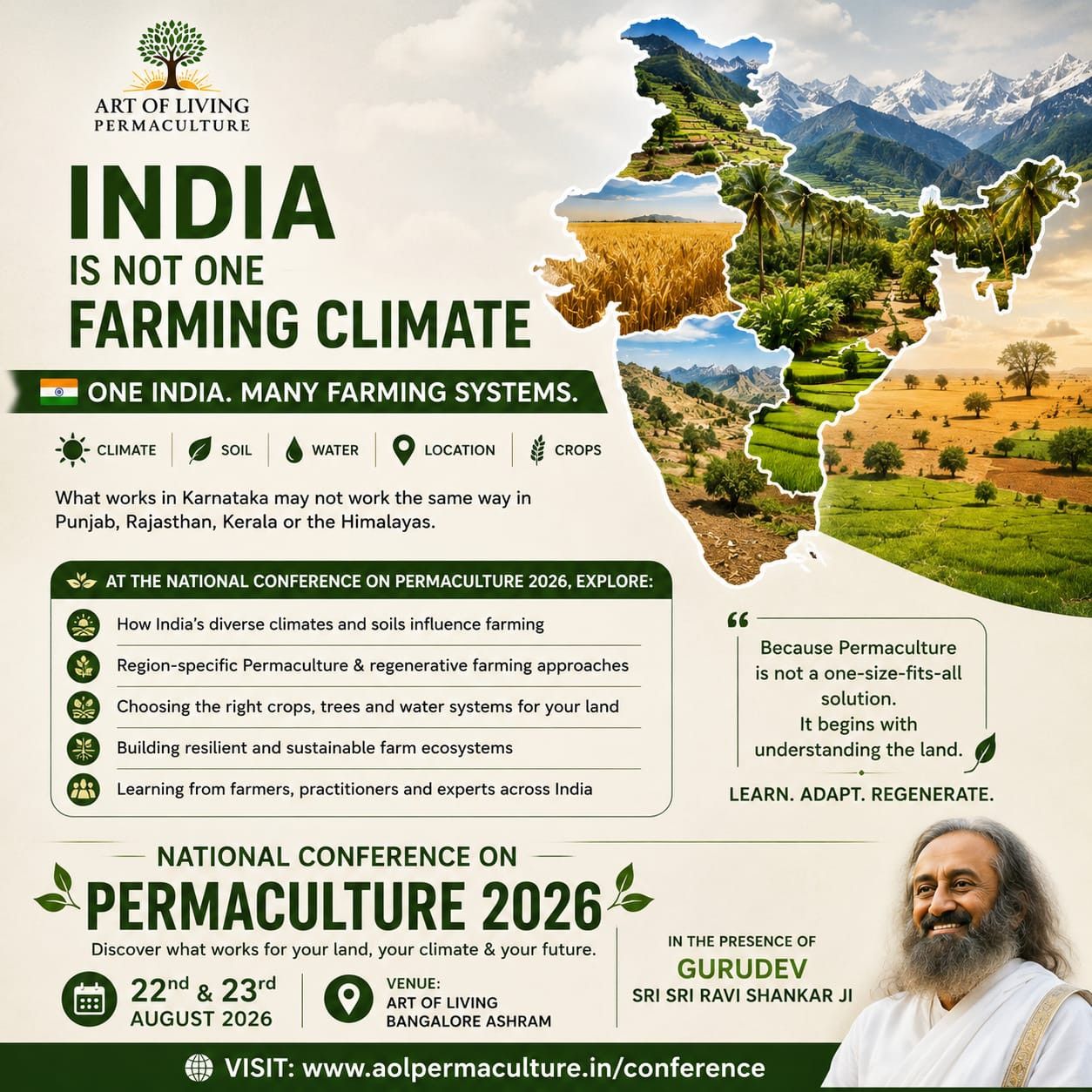
The agricultural landscape of India is incredibly diverse. From dry regions to tropical areas and from small farms to large agricultural operations, different parts of the country face different environmental challenges.
Water management is one of the most important concerns. Traditional farming practices may struggle when rainfall becomes unpredictable or groundwater levels decline. Permaculture encourages careful observation of the land and the development of systems that slow, store, and make better use of available water.
Soil health is another major consideration. Healthy soil supports strong plants, retains moisture, and provides a foundation for productive agriculture. Rather than treating soil simply as a growing medium, permaculture considers it a living ecosystem that needs protection and nourishment.
This makes Permaculture India particularly relevant for people looking for sustainable ways to grow food while restoring the health of their land.
Principles That Guide Sustainable Land Management
Observe Nature
Observation is one of the foundations of permaculture. Before making changes to a piece of land, it is important to understand its natural patterns.
Where does rainwater flow? Which areas receive sunlight? Where does water collect? Which plants grow naturally? How does the soil change across the property?
Answering these questions helps people make better decisions and design systems suited to their specific environment.
Care for the Earth
Environmental care is central to permaculture. The goal is not simply to produce more but to create systems that regenerate natural resources.
Planting trees, protecting soil, encouraging biodiversity, composting organic matter, and managing water responsibly can all contribute to healthier ecosystems.
Care for People
Sustainability must also benefit people. A successful agricultural system should provide useful food, meaningful work, learning opportunities, and a healthier environment.
Permaculture connects environmental responsibility with human wellbeing, making it relevant not only to farmers but also to families, educators, entrepreneurs, students, and communities.
Fair Share
Permaculture also encourages responsible sharing of resources and abundance. When land produces more food, seeds, knowledge, or other resources than one person needs, sharing can strengthen communities and reduce unnecessary waste.
Learning Permaculture Through Practical Experience
Understanding permaculture through books and videos can provide useful knowledge, but practical experience can make the principles much easier to understand.
AOL Permaculture provides learning opportunities for people at different stages. Its online Foundations of Permaculture course introduces the core principles and explains how natural systems can influence everyday decisions. The course is designed for beginners, so previous experience is not required.
For people who want a deeper practical experience, the Spirit of the Soil program offers an in-person immersion. Participants spend nine days learning and working on the land, gaining exposure to designing, planting, building, and other practical aspects of permaculture.
This combination of theory and hands-on learning can help participants understand how sustainable systems are actually developed.
From Barren Land to a Living Ecosystem
One of the most powerful aspects of permaculture is seeing how thoughtful land management can transform a landscape over time.
At the Art of Living Permaculture project, a previously barren mountainside was gradually regenerated using permaculture principles. The work involved observing the land, developing appropriate systems, planting, and continuing to care for the ecosystem.
The transformation demonstrates an important lesson: ecological regeneration does not necessarily happen overnight. It is often the result of many small, consistent actions. A tree, a garden bed, a water-management feature, improved soil, or a diverse planting system can become part of a much larger ecosystem.
This practical philosophy is an important reason why Permaculture India can be valuable for people who want to move beyond environmental theory and participate in real-world regeneration.
Who Can Learn Permaculture?
Permaculture is not limited to professional farmers. Anyone interested in sustainable living can explore its principles.
Farmers can use permaculture to improve the resilience of their land. Gardeners can apply it to small spaces. Homeowners can use its ideas for food production and resource management. Students and environmental enthusiasts can develop a deeper understanding of ecological systems.
It can also be useful for people considering careers or projects related to sustainable agriculture, ecological restoration, food systems, and community development.
The important starting point is curiosity and a willingness to observe and learn from nature.
Building a Sustainable Future
The future of agriculture depends not only on producing sufficient food but also on protecting the resources required to produce it. Healthy soil, clean water, biodiversity, and resilient ecosystems are essential for future generations.
Permaculture offers a way to think about these challenges differently. Instead of viewing nature as something separate from human activity, it encourages people to design human systems as part of the wider ecosystem.
This perspective can inspire more responsible decisions at farms, homes, institutions, and communities. When people learn to work with natural patterns, even small changes can contribute to larger environmental improvements.
Conclusion
Permaculture India represents a growing opportunity to rethink how people grow food, manage land, use resources, and build sustainable communities. Its principles are simple but powerful: observe nature, care for the earth, care for people, and share fairly.
AOL Permaculture provides a practical environment for exploring these principles through online education and hands-on learning. Whether someone is completely new to permaculture or already working with land, learning from natural systems can open the door to more sustainable and regenerative possibilities.
The journey toward sustainability does not have to begin with a massive project. It can start with observing a piece of land, planting a tree, improving soil, saving water, growing food, or simply learning how nature works. With consistent effort and the right knowledge, these small actions can become part of a much larger movement toward a healthier and more sustainable future.