Meakusma Festival: Belgian Sound, Closet-Sized Rooms, and the Magic of Dub
As has become a tradition, every year I choose one summer festival and write a gonzo review about it. My selection criteria are always somewhat blurry, but very specific. I honestly can’t stand multi-thousand-person mega-festivals with music for "every taste," where the crowd turns into an amorphous mishmash. Usually, my choice is an event capped at 1,000 to 2,000 people max, with a promising lineup or simply a proven track record in niche circles, because often I am settling on the choice even before the line-up is announced. That’s exactly what happened this year with Meakusma.
Fair warning: you won’t find dry music journalism here. I’m going to pour at you not just facts about music and artists, but also my personal observations about "the vibe" of the event, and let’s call it user experience: questions of basic and emotional comfort (or the lack thereof), whether it’s actually a pleasant space to exist in.
A friend of mine who lives in Brussels (and supposed to go with me but got stuck in Berlin) described this festival simply as "Belgian sound" (whatever that means, I thought… though I kinda got it later). This term isn’t about the origin of musicians of course: for example, the line-up had plenty of artists from the UK—rare creatures in our doomed Berlin.
I knew beforehand that it’s a festival for a more "mature audience". I was even feeling a bit frustrated, before the trip: over the last six months, my musical taste had degraded into some kind of 00s eurodance dump (which back in the days I obviously avoided like the plague), and fucked-up deconstructed club remixes of those exact same tracks.
Getting there was also a hassle: my attempt to organize a crew failed. But it didn’t matter so much in the end, and I’ll tell you why.
My daily schedule was built on a semi-blind, on-site vibe check: stuff that sounded promising on paper sometimes didn’t land in reality, while completely random, overlooked acts unexpectedly blew my mind. I’ll drop the documentation of my listening schedule right here with the full artist list and my color-coded priorities: red for must-sees, green for medium priority.
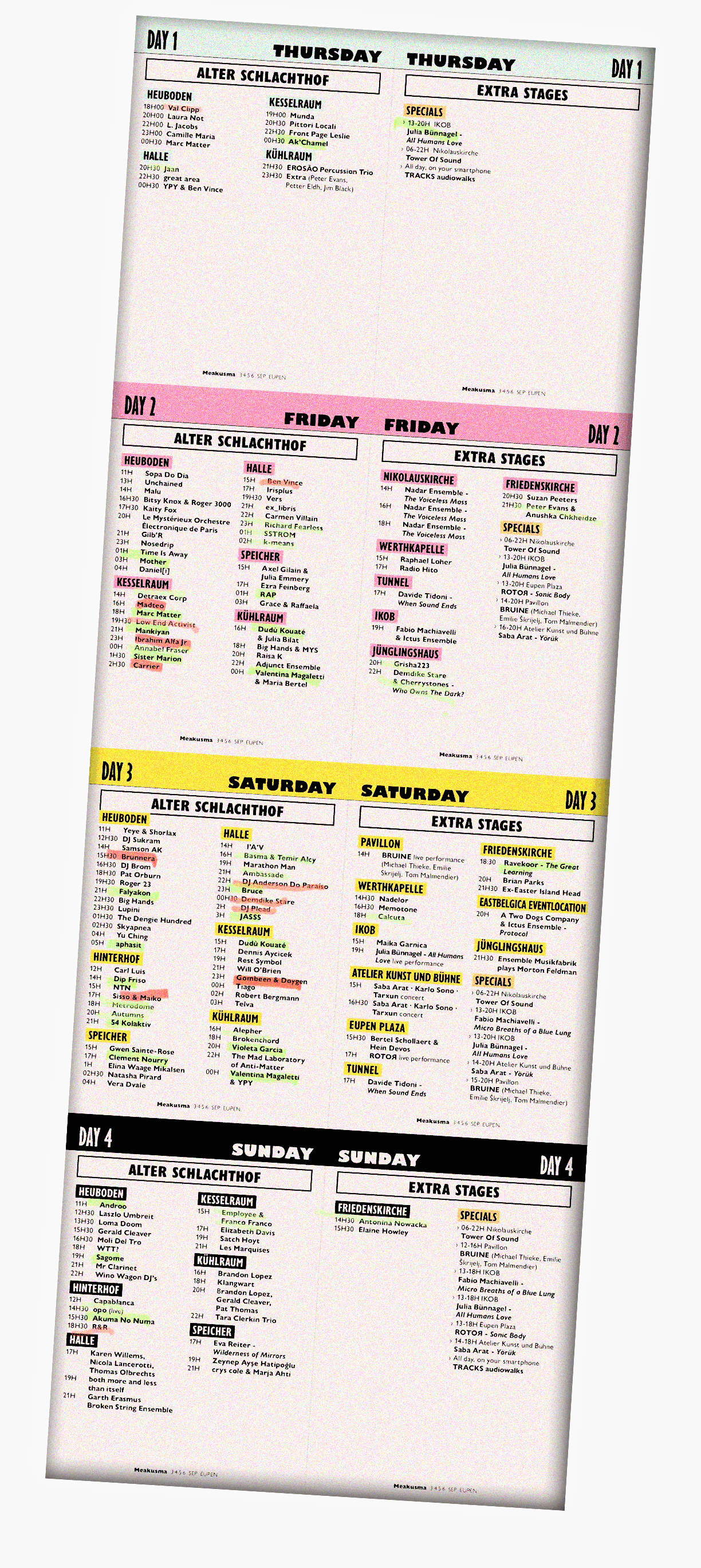
One of the main reasons why I wanted to be on this festival was Val Clipp. The Hague based artist with his surreal poetry wrapped in hazy, hauntological dub and ambient sounds like a broken radio broadcast. But he was scheduled for the opening on Thursday. Having arrived in Brussels completely shattered, I decided to sleep in a proper bed at a friend’s place for one more night instead of jumping straight into a tent. Zero regrets.
Friday
Made it to Eupen in afternoon. First was Ben Vince. The guy experimentally samples the saxophone, turning it into some techno-who-the-fuck-knows-what, but with a very retro, almost classic sonic texture.
Quick note on sound: Most stages ran on L-Acoustics setups, so no complaints about the punch or clarity.
Then was Madteo—a classic. Pure outsider-electronic royalty—an Italian NYC veteran who’s been churning out raw, tape-mangled dub-house, sluggish hip-hop beats, and lo-fi techno for over two decades. He sat hilariously behind the table, occasionally jumping up, delivering a super chilled-out set.
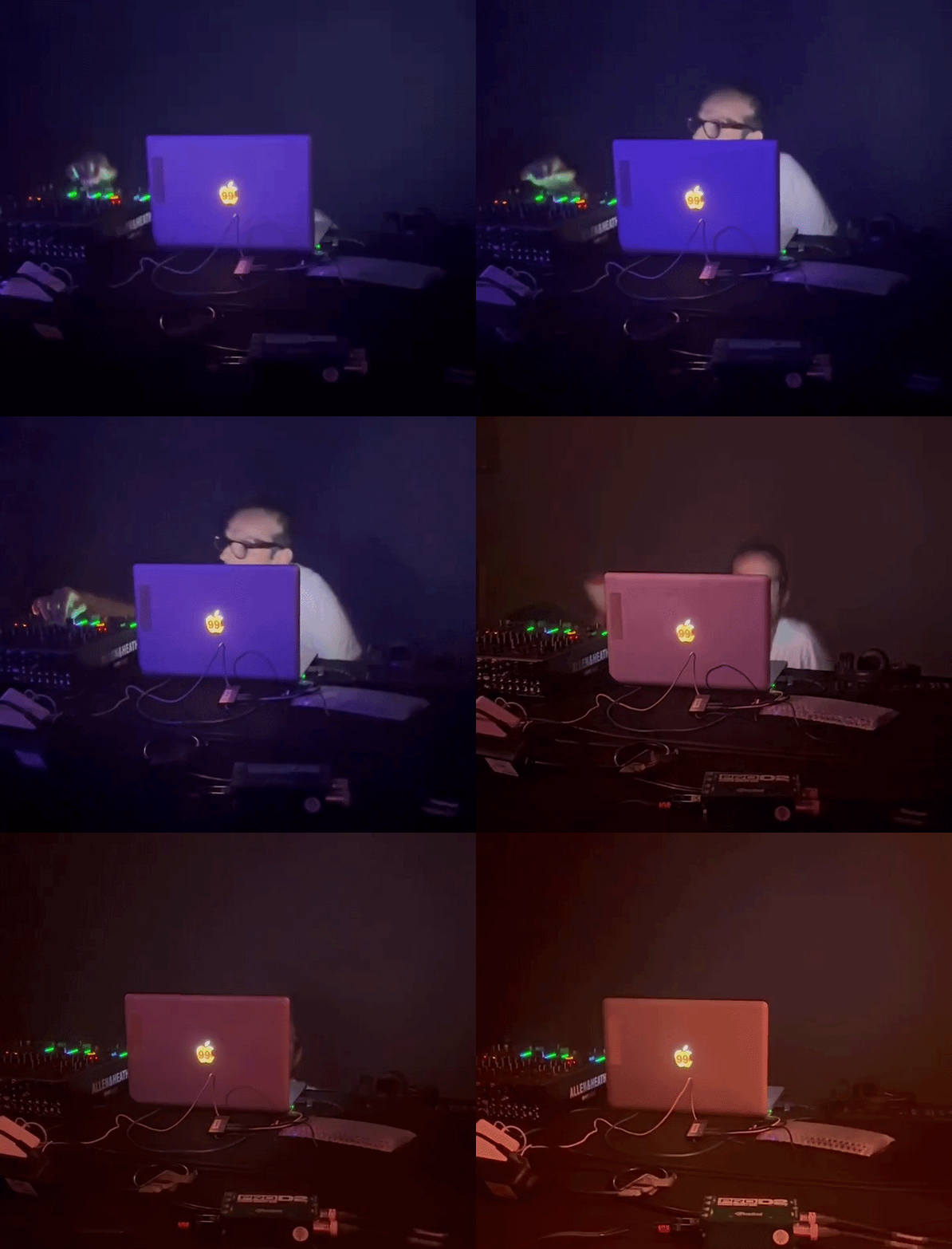
After Madteo on the same stage was Marc Matter. Professor at Düsseldorf’s Institute and a staple of the Belgian label (s?). His thing is text-sound composition and tape manipulation—chopped-up vocal samples turned into dense collages. On paper exactly my type of set. Ended up feeling way too heavy, almost schizophrenic.
On the flip side, performance of Big Hands & MYS that were not on my list. Their set was hauntological, full of stray sax interventions, and buried under a pile of hardware gear—genuinely didn’t expect to get sucked in that hard.
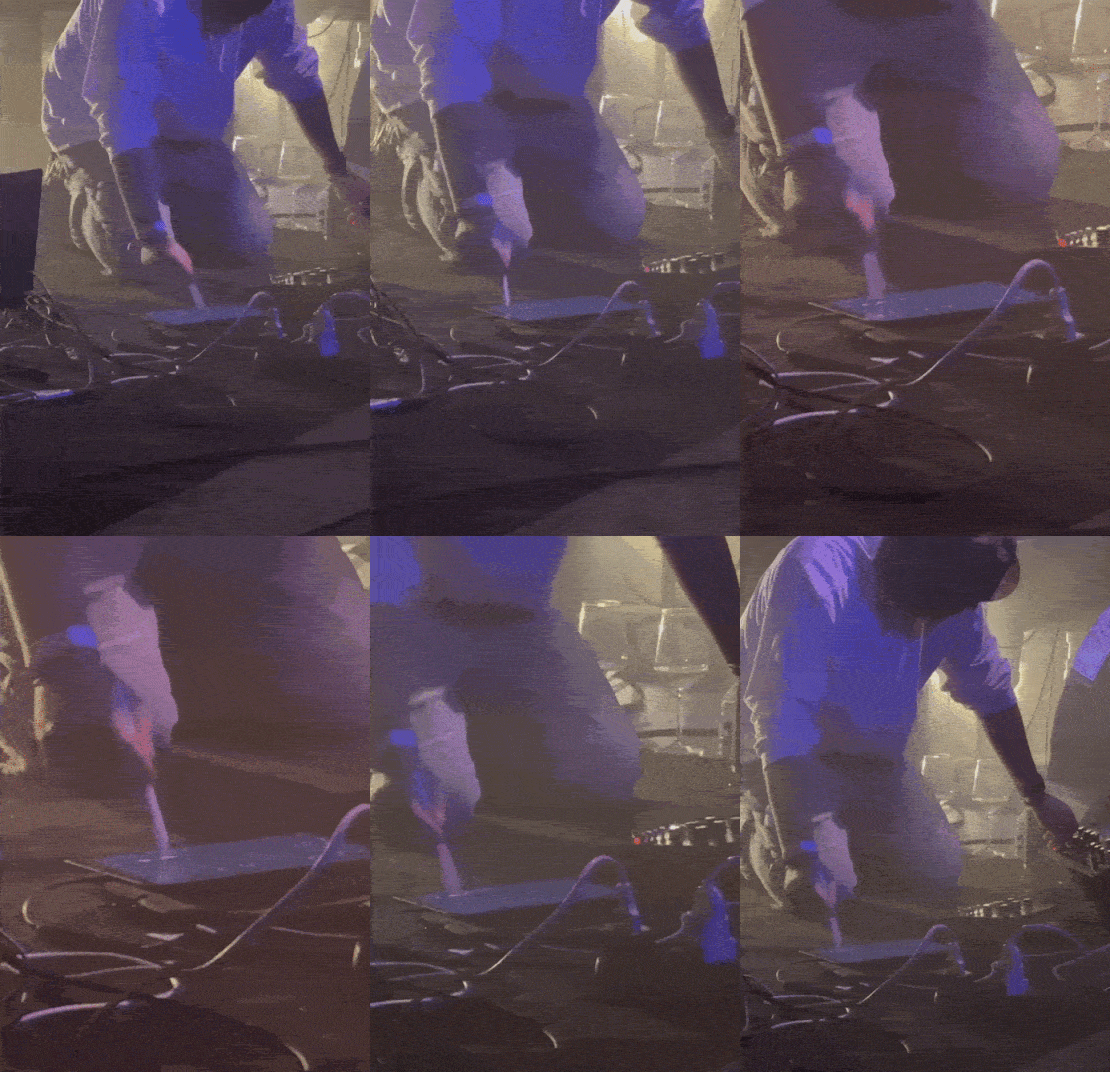
Right after them, Low End Activist brought flawless intelligent dub and broken beats—seamlessly blended, like one monolith piece. He is the mastermind behind the legendary Sneaker Social Club label and parties in Ohm. He deconstructs the UK hardcore into skeletal grime, broken beats, and atmospheric 'deprivation chamber dub'. One of my fav sets of all event.
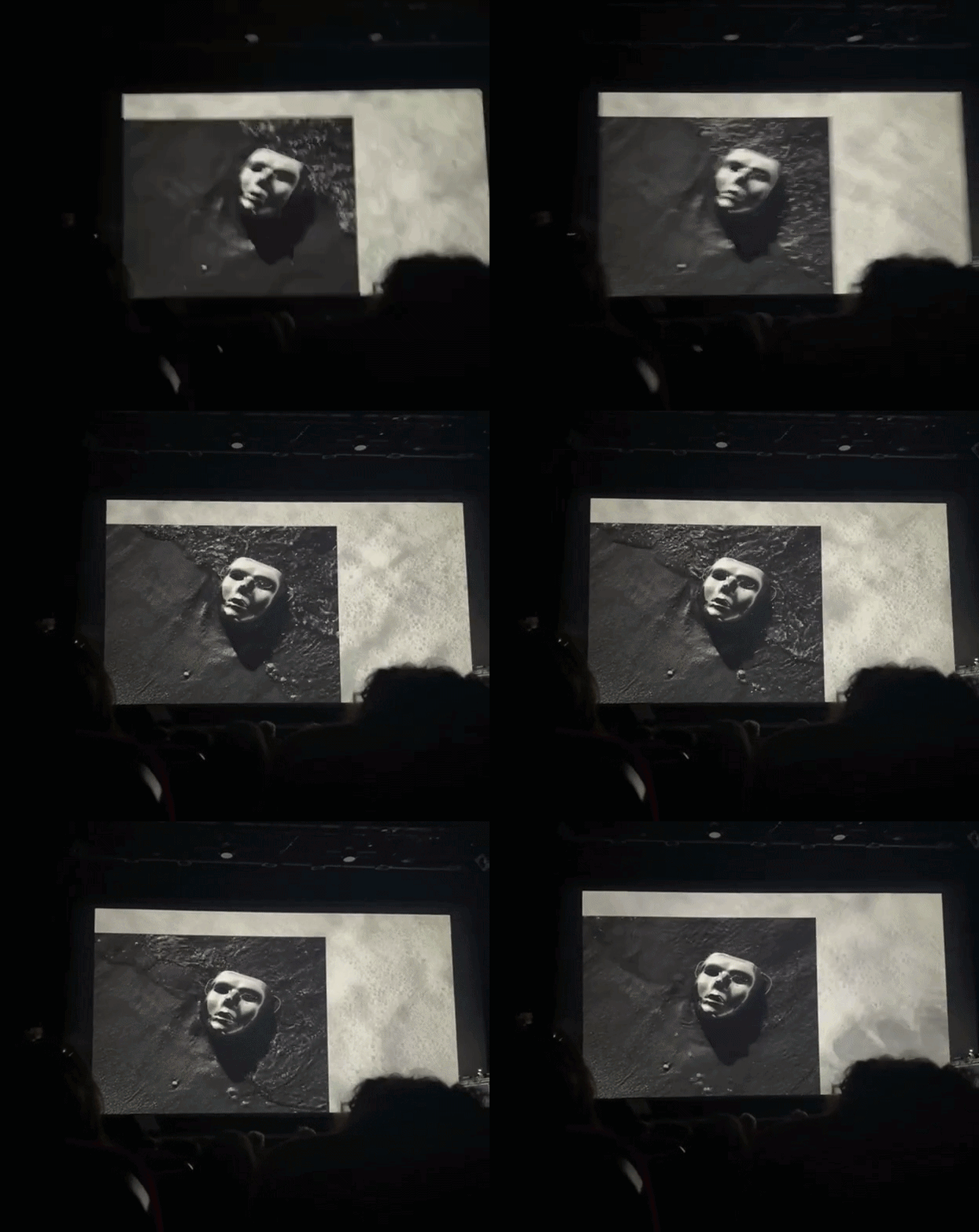
Later, I headed to the Demdike Stare & Cherrystones performance in an off-site city venue called Jünglingshaus. The atmosphere there was interesting: essentially a local cultural center where elderly regulars were sipping beer in the foyer on a regular Friday night, with us festival freaks mingling around them. Then we were ushered into a classic cinema hall with red velvet seats. The performance concept was built around these three guys, each with a deck, live-stitching a shared canvas. But as someone who graduated from art school with a degree in video art a decade ago, watching the visual backdrop was physically painful. Water vs. fire, some random mask floating in water… The only association I had was the opening scene of Jim Carrey’s The Mask, even though the artist clearly intended some deep philosophical metaphor.
Escaped back to our cozy festival grounds to listen Annabel Fraser's set. Manchester underground star (zvezdochka) and an NTS resident. A true selector’s selector, playing strictly vinyl. She’s usually weaving UK bass, raw industrial, house with hazy dub, but as her Soundcloud says 'a lover of music not genres'. Her set was pretty smart and funny.
And then was k means. She is from Bristol and known for her polyrhythmic sets, seamlessly shifting tempos and genre boundaries while burying deconstructed club sounds under massive layers of sub-bass. But, honestly, can it get any better than this? She literally wrapped the room in a warm dence blanket of bass. The set was insanely intricate and calculated: the tempo shifted so gradually, sliding through every genre imaginable, but strictly through a distinct UK sound lens. That bitch deconstructed TikTok soundbites with more sub-bass weight than anyone ever has. We all were glued to the dancefloor. I was planning to catch the Carrier, who was playing literally next door, but physically couldn’t force myself to leave.
What I also noticed at that time (around 3-4 am)—major difference from Berlin: The entire evening doesn’t revolve around the bag. People here drinking couple of beers, doing bumps occasionally but that’s it, nobody circling back and forth to the bathroom (nobody occupying toilet booths with a huge crowd of 4-5 people).
Saturday
By 3rd day everyone’s social anxiety had completely dissolved: the hungover crowd was relaxed and floating on the same wave.
I started the day at the 54 SOUND stage. A true custom dub sound system, but tuned so exquisitely that you could listen to anything on it. Their afternoon set showcased perfectly selected dub, letting the rig unleash its full potential.
Then I went up to the top stage to catch Brunnera. He delivered a totally unhinged, fast-paced set of cartoonish braindance and mutated UK bass. It was a chaotic, high-BPM collage of pitched-up 8-bit synths, wobble bass, and goofy, hyperactive sample abuse.
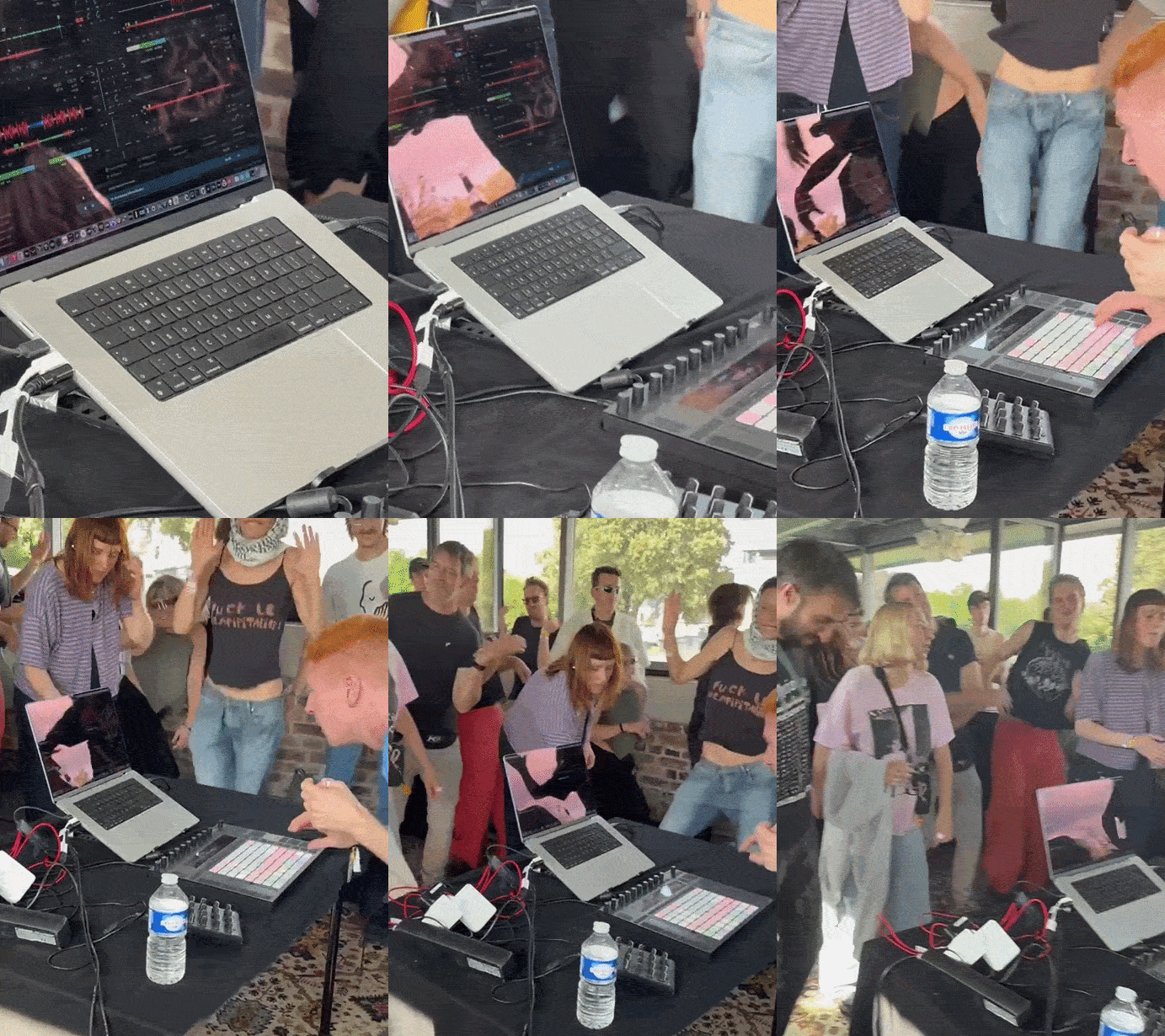
This stage, called the Heuboden, btw was fitted with custom speakers from the Dutch DIY-outfit Kikuno. The horns are 3D-printed, the sound was extracted straight through custom circuit boards, and they were running a dedicated app for micro-tuning the acoustics alongside the mixer and laptop.
Later, watching (and dancing to) Sisso & Maiko's performance, a thought hit me: people here aren’t afraid of just fooling around with their bodies. It’s actually the perfect festival to go to alone. It’s almost impossible to feel like you don’t belong here unless you do something genuinely inappropriate. A stark contrast to Berlin (sorry for constantly comparing, but it’s my main frame of reference now), where you’re easily made to feel out of place if you’re not dress-coded enough or not moving conventionally enough for that specific party.
Even though it was painfully hard to pull myself away from the main site, I forced myself out on my second day. I was way too curious to check out the off-site locations—and they turned out to be absolute gold.
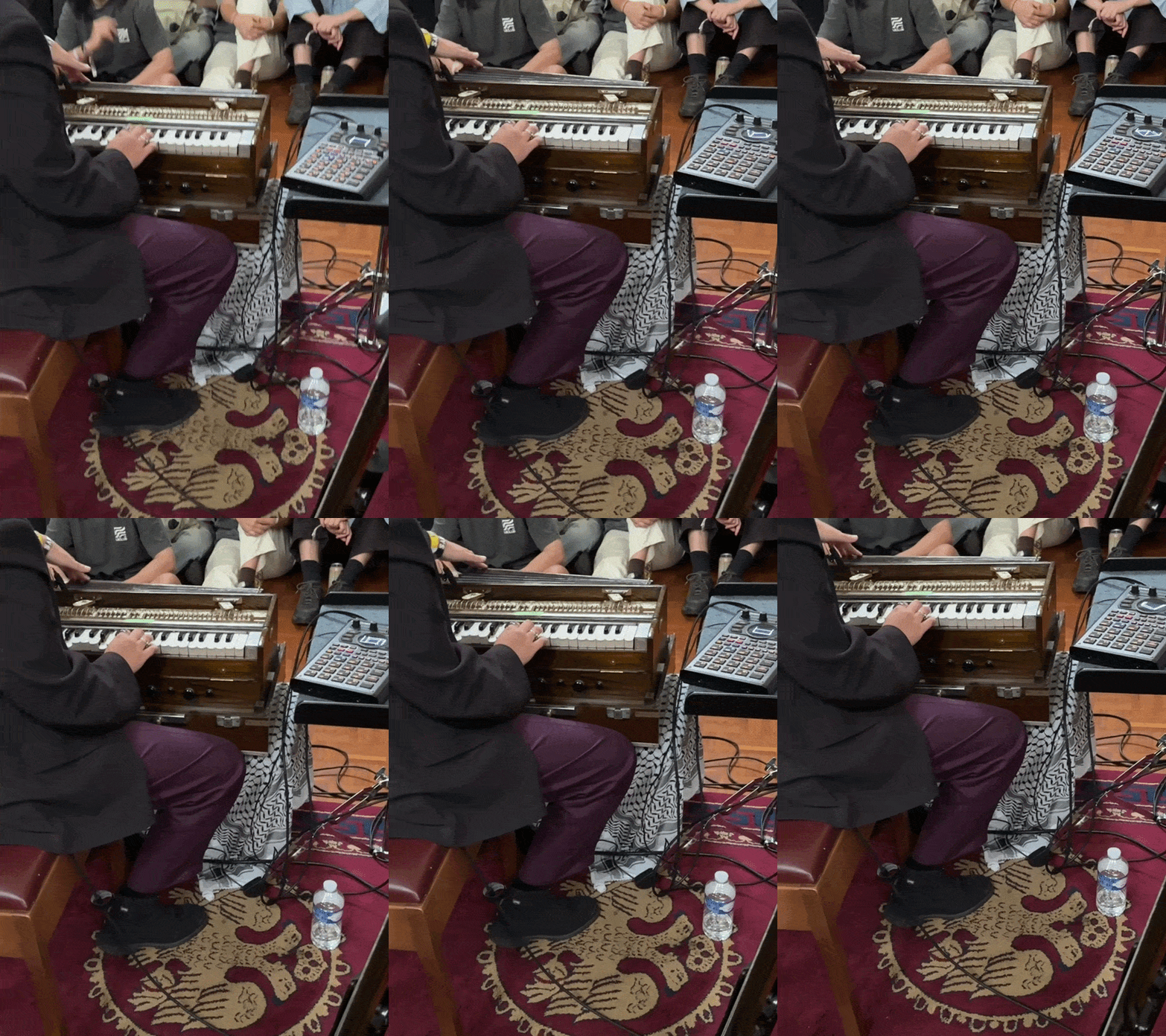
My first stop was Calcutá in the oldest church in town. An incredibly talented multi-instrumentalist, but the church itself was just as impressive: wooden interior, organ up top, and a parish shared by Roman Catholic and Greek Orthodox communities. The Orthodox side definitely wins the decor battle—the main altar is decked out with familiar icons and faces.
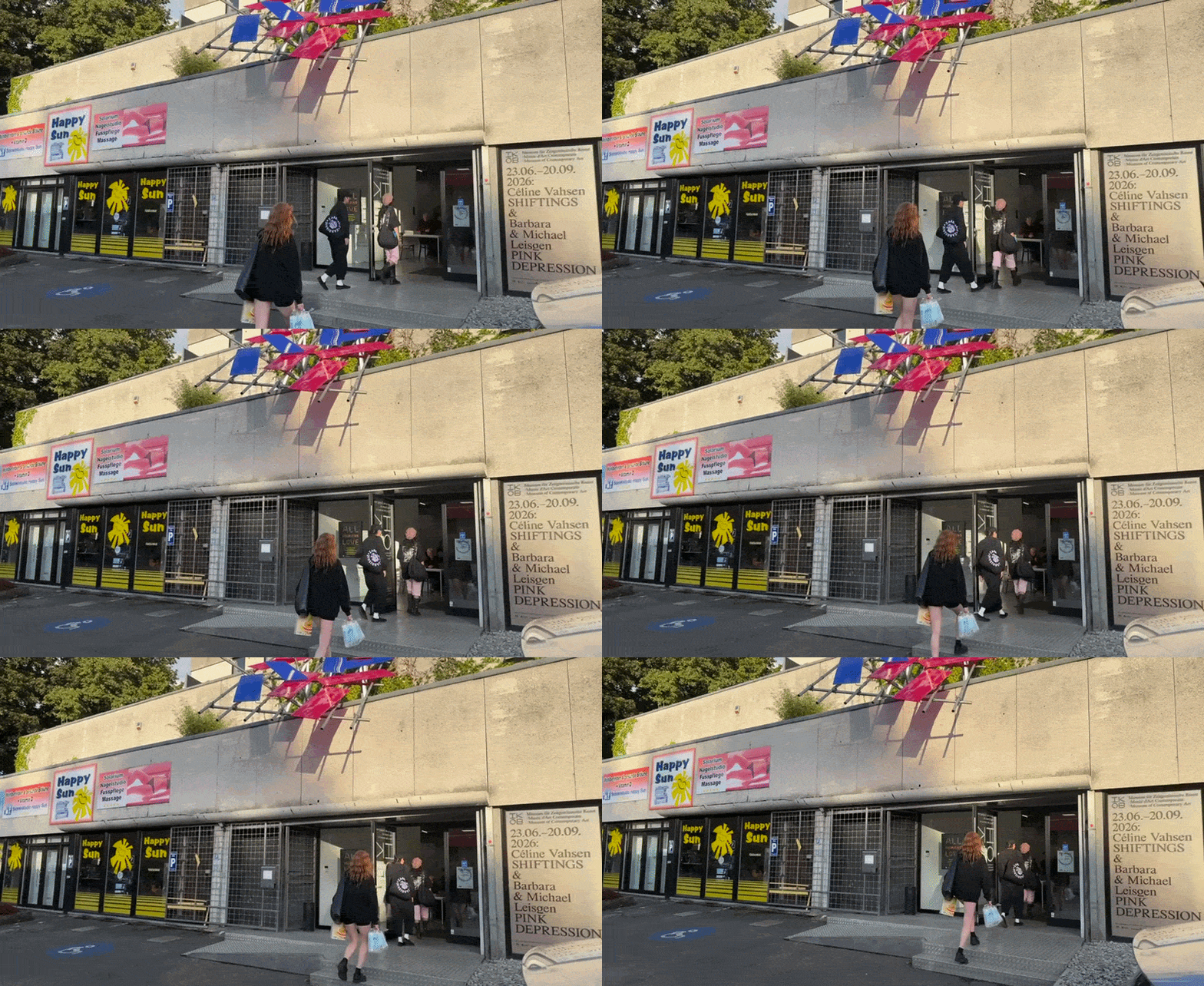
Little bit about the host city. Eupen is a tiny town of 20,000 residents right near the German border. I love Belgium for its openness and its ability to absorb neighboring languages like a sponge. Everyone here casually speaks 3 or 4 languages. The town itself is nice and calm—fruit trees (apples, pears) growing right in public parks reminded me of the Donetsk region (before 2014 ofc). It also blew my mind that a town this size hosts a contemporary art museum (IKOB), which hilariously shares a building with a tanning salon.
Then I ran to another church for Ravekoor. A massive, traditional cathedral vibe with a mind-blowing choral performance. Hearing choral harmonies while the singers moved dynamically through the church space created an intense, visceral impact.
Back to base. It was a schedule overlap in my plans, but I opted for Violeta Garcia (figuring I could catch Autumns outdoors later).
A quick side note on the festival logjam: If you have queue-related anxiety or generational trauma (for example like me as a person from the Soviet Union) of standing in lines, Meakusma will test your limits. On top of the usual festival lines for food, drinks, and toilets, you have to queue just to enter almost every stage. (Oh yeah, it’s mostly an indoor festival, if I forgot to mention). The organizers clear out and close the rooms after each performance, reopening them right before the next artist. This creates some, I would say, artificial demand: people pack the rooms like sardines in each room and do not rotate so much during the whole performance, even if it’s a DJ set, because they suffered in line to get in. Sure, I get the concept—it enforces active listening and respect for the artists. Later I asked orga about attendance numbers—turns out it was 5,000 (1,300 in a day, still don’t get the numbers but OK). Five thousand. For a venue that tiny? No wonder it felt like a claustrophobic nightmare half the time.
So back to Violeta Garcia. There was a peculiar pleasure in hearing the raw, heavy thud of the bow bouncing off the strings with heavy reverb (the kind of sound classical musicians usually try to eliminate). And then came the lowest sub-bass of my life. I was standing right next to the stack. It felt like the tectonic shift of an earthquake. Or like a helicopter landing directly on top of your skull.
Retreated to the adjacent room to heal my ears with dub. If you’re still trying to figure out what the greatest music genre in the world is—let me tell you: it always was, is, and will be dub. You know that myth about plants and animals loving classical music and snowflakes forming perfect crystals to Mozart? My question is: have they ever tried playing them dub?
Then during DJ Anderson Do Paraíso, the main hall was crammed, with everyone moving in sync with crazy energy. It was the first performance of the night where everyone was visibly drenched in sweat, including yours truly. Apperently this show drained my last pieces of energy. Not even a Ritalin pill (prescribed for my ADHD) helped—if anything, it made me sleepy (how?).
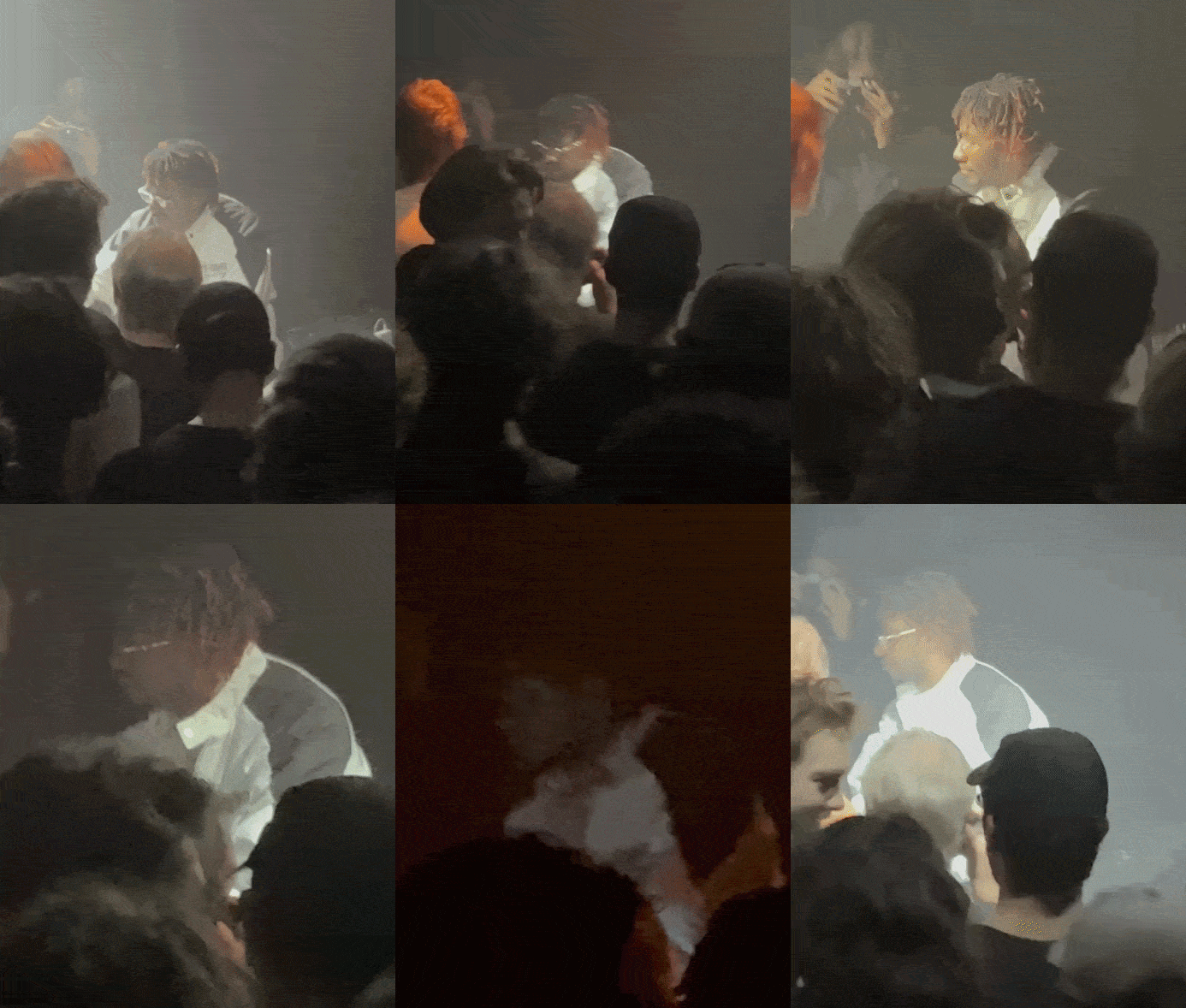
Valentina Magaletti was completely unapproachable on Saturday. She’s a fixture at this point on any self-respecting festival, but I’ve never seen this level of hype around her before. Thankfully I had caught her collaborative perf the day before.
Next was another round of dub with Ambassade, followed by Demdike Stare DJ set on the same stage. Nothing much to report—just solid as always, they’re seasoned pros. But after DJ Paraíso, my energy was completely depleted, so I just sat there zoned out thinking that actually this event is def slightly male-dominated: and not just by the line-up… mostly cis men over 30 in the crowd (many of them quite handsome, which, as a heterosexual woman, I wasn’t complaining about). Queer vibes were present, but without the intense Berlin posture. While I was sitting there in a half-dazed state, a group of girls in the Kesselraum hallway started a goofy dance-battle circle during Tiago's set. Instantly brought me back to life. Ended up dancing and powering through until 5 am.
Tell me why, second day in a row, I keep making friends exclusively with people from Germany or people who now live in Berlin?.. Is it my aura now? My KARMA?!
Sunday
If I’m honest, was pretty much a write-off. Every single time I go to a festival I somehow forget how physically limited I actually am. Made the executive decision to leave around 5-6pm instead of dragging it out late — figured I’d rather go lie low in Brussels and have a calm Monday.
Kicked off "morning" back at the bass stage with a surprisingly organic live set by opo (a member of Barcelona’s Jokkoo Collective). Warm, experimental Sunday chill: live clarinet over dub, some electronics, soft ambient textures underneath. Exactly what my body needed at that hour.
Then Akuma No Numa started. The Japanese trio whose name literally translates to 'Devil’s Swamp'. Though, I think it was two of them… not sure though, I was too gone by then to describe it properly—just remember it being slow, murky, and somehow exactly what my brain needed.
Ran into some friends. They talled me that I missed a lot of great stuff (well, what you gonna do?). There was powerfull work of Iranian artist Saba Arat: she was weaving a rug live, embedding conductive materials and sensors directly into the fabric as she worked, turning traditional textile craft into an interactive sound installation.
There was also a kinetic installation ROTOЯ featuring high-speed rotating speakers with synchronized video mapping, creating an illusion of liminal corridors and reverse rotation. Microphones placed directly opposite the speakers generated a disorienting spatial echo so you couldn’t tell where the sound was coming from.
Quick apology: I didn’t really cover the more experimental/composition-heavy acts this time around. Funny enough, a decade ago at art school I studied under some of the famous electro-acoustic pioneers in Russia—but keeping up that kind of interest long-term has never really worked out for me.
____________
On the train back while talking with a friend, I came to a weird conclusion: Meakusma’s crowd has this light aura of exclusivity and an obsession with "underground cred". From my point of view (as a person from the deep Russian suburbs), all these artists are just great, but pretty established musicians. When people asked me for the third time, "Wait, how did you even hear about this festival?", I initially answered straightforwardly something like "idk, from friends", only to watch their eyes glaze over with a sudden, cold loss of interest. Only later did I realize I should have put on a mysterious face and claimed I was there on press accreditation to cover specific acts. Lol.
Someday I will find my ideal summer festival and report back to you. I’m already eyeing a couple of niche ones in France for next year. Stay tuned. But to be honest, I’m getting even more curious now to check out something stupid and famous like Ibiza. Don’t know about you, but getting older, I’m starting to get tired of overly complicated vibes.
Do vstrechi na tanzpole (tam alkogol v coca-cole).
P.S. Earlier this year, I also attended a small, blackbox, Nordic LARP festival in Finland (no costumes, pure concept). If you want a breakdown of that experience, let me know in the comments.