Why Russian?
“But why Russian?”, еveryone keeps asking me. I never seem to give a satisfactory reply, each time blatantly expected by that one person who knows better than studying a language of the well-known oppressor. Indeed—I always feel I should come up with something, be it an excuse, an apology, a plan, an argument, a clear anti-war statement, just to leave no space for doubt which side of history I am standing on. Why Russian, then? “Why not English, or Swedish, or any other language, just not Russian, the language of violence and death? I will never ever speak it again!”, an outraged Ukrainian girl shouted at me in Tartu, a small town in southern Estonia, when I told her, somewhat reluctantly, that I had been studying Russian Philology at the University of Tartu. But during these two years I was lucky to meet Ana who doesn’t know the answer to “Why Russian?” either. Oddly enough, it was the suffering at the Russian Syntax lectures that initially brought us together.
“Why Russian?” That is the question I have been asked most often, usually nonchalantly, by people who are anything but clueless of what I am studying. Friends hungry for gossip, delighted to witness yet another casualty from the “humanities sphere” applying for paro, i.e. unemployment benefits. My family was initially enthusiastic—seduced by the exoticism of the cyrillic alphabet and the gravitas of Russian literature—then increasingly worried, and finally confused, when after the 22nd of February I decided to continue studying the language anyway. Professors, meanwhile, have always followed the same script: a tone of moral superiority while teaching me Russian language, Russian geography and demography, Russian culture, Russian history—all of it, without exception, referring exclusively to the non-democratic state of the Russian Federation. Who remembers now my first year at university, meticulously copying and tracing the Russian cursive alphabet in a lined notebook? Then came the cases (genitive: биолога нет). I even fell in love—also nonchalantly, in my first Russian class.
The Ukrainian girl was unapologetic, still. Needless to say, I was bewildered, if not embarrassed. Apart from the painful fact that my prefrontal cortex was clearly impaired by stress hormones, I retrospectively realized one other thing. The ineffable rule of our heated “exchange” (for the lack of better word) was that I could and should not have even tried to win from the logical standpoint. How could I have explained to her that I condemn this war, not just this one, but every single one; that I feel ashamed on behalf of the supposedly equality-fuelled and say-no-to-cultural-supremacy-inspired European Union which, before this war, had not really put any interest in the Ukrainian cultural realm; that I am not in the least interested in the pro-regime Russian authors, but especially intrigued by those who question their bond with the Russian language and their homeland instead (I am not even interested in the classics anymore which had happened before the outbreak of the war!); that I never spoke Russian to any Estonian in a shop or cafeteria, even when I had reasonable grounds to suspect they were of Russian descent; that I would not resort to English (I am writing in English now, am I not?) nor Swedish (remember Sámi people?) in search for an exemplary language, but yes, I would, albeit intuitively, say both Swedish and English could be separated from the violence and deaths they have caused in the past as I believe, intuitively again, for the sake of my affection for languages, that violence is not inherent to a language whereas the opposite has been proven true many times? I would say the same about Russian or any other language. None of this I could say to the Ukrainian girl, the survivor of the Bucha war crime, though. But it made me think.
And yet, the more I studied Russian, the more bored I became. I was certain: I belonged in cinema, not in languages. But as life so often proves, comfort tends to win over novelty. Then the Russia’s full-scale invasion against Ukraine began—precisely when I was supposed to leave on exchange to Moscow for a year and a half—and my relationship with Russian deteriorated completely. Fate, however, is rarely subtle. The eighteen-year-old Ana who once swore she would never study Russian again—because leftists do not study the language of expansionism, imperialism, colonialism, and a long list of other -isms—found herself in Tartu, Estonia, enrolled full-time in an MA in Russian Philology. And there, amid yet more Russian language, Russian geography and demography, Russian culture, Russian history—again, all of them framed exclusively through the Russian Federation—I fell in love once more.
This time, it was love at first sight.
I met my best friend: Manca, an incredible Slovenian woman.
And what happens when two women, eager to uncover what Russian academia prefers not to say, meet in Barlova, drink beer, dream of reading modern literature instead of Tolstoy, long to learn accents and dialects rather than memorize Grammar and Syntax, begin asking why Tatarstan, Dagestan, or Kazan never appeared in our syllabi, and wonder what would happen if Russian Philology was instead called Russophone Philology?
Well—this happens.
Each of us coming from very different linguistic backgrounds, Ana and I have yet another thing in common—we do not underestimate the power (in the broadest sense of the word) that languages exert. Ana is Spanish, thus setting in motion a whole imagery repertoire of sunny and passionate Spain in whoever’s mind’s eye every time she introduces herself, accompanied by clumsy Hola qué tal that I am sure she has heard a billion times. I, on the other hand, do not awake any concrete associative network apart from Luka Dončić, probably our most famous export product, and a connection to Yugoslavia (Tito, right? And what is it … Bratislava? No? Aaa, Ljubljana!) if a person is old enough to know it. This is not me complaining, this is just me pointing out something that made me think, again. Spanish (castellano, of course) is a huge world language, conquering the continents at the time when Slovenian was still considered to be too barbaric to be systematized in a written form, overpowered mostly by German both culturally and linguistically. Maybe this is why I am so intrigued by the mechanisms of the so-called “big languages”. This notion is not solely based on the number of speakers or translations made annually into a certain language, but rather on the language’s dominance which inseparably entails cultural and historical primacy. This ever so obvious yet often invisible veil of influence has always fascinated me—for example, at one point during WWII Slovenia was occupied by all its four neighbours, then Nazi Austria, Independent State of Croatia, Kingdom of Hungary, and fascist Kingdom of Italy. Naturally, Slovenian was prohibited, names and surnames were changed to sound more German, Italian, Hungarian and Croatian. But the power of the neighbouring languages, German still being the strongest, had manifested long before the nazi-fasci crazyheads wanted to own the past and future. Historically, Slovenia (a somewhat shy adolescent state, still, born only in 1991) has always been divided by and subjected to the surrounding actors, contributing to its linguistic and dialectical diversity.
Manca comes from Slovenia—a place where people speak Slovenian. Before meeting her, I only knew Slovenia existed because my parents had studied a map of Europe that still included Yugoslavia. When I was born, my parents made a point of showing me everything they had learned that differed from what I was taught at school. This resulted in years of map comparisons, books, and films. I learned about Yugoslavia first, and Slovenia later. No one ever told me that people there spoke Slovenian; I never asked. I simply assumed it, adding the language suffix automatically, as we do in Spanish.
Slovenia, incidentally, is one of the few European countries that has never colonized or occupied another territory.
Spain, of course, cannot say the same. I am Spanish, and I write this with a note of shame. Though we are internationally recognized as a proud nation, pride is difficult when the land still covers the bodies of half a million people killed during the Civil War. It is hard to feel proud when a special law was required—only in 2007—to dismantle Francoist monuments. And it is impossible to feel proud knowing that on the day Franco was exhumed from El Valle de los Caídos in 2019—a monument Republicans were forced to build—elderly women wept because “the dictator was leaving his home.”
We are also a colonial country, of course. Yet little attention is paid to this in school, where colonialism is framed as a heroic quest: El descubrimiento de América. I was thirteen the first time I left Spain to attend a summer camp in London. I befriended an English girl who told me, bluntly: “Your country killed a lot of people.”
“No”, I replied. “We discovered them”. (Anyhow, she was British, so her country hadn’t done any better.)
The Slovenian authorities erased 25 671 citizens of former Yugoslavia from the civil registration system after the declaration of independence—and I am writing this with almost indecent pleasure. These people had been living in Slovenia but were ethnically marked by the “soft č letter”—ć, which indicated their non-Slovenian but Serbian/Croatian/Bosnian/Other provenance, they were “down from the South”, as we would say. Ć is not part of the Slovenian alphabet. Apart from the erasure and loss of citizenship as if they had not existed, what is more, is that on many occasions people with ć in their surnames were requested to change it into a “real” Slovenian č. Similarly to the ć letter, these people remained without any legal status in Slovenia after the dissolution of Yugoslavia. Only recently the official reparations have been made. Every language (it does not have to be a big one) can indeed be easily turned into a violent beast by those who really want it.
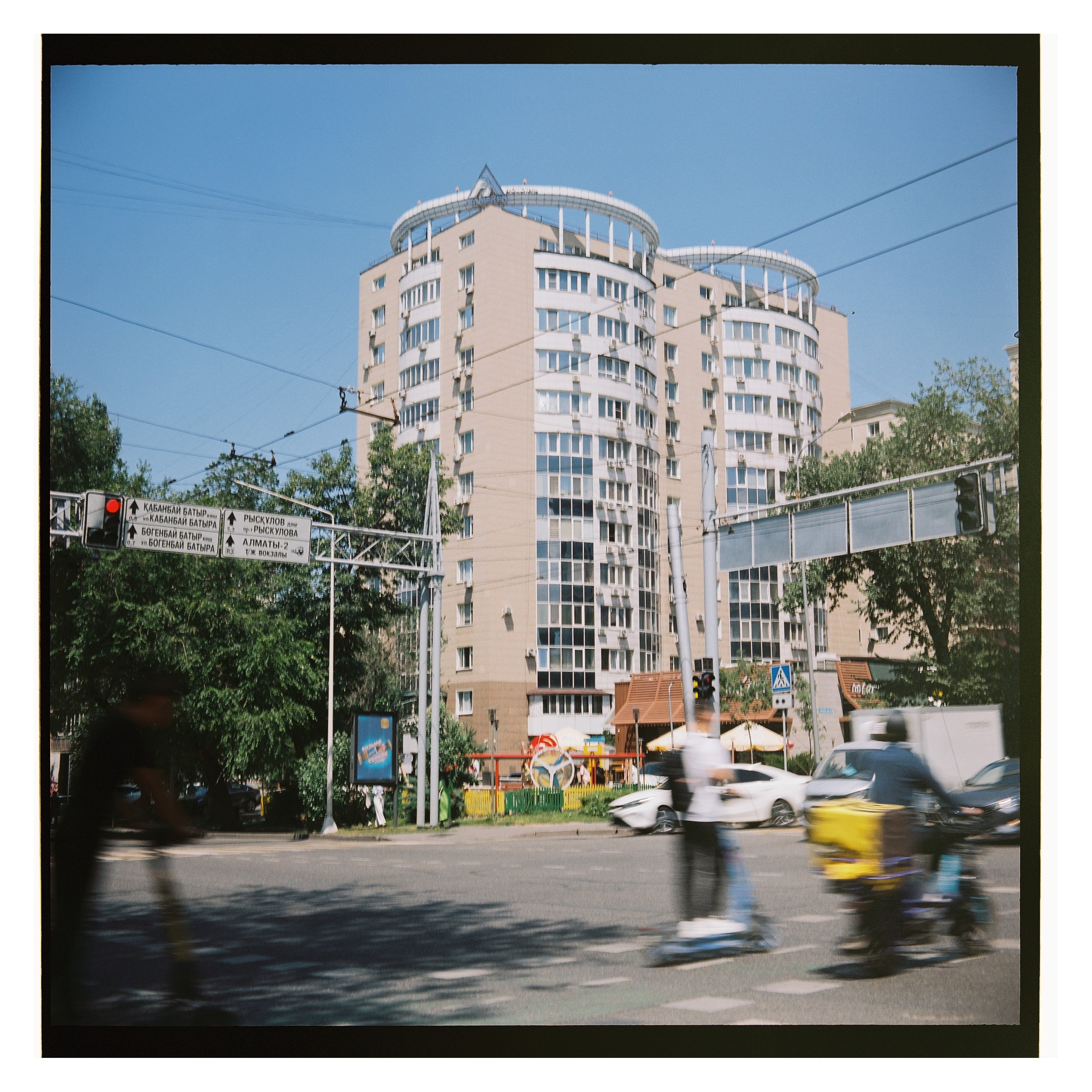
This summer I went to Almaty, where I spent several months teaching Spanish, practicing Russian, and getting to know people. There was little reasoning behind choosing Almaty beyond the fact that it was the only place willing to hire me. Still, the decision was heavy. Why Almaty? Was it ethical to go there to practice Russian—to finally learn about places Russia colonized but that were never mentioned in my education?
To help me decide, Manca joined me for two weeks. Those weeks remain, to this day, the happiest holidays I have ever shared with a friend.
People were always surprised by our pairing—Spain and Slovenia—and they inevitably asked two questions:
Why Kazakhstan?
Why Russian?
And we kept asking these two questions to ourselves:
Why Russian in Kazakhstan?
Why Kazakhstan in Russian?
No one objected to the language. On the contrary, people seemed proud, even impressed, that we spoke Russian. Neither Manca nor I—despite my longer stay—ever intended to learn Kazakh, and no one made us feel that we should. This unsettled us deeply.
While the term “decolonial writing” does not fit the Slovenian literary sphere (although it would be interesting to address the issue of various occupation periods throughout Slovenian history from the (de)colonial standpoint), it has been very much present on the world literary stage. It deconstructs precisely what has always been ever so obvious to all of us—the supremacy of certain languages due to the colonial superpowers. But only recently has the focus turned to the Russophone sphere, or rather the Russophone sphere has started to shift the focus to itself. Sadly enough, and broadly speaking, this process was much accelerated by the Russian invasion of Ukraine that was “lucky” enough to be EU’s neighbour for the latter to pay any real interest in its cultural production. Apart from other horrific repercussions if instead of Ukraine it was Estonia, Latvia, Lithuania, Moldova and Belarus, similar interest on the part of the “Westerners” would emerge but, again, it seems like more out of fear and fake solidarity than real curiosity. But imagine if it was Georgia, Armenia, Azerbaijan, Kazakhstan, Uzbekistan, Kyrgyzstan, Tajikistan or Turkmenistan? Ana and I doubt it and for a very simple reason: we (us, “Westerners”) know nothing about these countries and always refer to them as the post-Soviet space. To the European part of the former USSR as well, for that matter. Factually, yes, but this is not what Glissant had in mind with his Poetics of Relation, hollowing out the France French primacy over the Martinique French. Criticizing the self-indulgence of the Western languages as the first thing, imported by the conqueror, Glissant emphasizes the concept of relation and errantry as essentially undermining the monolingualism of the conquest. It is only in acknowledging this errantry, this “peripheral” thought, that both parties are allowed to exist in relation: “Because the thought of errantry is also the thought of what is relative, the thing relayed as weIl as the thing related”. Russian is no less colonial language than other “Western” languages. That is why Glissant’s observations undoubtedly address the “post-Sovietness” of the above-mentioned spaces, too.
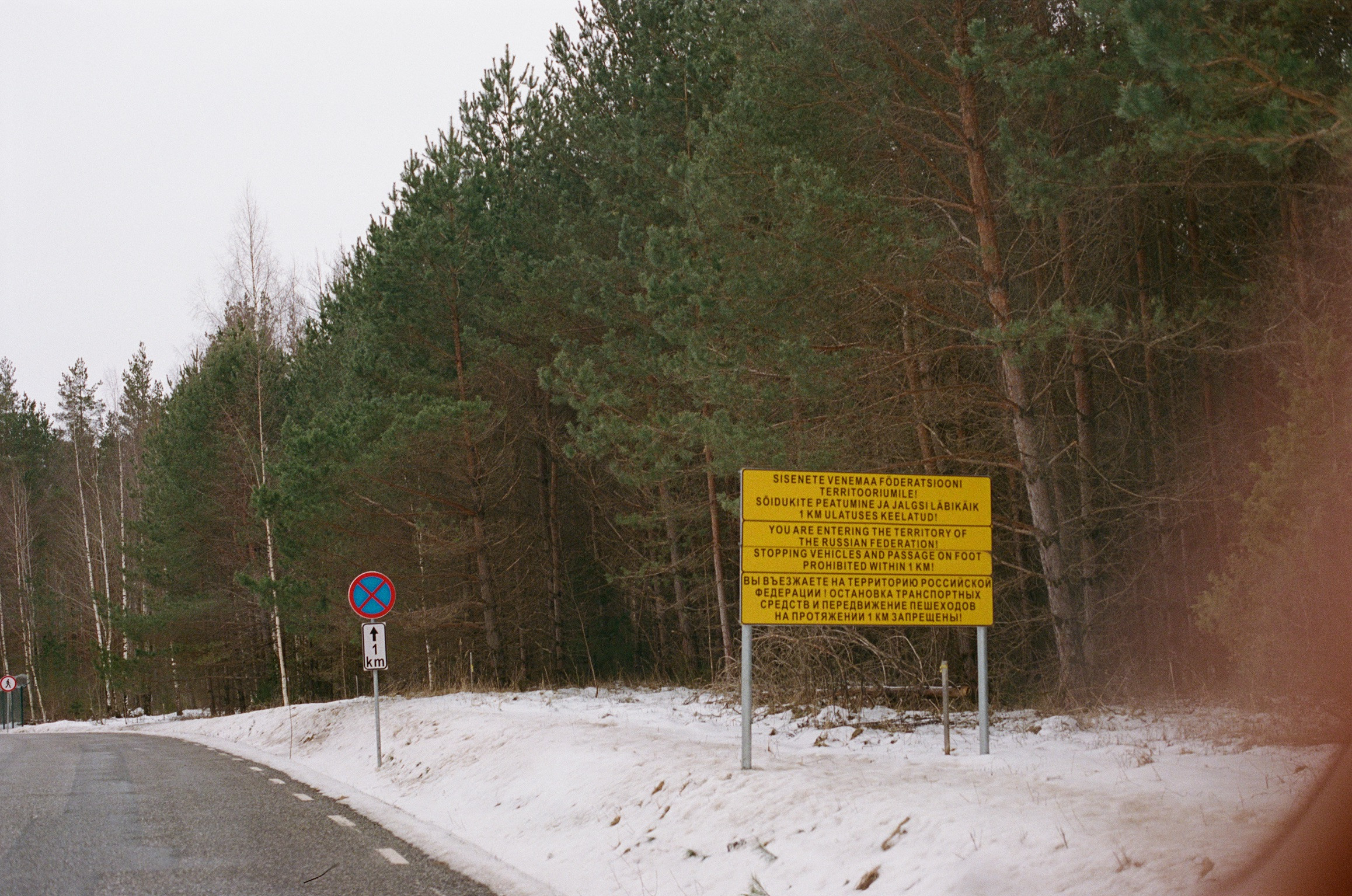
Estonia, by contrast, offered a radically different experience. Estonians are incredibely proud of their language, and communication is preferred in Estonian. Russian exists, but subliminally—in another reality that is difficult to belong to. Russian is the language of elderly people who never learned Estonian and refuse to do so now, and of children born in Estonia to Russian-speaking families. In public institutions, on the street, and at universities, Russian is concealed, and even English is preferred.
Now, sitting at the airport on my way to France, watching people pass by, I think of Édouard Glissant: “To write in the presence of all the world’s languages does not mean to know all the world’s languages. It means that I can no longer write in a monolingual manner”.
Since I began writing, I have always done so in the presence of the world’s languages—yet without agency. However, this is the first time I write without knowing who is on the other side of the screen. And that, paradoxically, makes the exercise better still: it forbids me from being monolingual and forces me to remain alert to other realities. Perhaps the most urgent of those realities—one that Manca and I continue to grapple with after studying Russian under everyone’s constant questioning—is the violence languages can exert, and the urgent necessity of linguistic decolonization. Russian, in particular. Troubled by an emeritus professor’s claim that “all literature written in Russian belongs to the Russian Federation”, Manca and I dove headfirst into the inevitable. What about literature written in Russian outside the Russian Federation—say, in Estonia? This led to a series of conceptual puzzles surrounding “Russian identity”, if such a thing even exists; what it means to be Russian; the idea of русский мир; and a lot more.
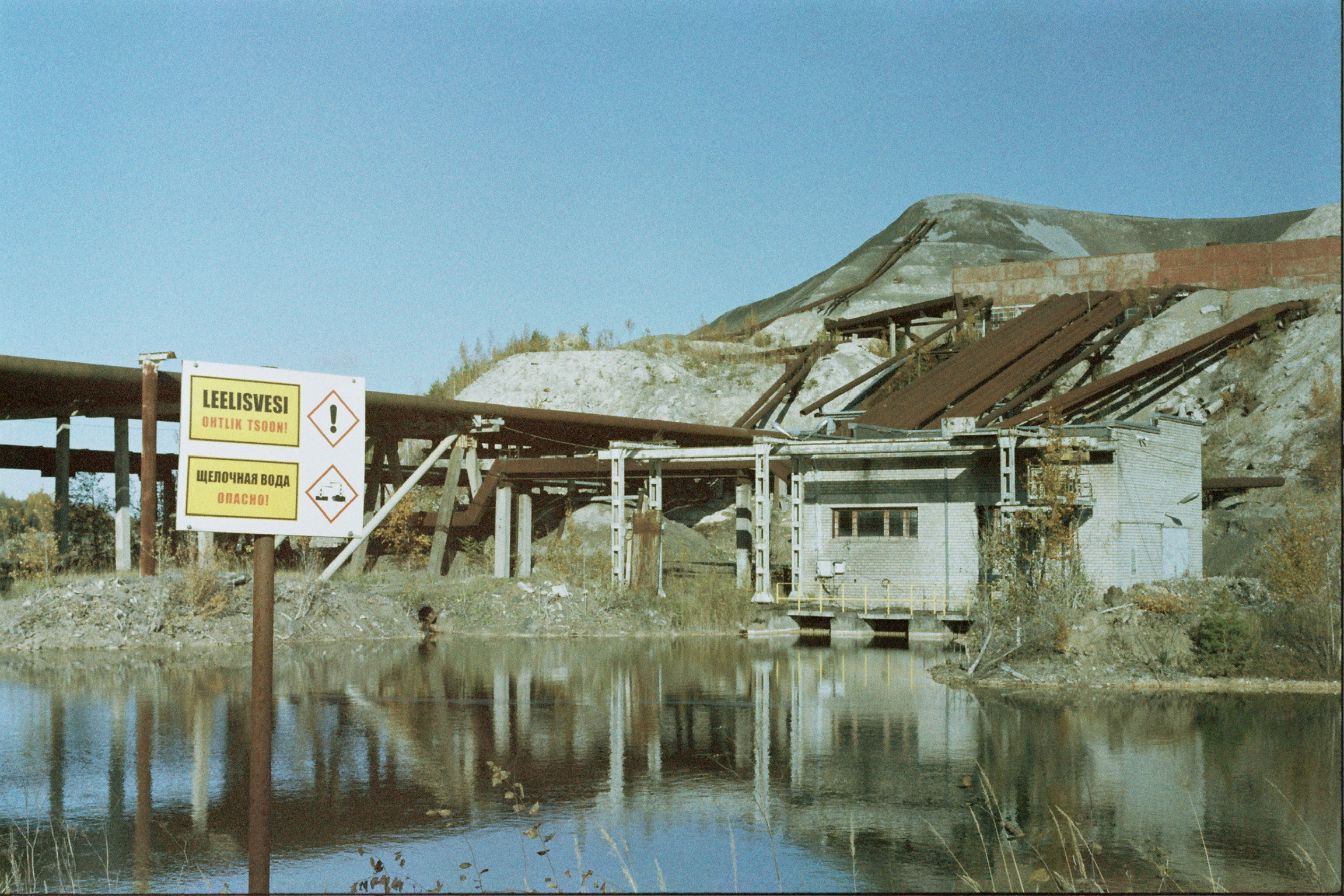
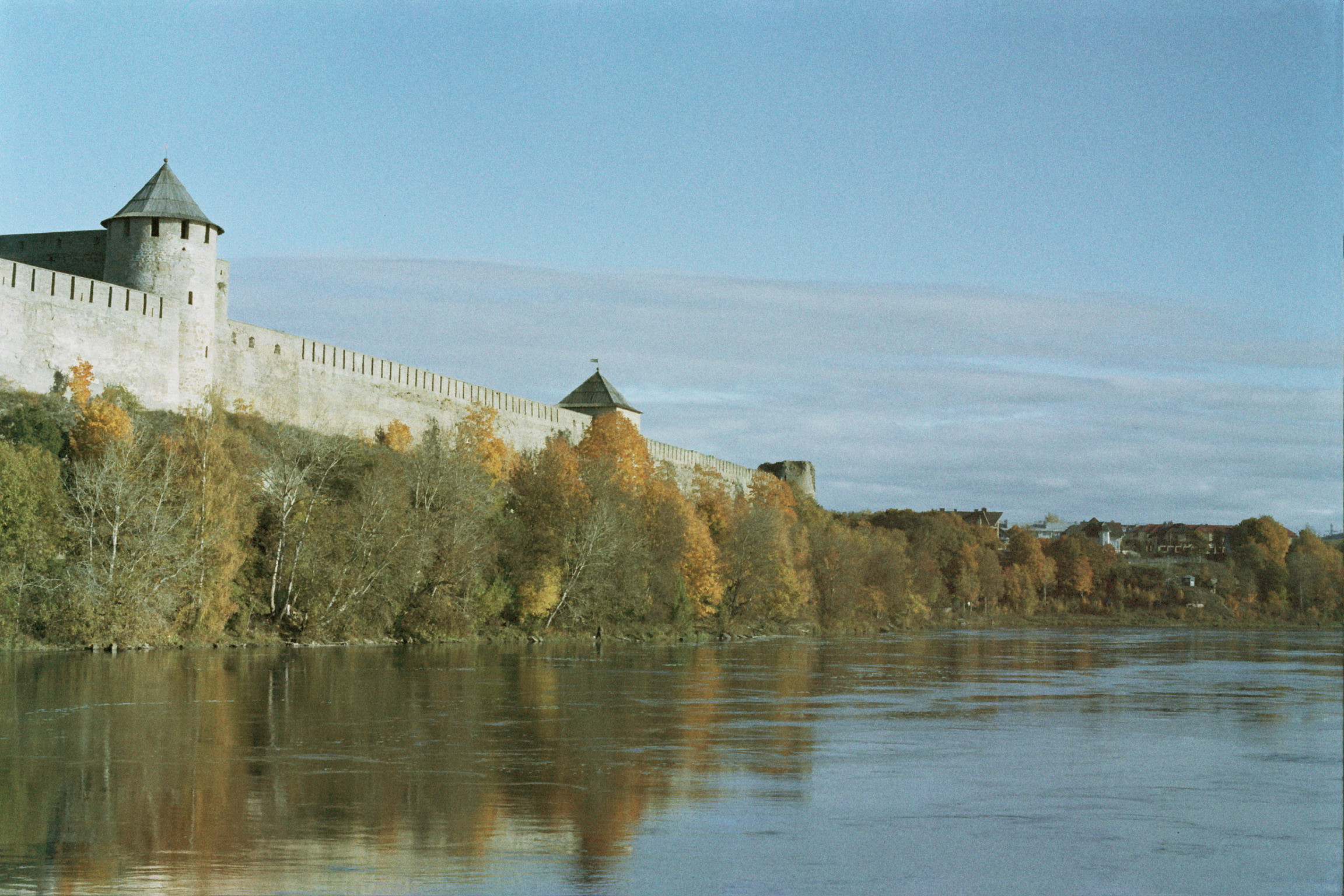
Moreover, quite a lot of my friends and acquaintances had a moment of incorrect self-evidence when I told them I would be studying Russian Philology in Estonia: “They speak Russian over there, right?”. Well, yes, but not how my friends imagined it. Like in Latvia, around a third of the population is of Russian descent, and a slightly higher percentage is Russian-speaking or Russophone. But Russian is not an official language, and for political reasons not even the minority one. I love this word—Russophone. It sounds like a breeze of fresh air into the stuffy and tastelessly decorated marble hall of fame, filled with stern busts of the canonical Russian writers, scholars and political figures. It also sounds alert and attentive, hip yet well mannered, serene yet assertive. It is a one-word counterargument to the very preposterous and taken-for-granted comprehension by one of Ana’s and mine old-school “Russian Civilisation” professors in Tartu insisting that “every literature written in Russian is Russian literature”. Maybe this could be my answer to “why Russian?”. Because I, like Ana, truly want to know what more is to this (self-)perpetuating steel image of what Ana and I call the “Russian automyth” for the lack of better wording, casting a shadow to the whole curriculum of Russian Studies not only in Tartu.
What is the “Russian automyth”? Somehow, we had a feeling that it permeated even the dullest layers of language conveyed to us in the Russian Syntax seminars. How Ana and I experienced it, the automyth manifested as a stiffness and overindulgence in ethnic Russians' own dominant culture and literature, which in countries not annexed, occupied or colonized by the Russian Empire, the Soviet Union, or the Russian Federation, has always evoked a somewhat awed reverence (in Spain or Slovenia, for example). The myth travels both ways, of course. It’s always used to strike me how stern and serious the Russians are about their literary greats that remain the main focus in the scholarly environment with few exceptions to this day. To avoid an extended leap into history and cultural studies, we could name just a few possible reasons for it: the Russian intelligentsia of the 19th century was preoccupied with paving the future way—was it going to be more European or more genuinely Slavic (which basically, unfairly enough, meant “Eurasian” but heavily based on monolithic “Russianness”)? Literature was entrusted with huge historical, philosophical, religious and moral questions, creating something that we could call “literaturocentrism”. In this echoed yet another “special mission” of Russia (at that time Tsardom of Russia): Moscow as the Third Rome, defending the last fort of Orthodoxy after Rome and Constantinople. And let us emphasize another important factor that has shaped the present of the whole post-Soviet space, and by this term we also acknowledge all ethnic minorities inside Russia. During the 50s and 60s, when the colonial world order started to shatter, the USSR was still enamoured by its own achievements and “progress”—under Brezhnev the idea of USSR as a monolithic and unified “Soviet” nation due to the “friendship of peoples” concept became as strong as ever. These ideas are recurring, if anything. With “the only true writer is a dead one” stance the majority of Slavistics scholars in and outside of Russia (regardless of their political views, as we learned in Estonia, where all our professors, mostly ethnically Russian or Ukrainian but of Estonian citizenship were no doubt against the Putinist regime) study great old men of the 18th and 19th century, accompanied mostly by Akhmatova and Tsvetayeva in the 20th. They were indeed astonishing authors, but there is this impenetrable aura of ignorance surrounding them which we cannot explain in any other way than by the Russian academia simply being embedded in the alleged supremacy of “Russianess” over everything else, and the certain casualness with which this cultural and territorial expansion has always been perceived.
As students of Russian Philology we must say this is, frankly, quite a boring and disappointing approach. Where are the contemporary authors (honestly, this is a question to many language departments) and where are all the authors from the ex-republics and autonomous republics of Russia, in other words, not Russian, but the Russophone ones? In the blinding light of the ongoing war and tumultuous histories finally emerging to the surface, we call for reshaping the Russian literary and cultural scene to the Russophone one by shifting the focus of linguistic power—so often abused by many ethnic Russian speakers—toward texts and authors that resist this taken-for-granted language suprematism. The root of austere monolingualism should be uprooted by acknowledging the whole scope of different (linguistic) realities of the Russian language.
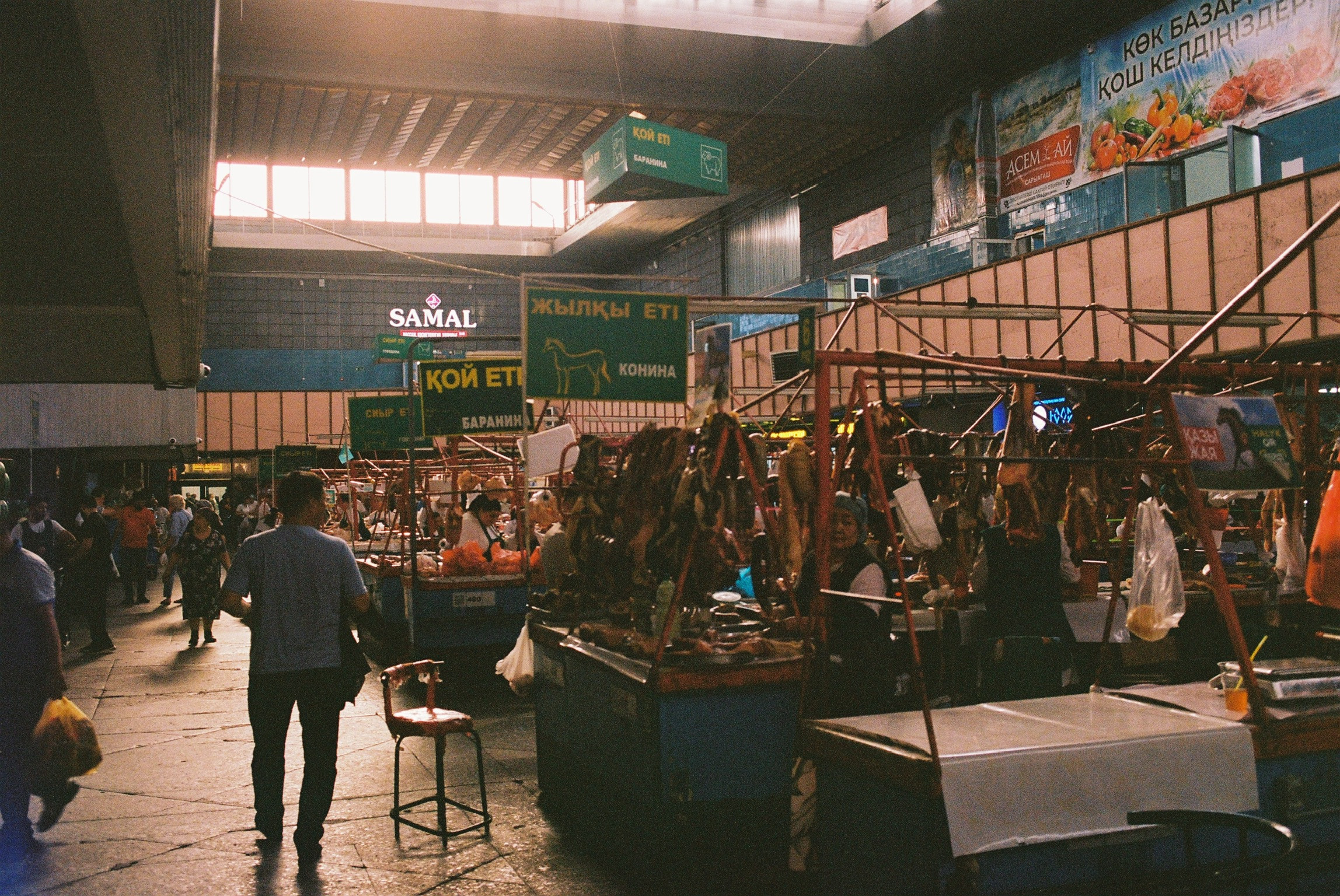
In Kazakhstan, Russian did not need to be imposed loudly; its power was already sedimented. It was the language of work, of administration, of urban life, of being taken seriously. Russian was the language in which I could find a job, rent an apartment, make friends, complain, teach and, ultimately, be understood. Kazakh, by contrast, hovered in the background—present, respected, but rarely required of me. The fact that neither Manca nor I felt any pressure to learn Kazakh is precisely the point. Russian functioned as a linguistic shortcut, a remnant of an empire that continues to organize social life long after the empire itself has formally disappeared. As a foreigner, I benefited from this arrangement immediately. My Russian, imperfect and accented, opened doors with surprising ease. It was met not with suspicion, but with pride. People thanked me for speaking it, complimented me, and switched into it without hesitation. I was rewarded for accessing the language of power, even as I remained exempt from learning the language that names the country itself. This exemption unsettled me. It revealed how deeply colonial hierarchies can persist in something as seemingly neutral as daily communication.
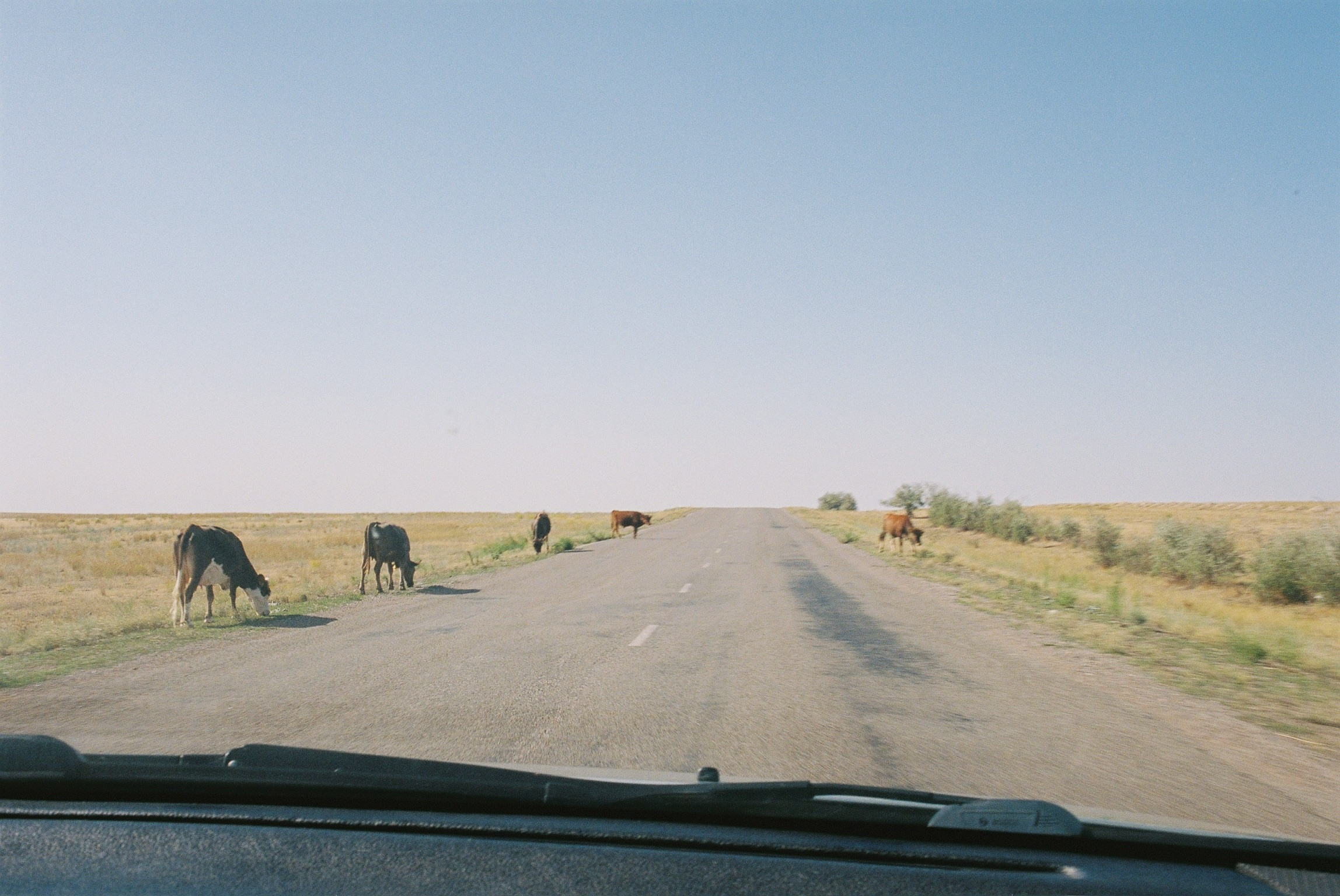
Our fascination with the deconstruction of the myth continued in summer of 2025 when Ana landed an internship in Almaty, Kazakhstan, and I followed her there for two weeks. If Estonia is the cultural crossroads between Scandinavia and Russia, but with a very clear sense of its own (not only Baltic, not only Finnougric), then Kazakhstan—along with other Central Asian and Caucasian countries—has started to follow the Estonian pattern of detaching itself from the Soviet past, especially among young people. Yet it still consists of several parallel linguistic realities. To illustrate this, at the techno party under the mountain tops we met a guy named Sasha, a barely 20-year-old giving off white-TikTok-rapper vibes who seemed to be living his parallel life in Russian with zero knowledge of Kazakh—his family simply moved to Almaty from Moscow, assuming the language wouldn’t be an issue as “they speak Russian there anyway”. Such flamboyance would not be possible in Estonia, not anymore. That’s why it is ungraspable to us that Estonia and Kazakhstan were once part of the same country, and that this historical fact place them together within the blurred notion of the post-Soviet also linguistically and culturally, and often in a condescending way, by both the West and Russia. Again, since the linguistic situation reflects the political and cultural whirlwinds of every nation state, our focus was immediately drawn to the relationship with the Russian language in both countries that, at first glance, seemed diametrically opposed. We posed a simple question about how “Russianess” is being revoked in these two countries.
In Estonia, Russian operates differently than in Kazakhstan—but no less politically. There, Russian is heavy with historical memory. It is not the language of convenience, but the language of occupation, associated with demographic violence, forced migrations, and cultural erasure. Estonian, by contrast, is fiercely protected. Speaking it is not only a practical choice, but a political act. Russian survives in parallel: in elderly communities, in segregated school systems, in families who have lived in Estonia for generations and yet remain linguistically outside the nation. As a student of Russian in Estonia, I felt caught between worlds. Russian was omnipresent in my academic life, but marginal in public spaces. It was studied intensely, but spoken cautiously. English often replaced it—not because English is more neutral but because it is less charged. In this context, Russian became a reminder that languages do not simply communicate; they remember. They carry histories that speakers may wish to escape but cannot fully shed.
In today’s Estonia, Russian is officially recognized as a foreign language. In the Soviet Union when Estonia was occupied and colonized by the Russians for the second time, even though Estonians were the majority of the population and Estonian was the official language, the language situation was “reversed”—Russian was the language of prestige, imposed on Estonians by the USSR-planned immigration of ethnic Russians. This process was accompanied by mass deportations of the Baltic people to Siberia and Central Asia, Kazakhstan included, continuing the legacy of penalty colonialism of the Russian Empire. This resulted in Estonians being in a minority-like linguistic situation in their own ethnic territory, and in the Estonian language becoming a “minoritized majority language”. Since the collapse of the USSR, the situation changed conversely: the official data regarding unemployment has shown Russian doesn’t get you far in Estonia anymore, even though there are several only-Russian-speaking bubbles with schools only in Russian across the country. The Estonian government, certainly propelled by the war in Ukraine, has set out on a mission to reform the whole school system so that Russian will no longer be a language of instruction anywhere by 2030, as the “Russian schools” proved to be lagging behind the average on the state knowledge tests. Some think this government-led solidifying of the Estonian identity is a good call, whereas some accuse this to be a breach of the minority rights, targeted specifically at ethnic Russians. The state-fuelled fear that they might sympathize with Russia’s official policies has been prevailing since the war began. The aversion toward everything Russian is noticeable everywhere, also contributing to some Estonian nationalist parties’ political agendas. It was also somehow significant that in my year I was the only international student in the programme, whereas Ana was the sole student in her year. Solidarity with Ukraine is shown everywhere: with mini Ukrainian flags on public transportation; with the juxtaposed projection of the Ukrainian and the Estonian flag in the Tallinn Freedom Square; with posters offering aid to the Ukrainian refugees; with NGO camouflage nets making; with exhibiting weapons and recruiting young men on national holidays.
On the other hand, something like this would be unfathomable in Kazakhstan, at least on an official level, as the leadership is evidently inclined toward Russia’s political caprices with some shy attempts at breaking the Russian yoke. With Kazakh being a state language and Russian being an official language (thus Kazakhstan being an officially bilingual country), the asymmetry is unmistakable: almost every ethnic Kazakh speaks Russian, but almost no ethnic Russian speaks Kazakh. Russian is still a language of prestige, so the question “What does being Kazakh mean?” for the Kazakh youth is now, in times of crumbling of the Russian cultural hegemony in Ukraine, more pertinent than ever. The unavoidable fact is that Russian has functioned as a connecting tissue between many ethnic groups in the state. It seemed natural to Ana and me to speak Russian in Kazakhstan, but it was not out of ignorance. It was just the easiest. Kazakhstan, and Central Asia in general, are the West’s blind spot, somehow vaguely yet firmly associated with Borat’s mankini quest to troll the West’s stereotypes about the non-Western localities. It hardly matters if it is a dilapidated Romanian village with Roma people (as it actually is in the movie, with zero Kazakh cultural references) or the 9th largest country in the world, locked away by other “stans” in the muddy concept of post-Soviet. The most ridiculous part of the movie is its (deliberately?) feigned innocence—the fact is that we laugh not at the “backwardness” of Kazakhstan, but instead at our non-existing knowledge of the country. The West and Russia, despite the mutual despise, are on the same page here—understanding a country only as opposed to where it used to belong (USSR) out of some semiotic laziness (Soviet vs. post-Soviet), or, as the Russian official regime, claiming it has never had a proper statehood. The only difference is in Putin’s open violent rhetoric about annexing Northern Kazakhstan with a mostly ethnically Russian population.
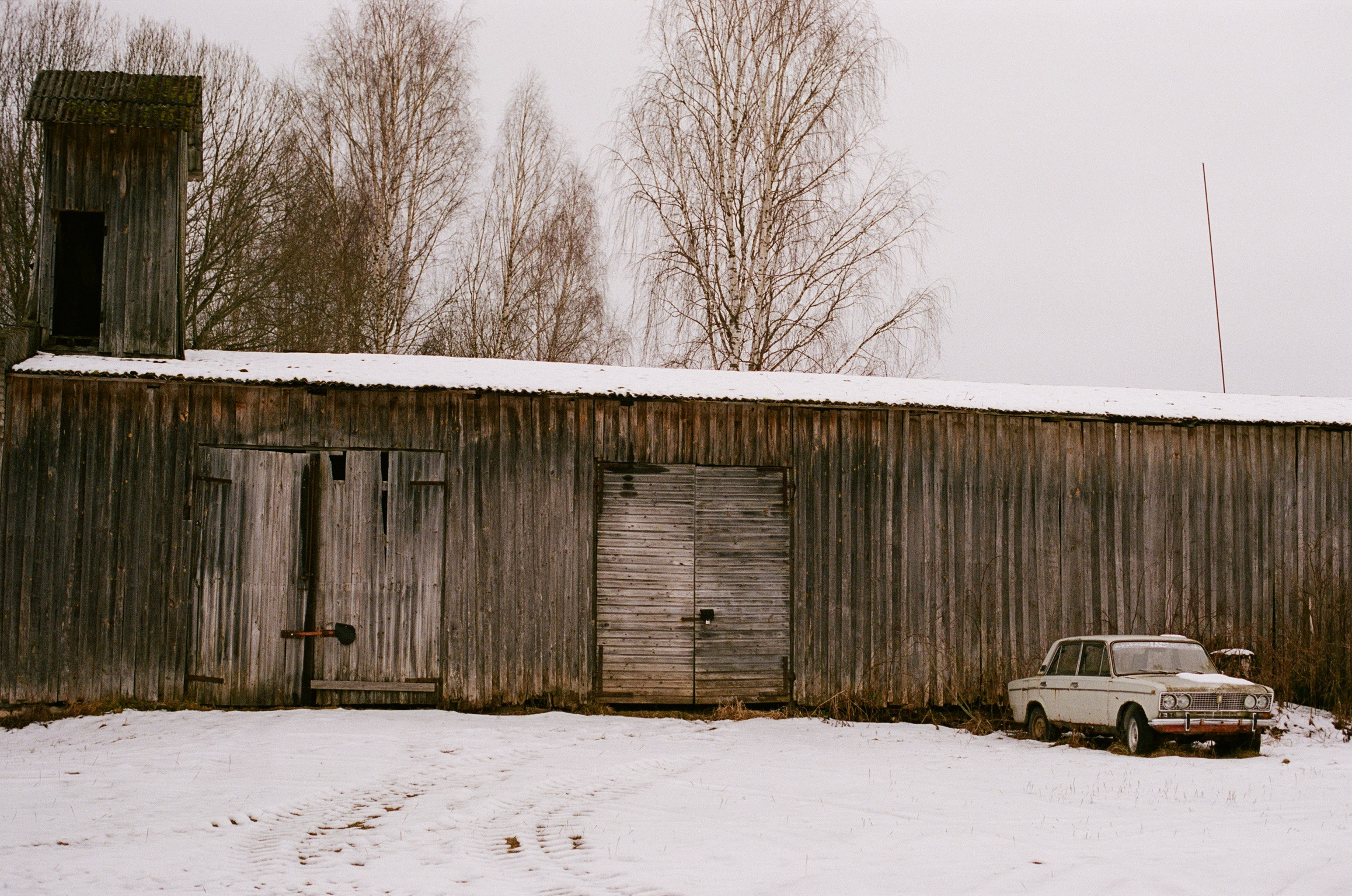
Studying Russian as a foreign language placed me in an ambiguous position. I was neither Russian nor from any country that had been occupied/colonised by the empire, neither victim nor inheritor of that specific empire. And yet, I cannot claim innocence either. I am Spanish. My own language is also a language of conquest, extraction, forced conversion, and epistemic violence. Spanish, like Russian, travelled with armies and administrators. It erased languages, reordered worlds, renamed bodies and territories. I was raised inside the silence that follows such histories. I learned to call it “discovery.” I learned pride before I learned grief. And yet, I would not want to think that the Spanish I speak with my family is a “colonial Spanish”. It is not the language of the empire but the language I created together with my family and my friends, made of private jokes, regional accents, mispronunciations, tenderness, anger, repetition. It is a language that exists at the scale of the kitchen, not the archive. In this sense, I think of Orhan Pamuk’s idea that all museums are, in some way, violent—and that the response is not to abolish them, but to create your own museum at home. Perhaps something similar can be said of language. Maybe the way toward less violent languages is not to purify them historically or to deny what they have done, but to recognise the many languages that already exist within what we insist on calling one. By this I mean Russian not as a single, coherent entity, but as a language spoken by many different realities. Seen this way, language stops being a monument and becomes a practice. A fragile, negotiated space shaped by who speaks, to whom, and for what purpose. This does not erase violence, but it refuses to reproduce it automatically. It allows Russian, Spanish, Estonian, Slovenian, and Kazakh to exist not only as instruments of power, but also as languages of care, dissent, intimacy, and survival. Perhaps this is where my insistence on continuing to study Russian comes from—not from loyalty to a canon or a nation, but from a desire to inhabit the cracks, to listen to the pluralities that the empire tries to flatten. To believe, however cautiously, that languages can be unlearned as weapons and relearned as ways of being with others.
That’s why Russian.
Maybe then instead of “Why Russian?” a better question for me is “Why do I care?” or even “Should I even care?”. With Glissant, I want to say my root has always felt monolingual. Coming from a small language and a small, rather homogenous nation, questioning my identity of belonging, let alone emphasizing it, has never truly struck me as urgent (I use the word homogenous somewhat reluctantly, but in my defence, the official stance, uttered by one of the right-wing xenophobes, yet internalized by many more, is that “there is no racism in Slovenia since all of us are white”). This seems oddly enough, since we are only slightly bigger in number than Estonians, yet waving our flags and exhibiting the national symbols for us has always been perceived as a bit off, beyond the line of acceptable, if one does not sympathize with politics of intolerance and exclusion. Another reason why my indifference to my root (s) might be perceived as unjustified privileged apathy, is the fact that both Slovenian, Estonian, and Kazakh languages have been subjugated to the devouring erasure policies of the same type, after all— for us it was mostly German and Italian, for Estonians and Kazakhs it was Russian. Yet it was only through my observational experience of the imposed “Russianess” in Estonia and Kazakhstan that I started to listen attentively. At last, the monolingual root cracked, and the loud silences and twisted realities that have always been there but that I never grasped, became visible.
Even though there is no such thing as solid and impenetrable identity (or if there is, it usually veers into dangerous waters), it seemed to us that Estonia, although haunted by the USSR past, has deliberately cut ties with this chapter of its history and has a very strong sense of “self”. However, the situation in Kazakhstan felt much more layered. At least in Almaty, the regional metropolis, it seemed to Ana and me that today’s Kazakhstan consists of a tripartite image: traditions of the nomad way of life mixed with the Turko-Mongol Muslim world, and contested by the imposed Soviet 20th century cultural supremacy, which is still visible in many dramatic Soviet buildings and megalomaniac monuments. Not to mention more than 130 ethnic minorities of Kazakhstan, some forcefully deported there by the Soviet paranoia (e.g. Germans, Koreans, and many more), others inhabiting it since forever (e.g. Uyghurs, Uzbeks, and many more). Here lies the irony of the Russian language, a language, forcefully imposed on millions of people, yet owned only by those who are Russians by ethnicity. It still does, it looks like, as the linguistic supremacies indisputably demonstrate: na Ukrainu instead of v Ukrainu, nerusskie, spetsialnaya operatsiya instead of war, near abroad, etc. This is a story of a language subjugated to harsh and unreasonable language policies that have not changed at all to this day. If anything, they were finally brutally revealed by the war in Ukraine. Ana and I are thus interested in voices that undermine the very essence of the ossified autoimage of “Russianness”, inflicted by the distorted language and ignorantly iterated by the Russian academia, be it pro- or anti-regime. Because, really, who owns a language? Everyone, yet—no one.
Manca & Ana
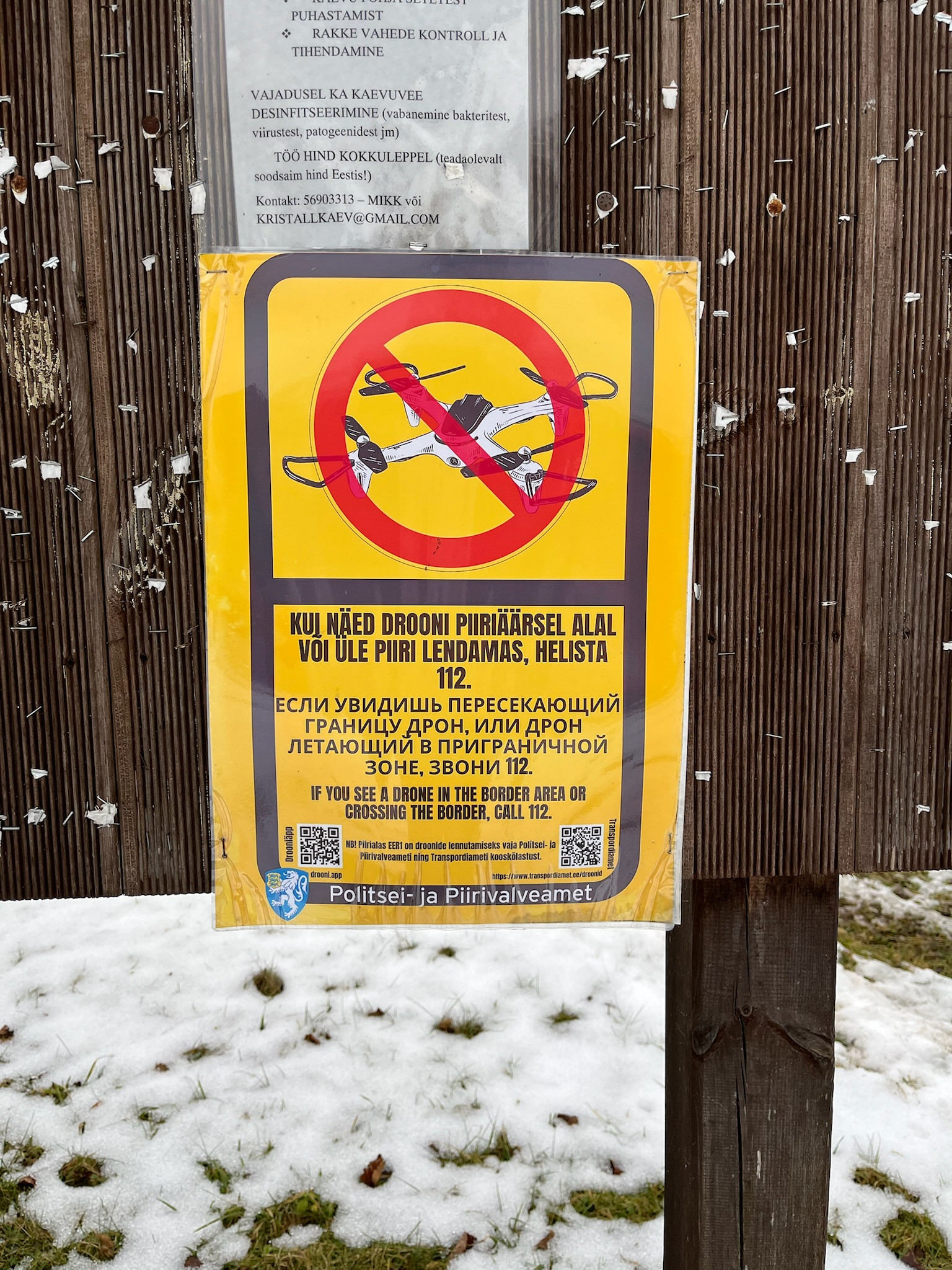
These reflections are not new; they have begun to surface in many collectives and artistic works. One example can be found in Marina Solntseva’s poem Why Am I Angry Today, which we also ventured to comment on.
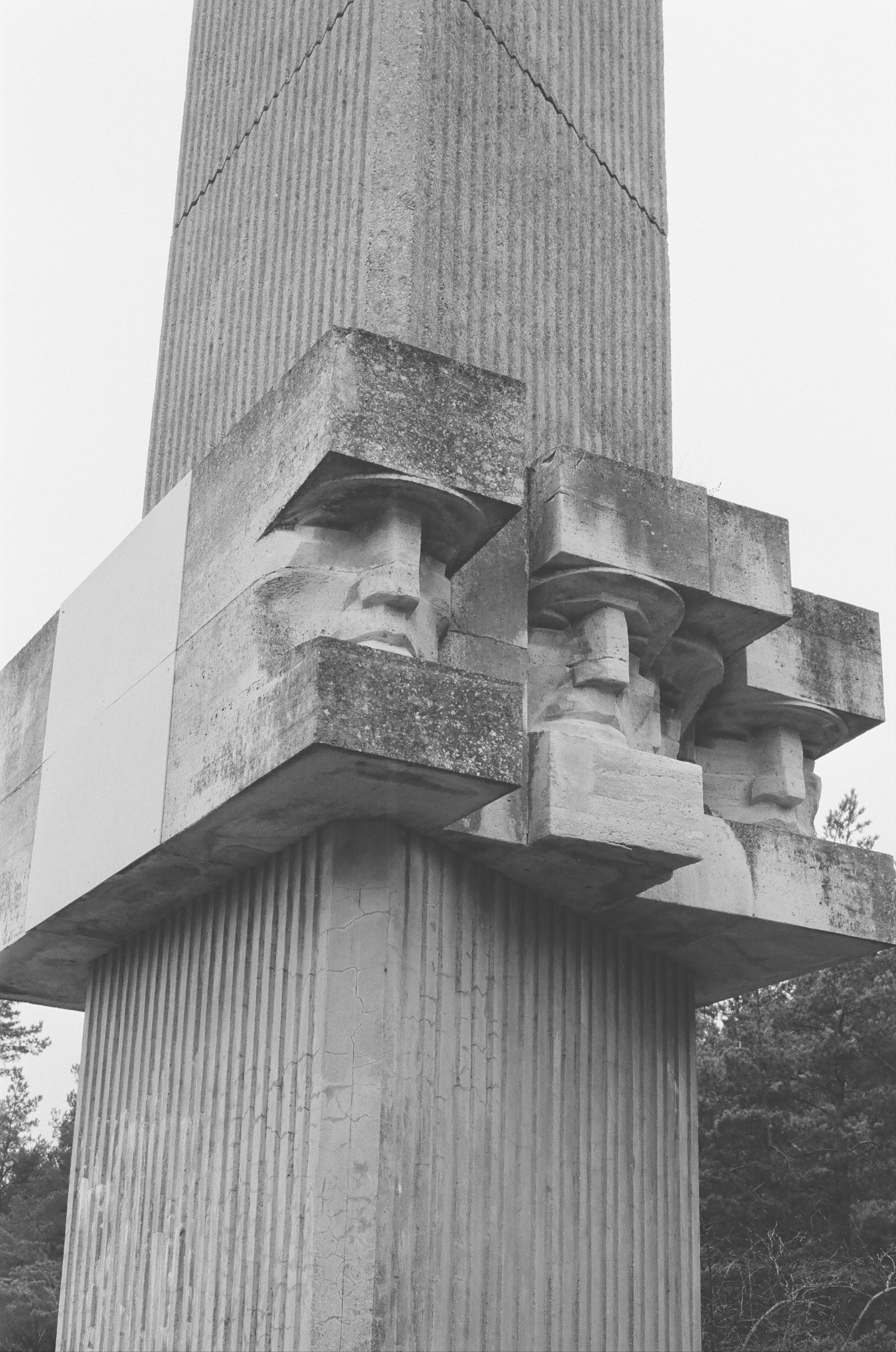
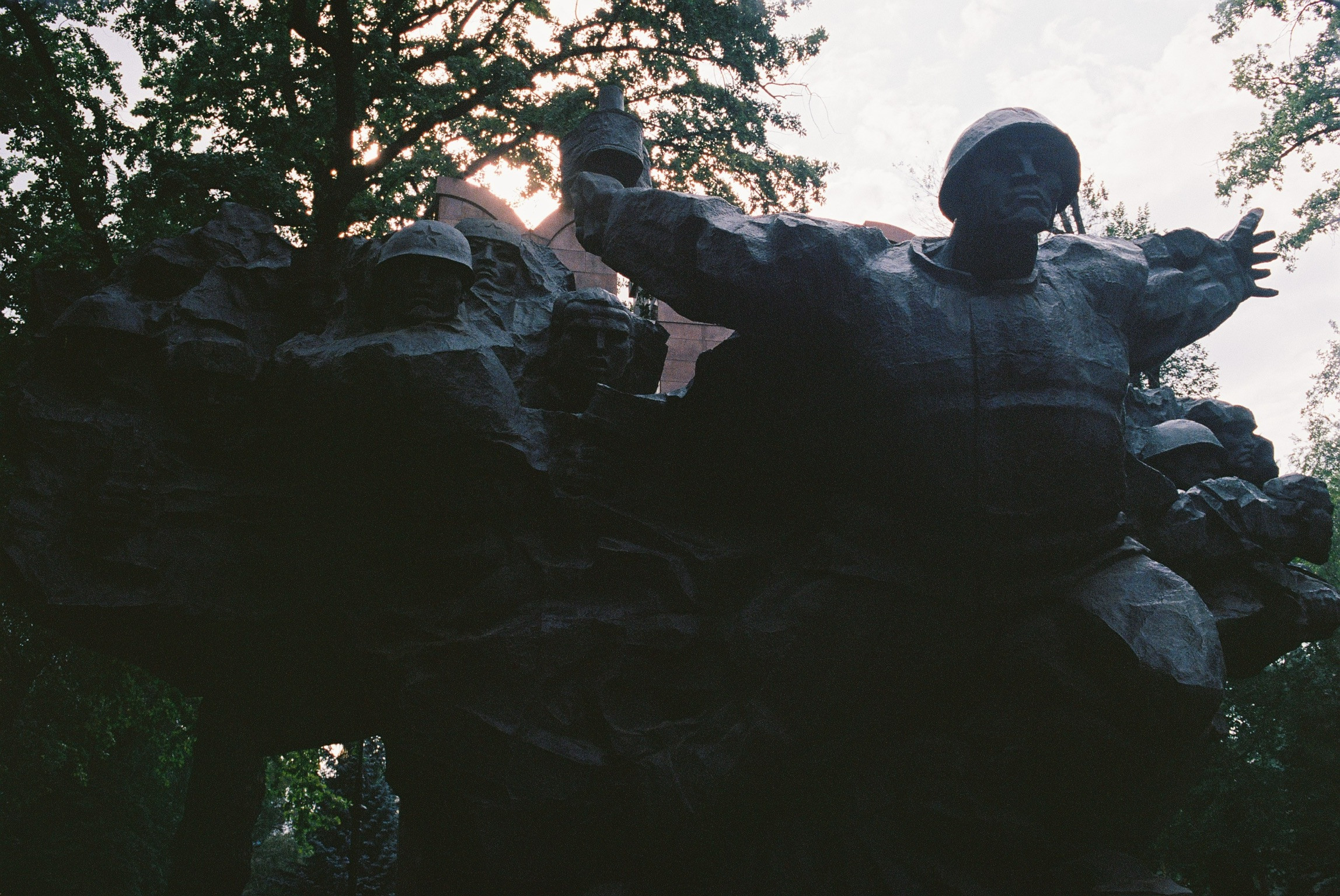
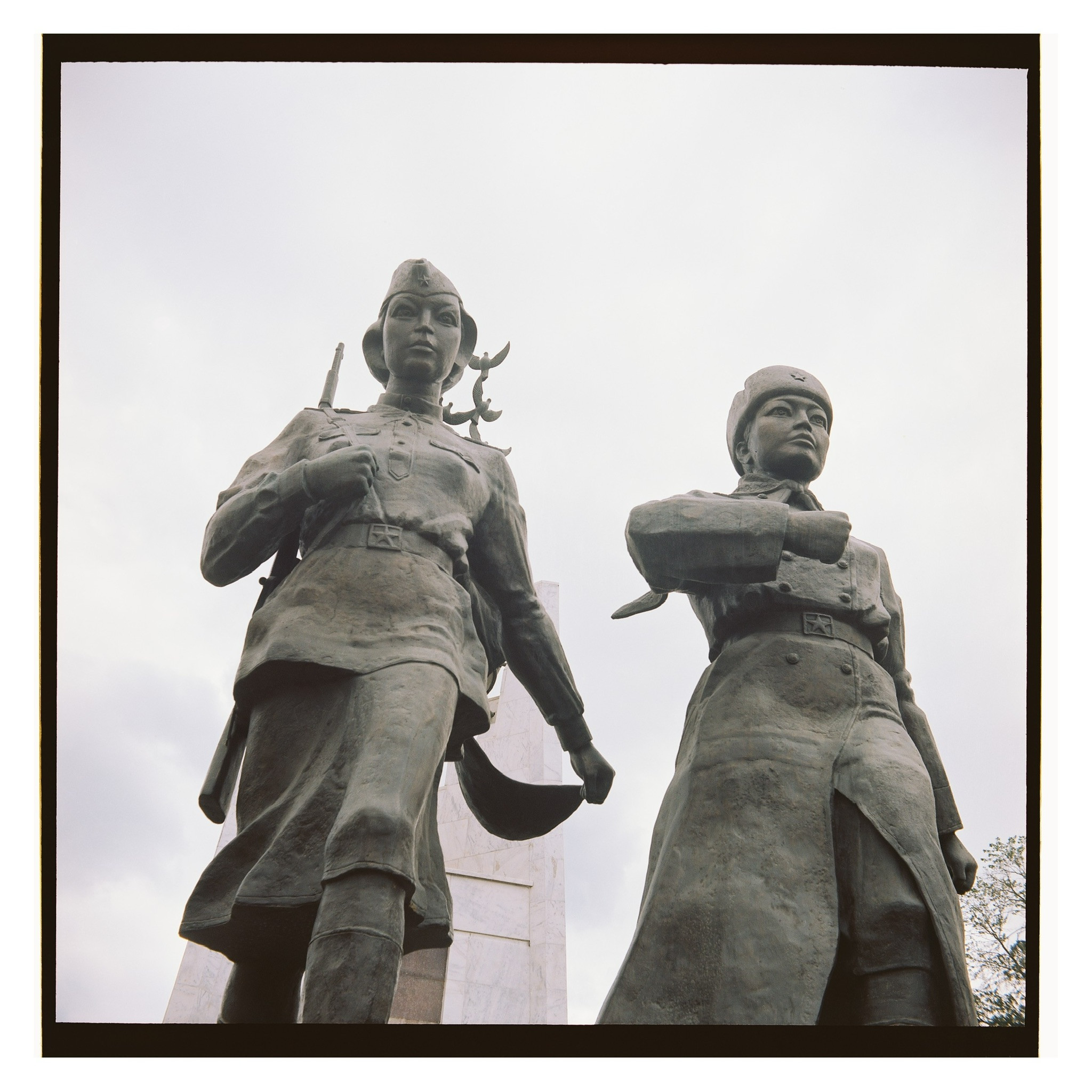
*All photos have been taken by Ana Muñoz & León Ihrke