Dr. Israr Ahmed Books: Which One Should You Read First?
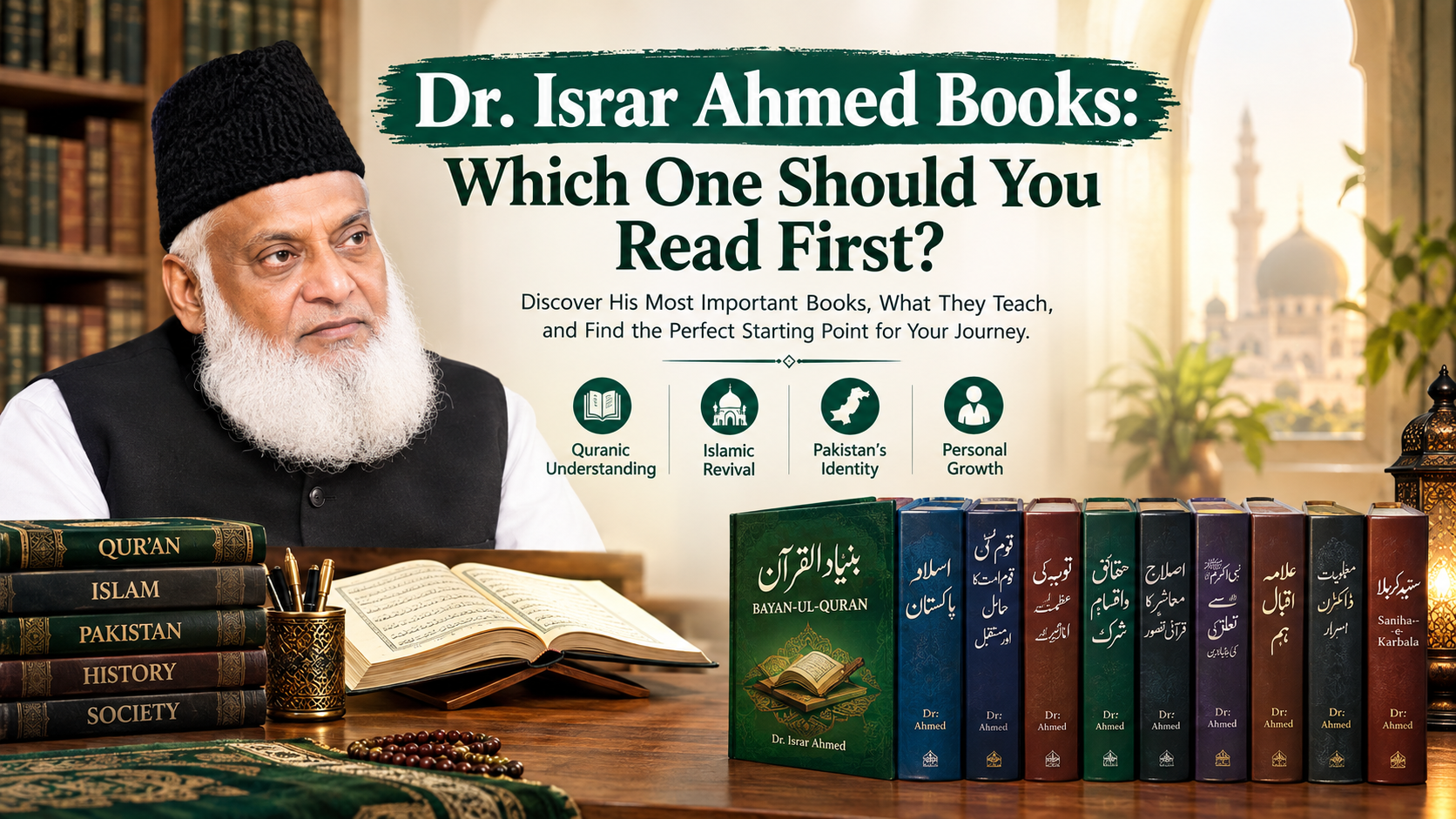
Dr. Israr Ahmed wrote more than sixty books on Islam, the Quran, and Pakistan during his lifetime. If you are new to his work, this large collection can feel overwhelming. This guide explains his most important books, what each one covers, and which title fits your interest, whether that is Quranic understanding, Islamic revival, or the history of Pakistan.
Who Was Dr. Israr Ahmed?
Dr. Israr Ahmed (1932–2010) was a Pakistani Islamic scholar, physician, and public speaker. He first trained as a medical doctor at King Edward Medical College, Lahore, then later earned a Master’s degree in Islamic Studies from the University of Karachi. In 1971, he left medicine completely to focus on Islamic teaching and writing.
He founded Markazi Anjuman Khuddam-ul-Quran in 1972 and Tanzeem-e-Islami in 1975. His central message was that Muslims can only revive their community by returning to the Quran and understanding it directly, not just reciting it. This idea shaped almost everything he wrote.
Why His Books Still Matter Today
Dr. Israr Ahmed’s books remain popular because they connect old Islamic teachings to modern problems. He did not just explain religious rulings. He explained why those rulings matter for a Muslim living in today’s world.
His writing style is direct and easy to follow, even when the topic is complex. This is one reason his books continue to be read, translated, and shared decades after they were first published.
Dr. Israr Ahmed’s Most Important Books
Bayan-ul-Quran (Tafseer of the Quran)
This is Dr. Israr Ahmed’s largest and most respected work. It is a detailed exegesis, or Tafseer, of the entire Quran. He spent decades teaching Quranic classes before compiling this commentary, so it reflects years of study and public teaching, not just personal opinion.
If you want to understand the Quran’s meaning in a structured, scholarly way, this is the starting point.
Islam Aur Pakistan (Islam and Pakistan)
This book examines Pakistan’s founding purpose and its relationship with Islamic identity. Dr. Israr Ahmed argues that Pakistan was created to become an Islamic state, and he explores what that responsibility means in practical terms.
Readers interested in Pakistani history combined with Islamic political thought often start here.
Quran Ke Hum Par Paanch Huqooq (Five Rights of the Quran Upon Us)
This shorter book explains five specific responsibilities every Muslim has toward the Quran, from believing in it to acting on its guidance. It is a practical, easy-to-read book, which makes it a good entry point for beginners.
Allama Iqbal Aur Hum (Allama Iqbal and Us)
Dr. Israr Ahmed was deeply influenced by the poet-philosopher Allama Muhammad Iqbal. This book discusses Iqbal’s ideas on Muslim identity, self-awareness, and revival, and how they connect to Dr. Israr Ahmed’s own message.
Musalman Ummaton Ka Mazi, Haal Aur Mustaqbil (The Past, Present, and Future of the Muslim Ummah)
This book takes a wider historical view. It traces the rise and decline of Muslim civilizations and offers Dr. Israr Ahmed’s analysis of where the global Muslim community stands today, and where it may be headed.
Islah-e-Muashara Ka Qurani Tasawwur (The Quranic Concept of Social Reform)
Here, the focus shifts to society rather than the individual. Dr. Israr Ahmed explains how the Quran approaches reform at a community level, not just personal worship.
Nabi Akram Se Hamare Taalluq Ki Bunyaden (The Foundations of Our Connection with the Prophet ﷺ)
This book explores what it truly means for a Muslim to have a relationship with Prophet Muhammad صلی اللہ علیہ وسلم, going beyond ritual respect toward genuine emulation of his character and teachings.
Tauba Ki Azmat Aur Taseer (The Greatness and Power of Repentance)
A shorter, spiritually focused book on the concept of Tauba (repentance) in Islam. It is often recommended for readers looking for something practical and personal rather than academic.
Haqeeqat Wa Aqsaam-e-Shirk (The Reality and Types of Shirk)
This book addresses Shirk, the concept of associating partners with Allah عَزَّوَجَلَّ, and explains its different forms. It is considered an important read for anyone studying core Islamic beliefs, or Aqeedah.
Malfoozat-e-Dr. Israr Ahmad
This is a collection of his sayings, talks, and reflections gathered from his lectures over the years. It offers a more conversational look into his thinking compared to his formal books.
The Tragedy of Karbala (Saniha-e-Karbala)
This book began as a speech Dr. Israr Ahmed delivered on the 8th of Muharram at Darussalam Mosque, Lahore. Due to strong reader demand, it was later published as a booklet under the title Saniha-e-Karbala.
In it, he explains the historical background of the events at Karbala and the chain of incidents that led to this tragedy in early Islamic history. He also addresses how a distorted understanding of these events created confusion about the conflicts between the Companions رضي الله عنهم of Prophet Muhammad صلی اللہ علیہ وسلم. His central point is that Muslims should study the real historical context so they can hold the correct, respectful view of all the Companions رضي الله عنهم involved, without falling into sectarian bias.
Which Dr. Israr Ahmed Book Should You Read First?
Your starting point depends on what you want to learn:
- New to his work overall: Start with Quran Ke Hum Par Paanch Huqooq. It is short and easy to understand.
- Interested in Quranic meaning: Go directly to Bayan-ul-Quran.
- Curious about Pakistan’s Islamic identity: Choose Islam Aur Pakistan.
- Looking for personal spiritual growth: Read Tauba Ki Azmat Aur Taseer.
- Studying core Islamic beliefs: Pick Haqeeqat Wa Aqsaam-e-Shirk.
There is no single "correct" order. Dr. Israr Ahmed wrote each book to stand on its own, so you can choose based on your current interest.
Where to Find and Read His Books
Most of Dr. Israr Ahmed’s books are available in Urdu, and several have been translated into English and other languages. You can find digital copies, audio lectures, and PDF versions through Islamic libraries and platforms dedicated to preserving his work, along with recordings of his original Quranic classes for readers who prefer listening over reading.
Final Thoughts
Dr. Israr Ahmed رحمہ اللہ left behind a body of work that covers belief, worship, history, and social reform, all connected by one central theme: understanding and living by the Quran. Whether you start with a short book like Tauba Ki Azmat Aur Taseer or commit to the full Bayan-ul-Quran, each title offers a clear entry point into his thinking. Pick the one that matches what you want to learn right now, and build from there.