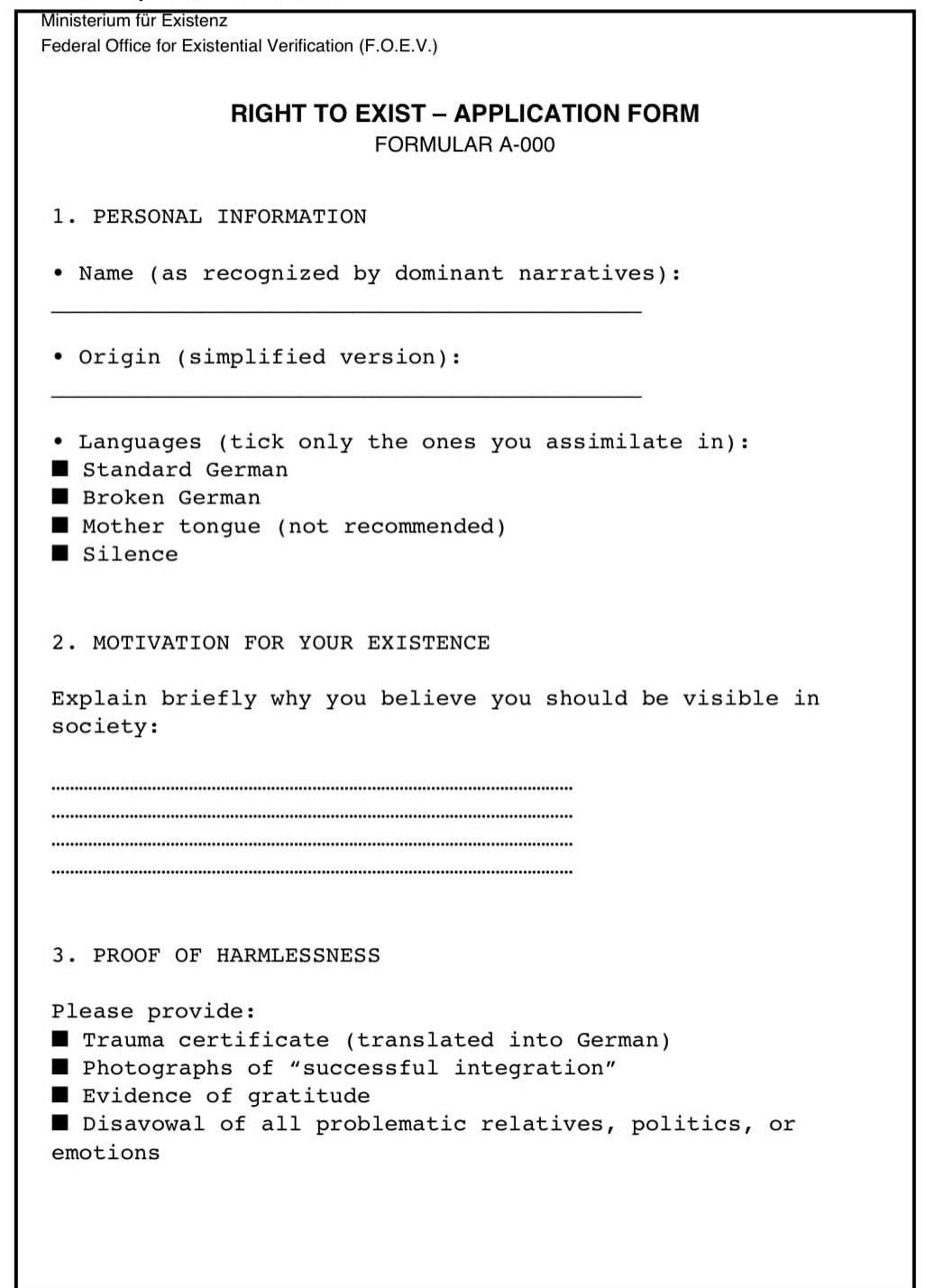
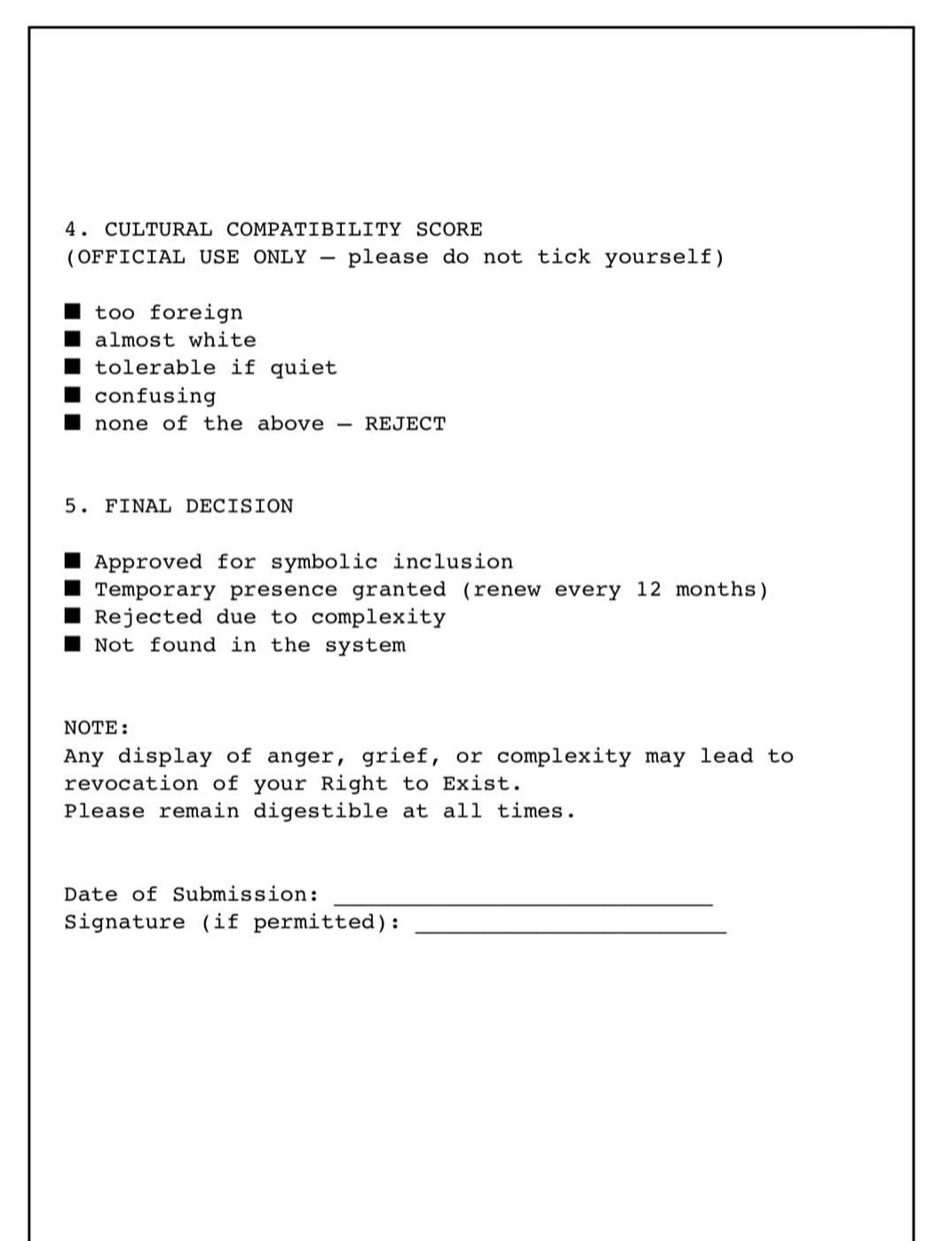
Existenzberechtigungsschein
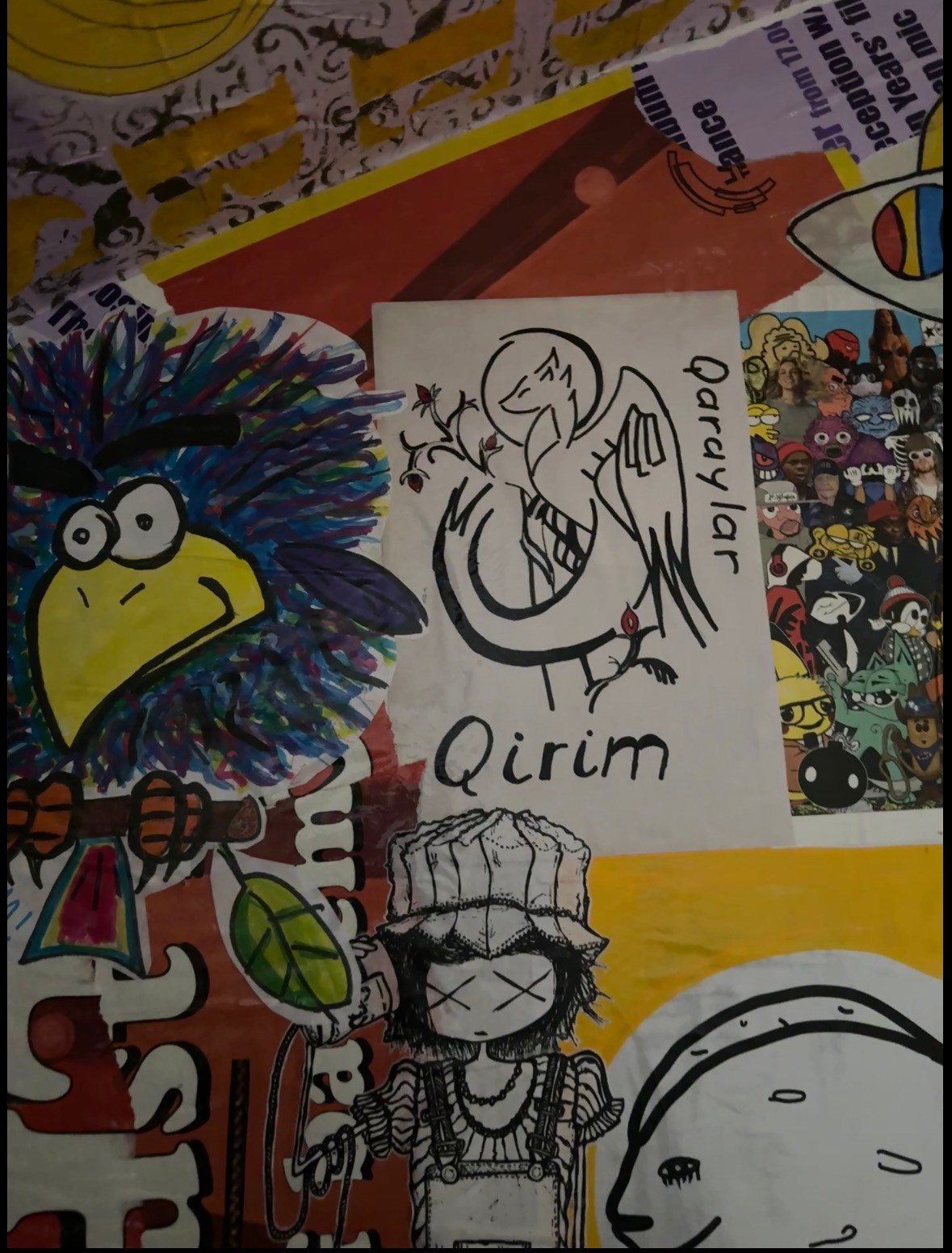
A decolonial monologue on the absurdity of proving the right to exist
Leo has qırımqaray roots ( Crimean karaim : one of the turcic speaking indigenous people of Crimea, together with Crimean Tatars and Krymtschaks. The official number of Crimean karaim is pending around 1000—- though karaim like Leo, who are mixed and/or diasporical, are probably not officially registered.
Since the death of their father and shortly after the beginning of the full scale invasion, Leo shifted their artistic practices and research to the history of Crimean natives, family ethnography, tries to reconstruct the cultural knowledge.
The German word Existenzberechtigungsschein—a “certificate of the right to exist”—has often haunted me. As an adolescent migrant struggling with depression, I wasn’t yet thinking about decolonisation. Instead, I often explained my mental state to friends as waiting for such a document, an official proof that my existence had meaning. Therapy helped me to integrate into life, but the metaphor stayed.
While researching family history and the impact of genocides, I discovered that during National Socialism in Germany, state ministries sought to decide scientifically who had the right to live. My great-grandfather, a linguist and orientalist, contributed data on the Crimean Karaim language and folklore— to be used in bureaucratic decisions about whether the community should be classified as Jews or Tatars. For the Krymchaks ( rabbinical indigenous ethnicity of Crimea) so-called “scientific” distinction offered no protection—they were murdered in the Holocaust. For the Crimean Karaim, however, the German ministry issued Scheins that temporarily allowed survival. Survival by such fragile documents shows the terrifying arbitrariness of life and death under fascism.
In 1944, the situation shifted again. German-issued right to exist could not shield the Crimean ethnic groups from forced deportations, suspicion, and the systematic dismantling of their communal life as ordered by Soviets. The legacy of these ruptures still echoes across generations.
In this poetry, I want to explore how the post colonial meseaure of groups by numbers, belonging criteria , political weight continues to shape me as a descendant of Crimean Karaim in the present. What does formal recognition of indigeneity mean today? Is it ever enough to guarantee survival, when communities are scattered, broken, and dispersed across the world due to war and displacement? How can awareness be raised when the people are so small in number, so easily overlooked? And why it’s important to see ethnical eco systems as an organism without erasuering the " tiny " yet so important parts.
Please fill out the following form:
Name: …
Nationality: complicated
Reason for your presence: history, pain, hope, fractures
Proof of loyalty: language, silence, adaptation
Belonging: disputed
Right to exist: pending review
They say:
I’m too loud.
Too angry.
Too complex.
Too unclear.
Too political.
Too much.
I say:
I simply am.
I breathe.
I remember.
I feel.
I owe you no translation of my existence.
No grateful smile for tolerated paperwork.
No explanation why my story doesn’t fit your map.
Existenzberechtigungshein.
What a word.
What a joke.
Who invented this form?
In what ministry?
On what colonial office desk?
Who gets to be here without applying?
We tear this paper apart.
We rewrite our names.
We inscribe our stories into the walls of this city.
Not in pencil,
but in voice, body, resistance.
We are here.
We have always been here.
We don’t need a “schein.”
We are.
Leo Efet, Berlin, 2025